Overview
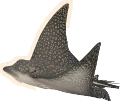
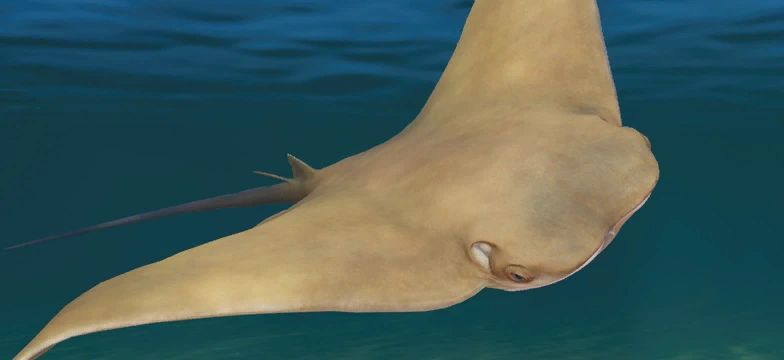
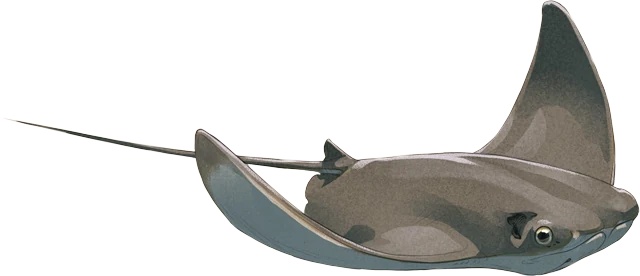
The Javanese cownose ray (or Rhinoptera javanica) is a coastal species found in the warm, shallow waters of the Indo-Pacific region, ranging from the Red Sea and eastern Africa across the Indian Ocean to Southeast Asia and northern Australia. It prefers sandy or muddy sea beds near coral reefs, estuaries, and bays, where it feeds on benthic invertebrates such as molluscs and crustaceans. This ray is easily recognised by its distinct head shape, featuring a broad, rounded snout with a central notch that resembles a cow’s nose. Its body is diamond-shaped with long, pointed pectoral fins and a whip-like tail. The upper surface is typically brown to grey, while the underside is pale. Adult Javanese cownose rays can reach a disc width of up to about 1.5m, with a body length of 2m including the tail. They generally weigh 20kg to 40kg, though size can vary depending on habitat and food availability.
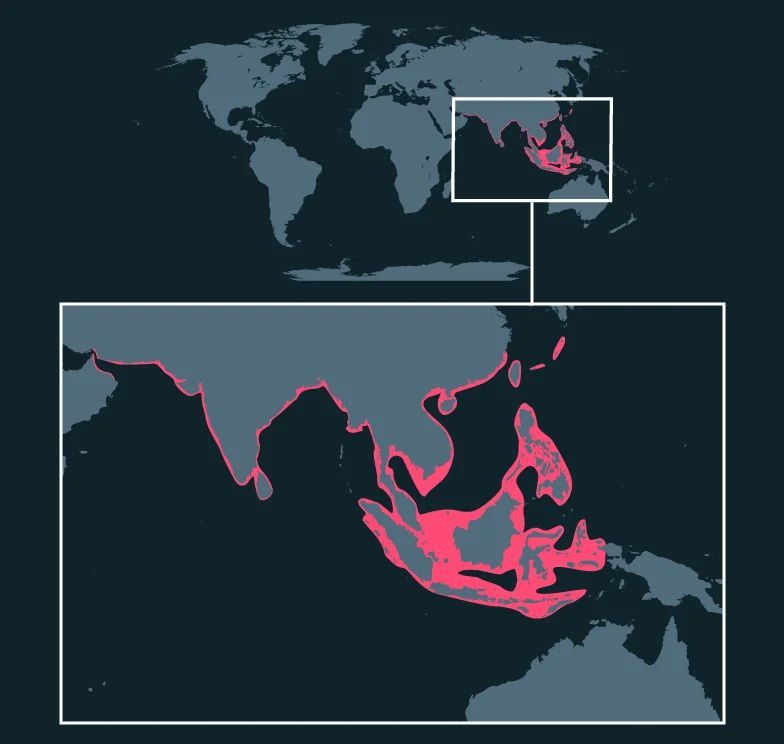
Found in Indo-Pacific reefs and coasts
Regions
- Indian Ocean
- Pacific Ocean
Biomes
- Open sea
- Reef
- Estuarine
Habitat requirements
Barrier grade
Grade 2 of 5
Minimum height
1 m minimum
Climbing & water
Climb proof
Not needed
Water barrier
Not allowed
Combine this animal with others in the barrier planner.
Habitat needs
Minimum area
Deep water
80 m² + 15 m² per extra animal
Environment
Temperature
24 to 30°C
Plant coverage
0-30%
Water salinity
Brackish, Saltwater
Enclosure
Aquarium
Terrain
- Sand 50-100%
- Soil 0-50%
- Rock 0-20%
Diet and enrichment
Diet
- Clams and Crustaceans
- Squid
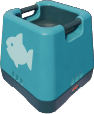
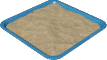
Enrichment items

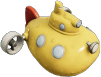
Conservation
IUCN Red List
Endangered
Least concern
Critically endangered
The Javanese cownose ray is considered Endangered. Fishing gear catches this species unintentionally as bycatch across its whole range, and the species is also directly fished for meat or trade in some regions. As a result, some populations have reduced 50 to 79% over the past 44 years. Habitat degradation is common due to coastal development, destructive fishing methods, and disturbances in mangroves, estuaries, or seagrass that reduce suitable feeding and breeding grounds. The Javanese cownose ray has low fecundity, slow growth and late maturity and cannot rebound quickly from heavy mortality. Some local efforts regulate fishing practices to reduce bycatch and over-exploitation, and improving monitoring quantifies catches, trends, and habitat use. Currently there is no comprehensive conservation program specifically for the Javanese cownose ray. Proposed measures include protected areas, fishing quotas or bans, and habitat protection, but gaps remain in enforcement, fishing regulations, protected area coverage, and species-specific research.
Zoopedia sketchbook
Social & reproduction
Keeper notes
Javanese cownose rays often swim in large groups, sometimes numbering in the hundreds, which helps them search for food and avoid predators. Breeding season is between late spring and summer. Courtship usually involves males closely following females, nipping at their pectoral fins, and attempting to grasp them for copulation. Like other rays, males have modified pelvic fins called claspers, which are used to transfer sperm to the female during mating. This pairing behaviour often occurs in shallow coastal waters where rays congregate, and it can look quite vigorous as males try to position themselves for successful fertilisation. Reproduction in this species is aplacental viviparous, meaning embryos develop inside the female. The gestation period is thought to last several months, though exact timing is not well documented for this species. Females give birth to a small number of live young, often just one to four pups, which are miniature versions of the adults and fully independent at birth. Males reach sexual maturity between 4 and 5 years old, and females between 5 and 7 years old. Maximum growth usually takes 5 or 6 years.
Group and breeding
Group
Group size
5-40 (up to 40 males, up to 40 females)
Male bachelor group
1-40
Female bachelor group
1-40
Offspring dispersal
None
Lifecycle and breeding
Life expectancy
15-20 years
Age of sexual maturity
5 years
Age of sexual sterility
Death
Gestation or incubation
12 months
Interbirth period
12 months
Litter size
1-2
Mating system
Promiscuous
Mating season
Summer
Reproduction in captivity
Average
Animal facts
- Javanese cownose rays use their powerful jaws and flat teeth to crush hard-shelled prey like clams, oysters, and crabs.
- Unlike stingrays, the Javanese cownose ray does not have a venomous barb, making it harmless to humans.
- When Javanese cownose rays are pregnant, the pups are initially nourished by yolk, and later by nutrient-rich uterine milk.
- While Javanese cownose rays mainly crush shellfish for food, they can also filter smaller organisms from the sediment.
- When feeding in groups, Javanese cownose rays sometimes stir up the sand together, making it easier to uncover buried clams and crustaceans.
Taxonomy
Class
Order
Family
Genus
Species