Overview
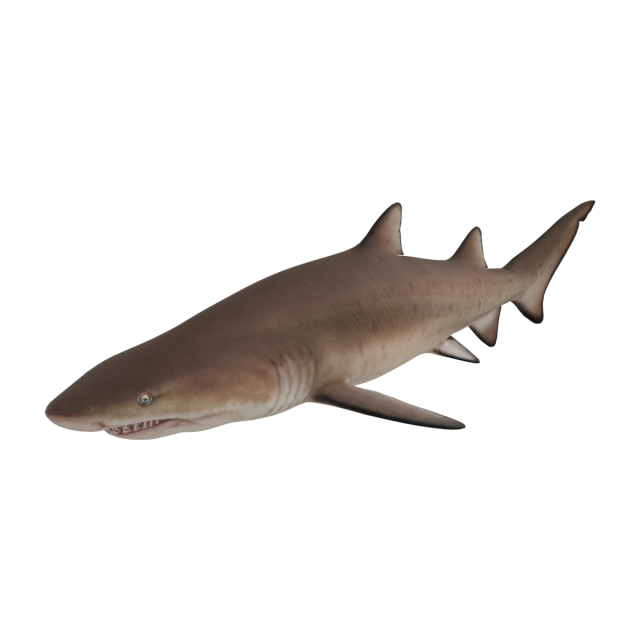
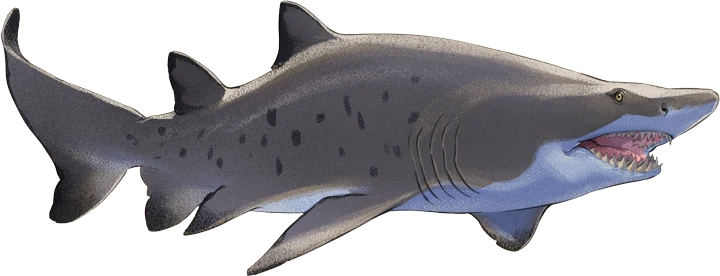
The sand tiger shark (or Carcharias taurus), also known as the spotted ragged-tooth shark or blue-nurse sand tiger shark, is a large species of shark that lives in the shallow coastal waters of temperate and sub-tropical oceans across the world. They have a classic selachian (‘shark-like’) body form, but are bulky in comparison to some shark species. They are pale grey-brown with brown spots and a white underside. Their snout is pointed and their mouth is generally kept open, exposing 3 rows of teeth. Like many other sharks, female sand tiger sharks are larger than males. Males measure 2m to 2.5m in length and weigh 90kg to 120kg, while females grow from 2.2m to up to 3.2m in length and weigh between 110kg to 159kg.
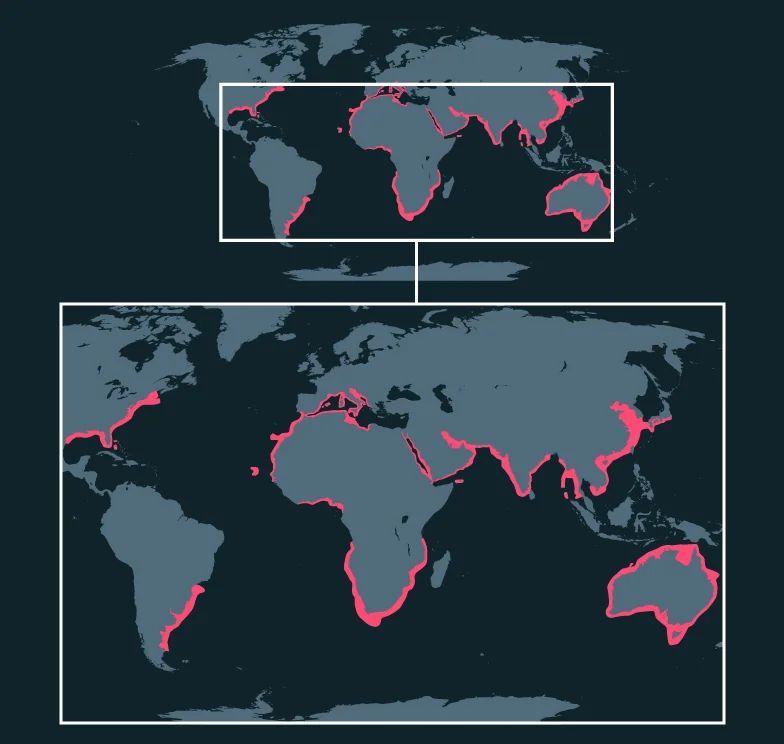
Found in Temperate and sub-tropical coastal regions worldwide
Regions
- Atlantic Ocean
- Indian Ocean
- Pacific Ocean
Biomes

Appearance
Male
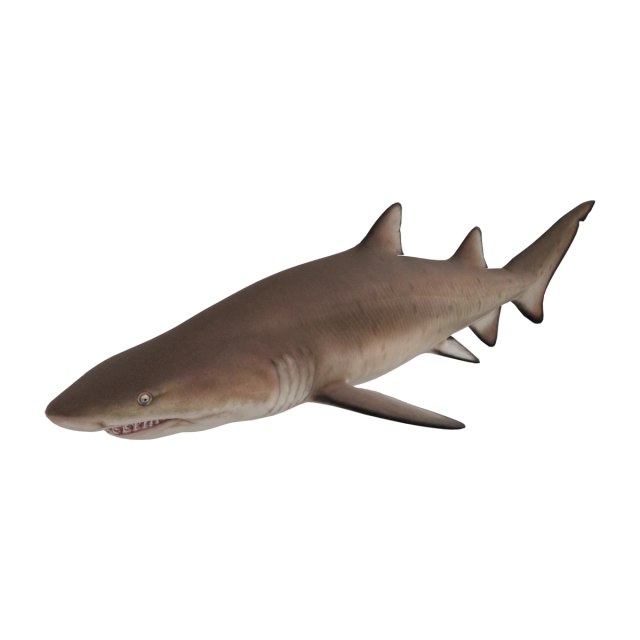
Female
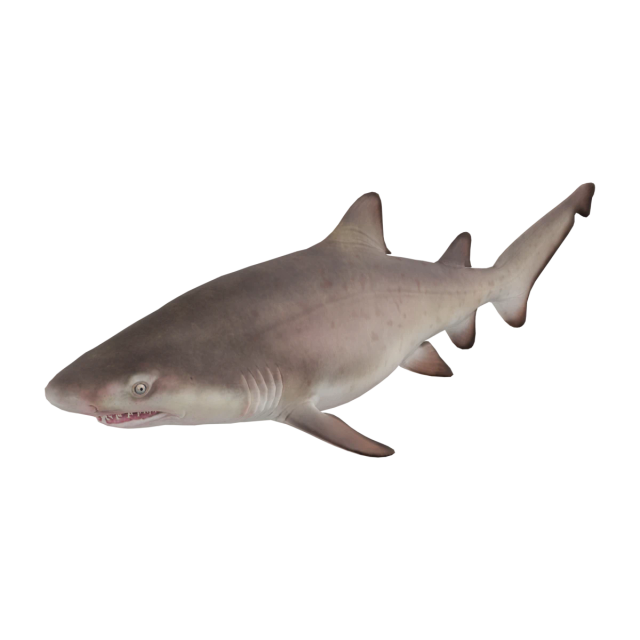
Juvenile
Colourmorphs
 Albino male
 Albino female
 Albino juvenile
Habitat requirements
Barrier grade
Grade 3 of 5
Minimum height
1 m minimum
Climbing & water
Climb proof
Not needed
Water barrier
Not allowed
Habitat needs
Minimum area
Deep water
420 m² + 240 m² per extra animal
Environment
Temperature
16 to 28°C
Plant coverage
0-70%
Water salinity
Saltwater
Enclosure
Aquarium
Terrain
- Rock 0-20%
- Sand 20-100%
- Soil 0-100%
Diet and enrichment
Diet
- Whole Fish
- Squid







Conservation
IUCN Red List
Critically endangered
Least concern
Critically endangered
Sand tiger sharks are Critically Endangered, having declined by 80 to 90% over the last few decades, mostly due to human action. They are heavily overfished for their fins, considered a delicacy in China and Southeast Asia, but are also often bycatch of fisheries. As their preferred habitat is shallow coastal waters, they are often exposed to pollutants, destructive fishing techniques and habitat loss through coastal development. Additionally, their slow reproductive rate (1 to 2 pups every 2 to 3 years) makes them more vulnerable to unsustainable population losses. To mitigate these problems, many countries have introduced fishing restrictions, while some have banned catching sand tiger sharks entirely. There are ongoing discussions about putting the sand tiger shark on the ‘Convention for Migratory Species’, so that there is more international cooperation regarding its protection and its enforcement. Conservation organisations are attempting to protect important habitats, and research into their behaviour, reproduction and migration is improving targeted conservation mechanisms.
Zoopedia sketchbook
Social & reproduction
Keeper notes
Sand tiger sharks are social and live in fission-fusion groups that may contain up to 200 individuals. During the breeding season in Autumn and Winter, female sand tiger sharks hover on the seabed while multiple males will gather round her and aggressively compete for the right to mate, with ‘intimidation displays’ including posturing and chasing away rivals. The dominant male initiates mating by circling the female and biting her pelvic fins to get her into the right position. Females may mate with more than one male. Sand tiger sharks are ovoviviparous, meaning they give birth to live young. Females have two uterine horns, and each one may contain several embryos. However, as the embryos develop, the largest one will consume the others by the end of gestation, so there is only one pup in each uterus. After 8 to 9 months, the female will give birth to 1 to 2 pups that are independent immediately and there is no further parental care. Sand tiger shark males reach sexual maturity at 4 to 7 years old and females at 6 to 10 years old.
Group and breeding
Group
Group size
2-6 (up to 6 males, up to 6 females)
Male bachelor group
1-6
Female bachelor group
1-6
Offspring dispersal
None
Lifecycle and breeding
Life expectancy
15-30 years
Age of sexual maturity
6 years
Age of sexual sterility
Death
Gestation or incubation
9 months
Interbirth period
27 months
Litter size
1-2
Mating system
Promiscuous
Mating season
Autumn and Winter
Reproduction in captivity
Very Difficult
Dominance
Size-based male dominance during breeding season
Animal facts
- Sand tiger sharks have complex social behaviours and are often seen in large groups.
- Sand tiger shark embryos go through a process called ‘adelphophagy’, meaning embryos are cannibalistic and the largest embryo will consume the others in utero.
- The sand tiger shark is the only shark species that is known to swallow air from the surface to contribute to buoyancy, they sometimes release this air with a ‘burp’.
- Sand tiger sharks are large and look intimidating, but they are docile, slow-moving, and have very rarely been associated with attacking humans.
- Sand tiger shark juveniles have been known to form ‘nurseries’ where many young sharks will gather in safe, secluded areas to avoid predation.
Taxonomy
Class
Order
Family
Genus
Species