Overview
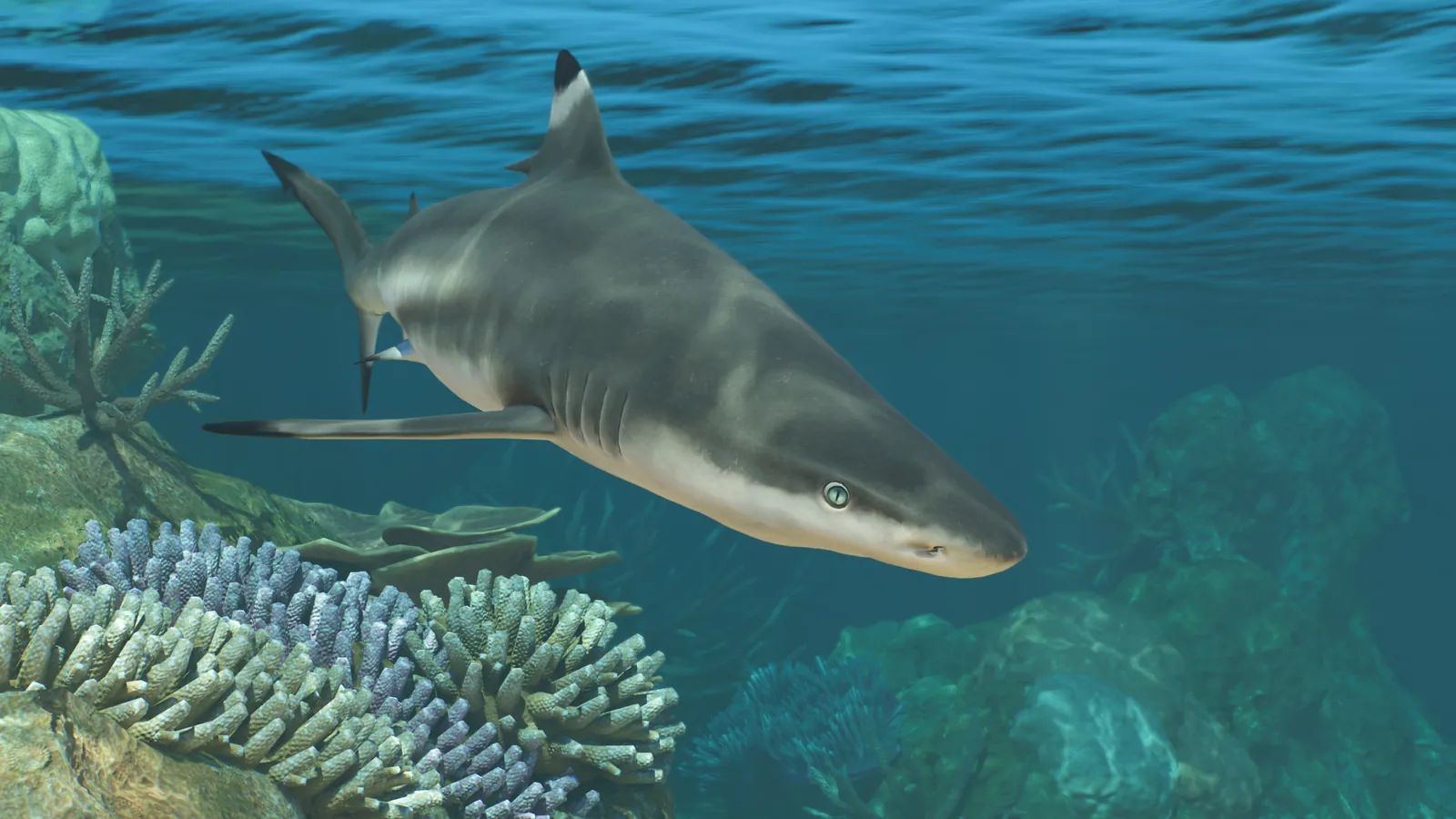
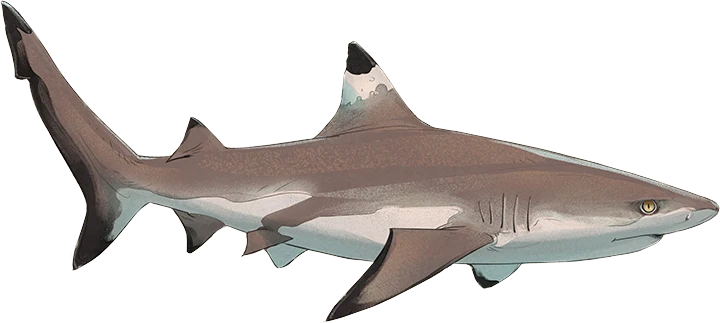
The blacktip reef shark (or Carcharhinus melanopterus, not to be confused with the blacktip shark, Carcharhinus limbatus), is a medium-sized shark living in the reefs and epipelagic waters of the Indo-Pacific Ocean. It has a streamlined body and build very typical of ‘classic’ sharks, with grey-brown skin and a white underside. It is named for its black tipped fins. Male blacktip reef sharks measure from 0.9m to 1.6m in length and weigh 7 to 9kg, while females are larger and heavier at 1m to 1.8m long and 8 to 10kg.
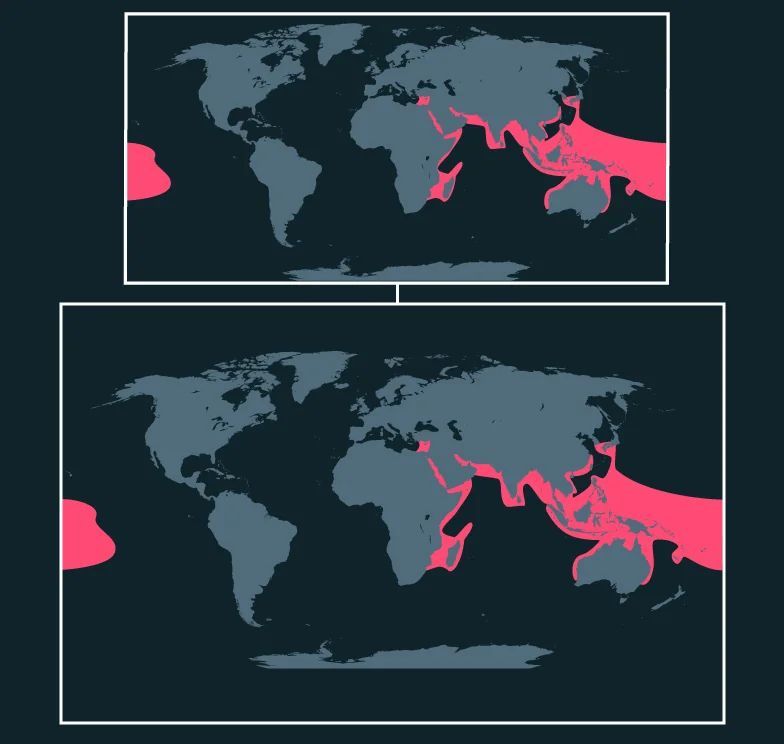
Found in Indo-Pacific reefs and coasts
Regions
- Indian Ocean
- Pacific Ocean
Biomes
- Estuarine
- Mangrove
- Reef
Size & weight
Size
Length: 1.2 to 1.6 m
Measured as Length. The person stands 1.75 m tall for scale.
Habitat requirements
Barrier grade
Grade 2 of 5
Minimum height
1 m minimum
Climbing & water
Climb proof
Not needed
Water barrier
Not allowed
Combine this animal with others in the barrier planner.
Conservation
IUCN Red List
Vulnerable
Least concern
Critically endangered
Blacktip reef sharks are considered Vulnerable, at risk due to overfishing and habitat loss. Although it is not a particularly desirable catch, bycatch may be sold in countries where shark fins and shark meat are part of the diet. Habitat loss due to climate change-induced loss of coral reefs is another big problem for these sharks, destroying both their and their prey species’ habitat. Due to their slow growth and low reproductive rate, any depletion of the population is hard for the blacktip reef shark to recover from. Like many other reef-dependent species, the blacktip reef shark benefits from established marine protected areas and reef restoration efforts. Targeted fishing of blacktip reef sharks is also illegal throughout the Pacific Ocean. Juvenile blacktip reef sharks have successfully been captive bred and reintroduced into South Pacific reef areas, where they have improved the health and stability of reef environments.
Zoopedia sketchbook
Social & reproduction
Keeper notes
The blacktip reef shark is a loosely social species. They often form groups when hunting prey in order to ‘herd’ schools of fish into a small space so they can feed more effectively. They are also known to swim together in groups when not hunting. Mating in blacktip reef sharks takes place in mid-Summer, typically once a year, though in parts of their range resources may be so scarce that pregnancies are only successful every other year. Receptive females swim in sinusoidal patterns near the seafloor, possibly releasing chemical signals to allow males to track them. Courtship of a male involves him biting the female’s gills or fins, matching her swimming pattern and following her for a while, before mating. Afterwards, the male and female part ways. Blacktip reef sharks are viviparous, meaning they give birth to live young instead of laying eggs. Depending on water temperature, gestation lasts between 7 to 11 months. Births take place in shallow areas near the reef, which may be used by multiple sharks, turning them into nursery areas. A female gives birth to 2 to 5 pups. After parturition, females provide no further care for the pups. Juvenile sharks often congregate in large groups in shallow water, and grow rapidly for the first 2 years of their lives, after which growth slows down to 5cm per year, which continues for the rest of their life. Blacktip reef sharks reach sexual maturity at about 1m long, which is usually at 4 or 5 years old for males and 7 to 8 years old for females.
Animal facts
- Blacktip reef shark vision is poor, and prey detection is much more based on movement and smell than sight.
- The blacktip reef shark is curious and non-aggressive. They will often approach divers out of interest.
- Attacks on humans by blacktip reef sharks are non-lethal and minor, usually caused by the shark mistaking feet for prey.
- The blacktip reef shark can swim at speeds of up to 32km/h.
- Blacktip reef sharks are a keystone species in their reef environment, meaning they are essential to the health of the ecosystem and maintenance of a stable food web.
Taxonomy
Class
Order
Family
Genus
Species