Overview
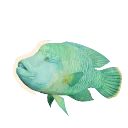
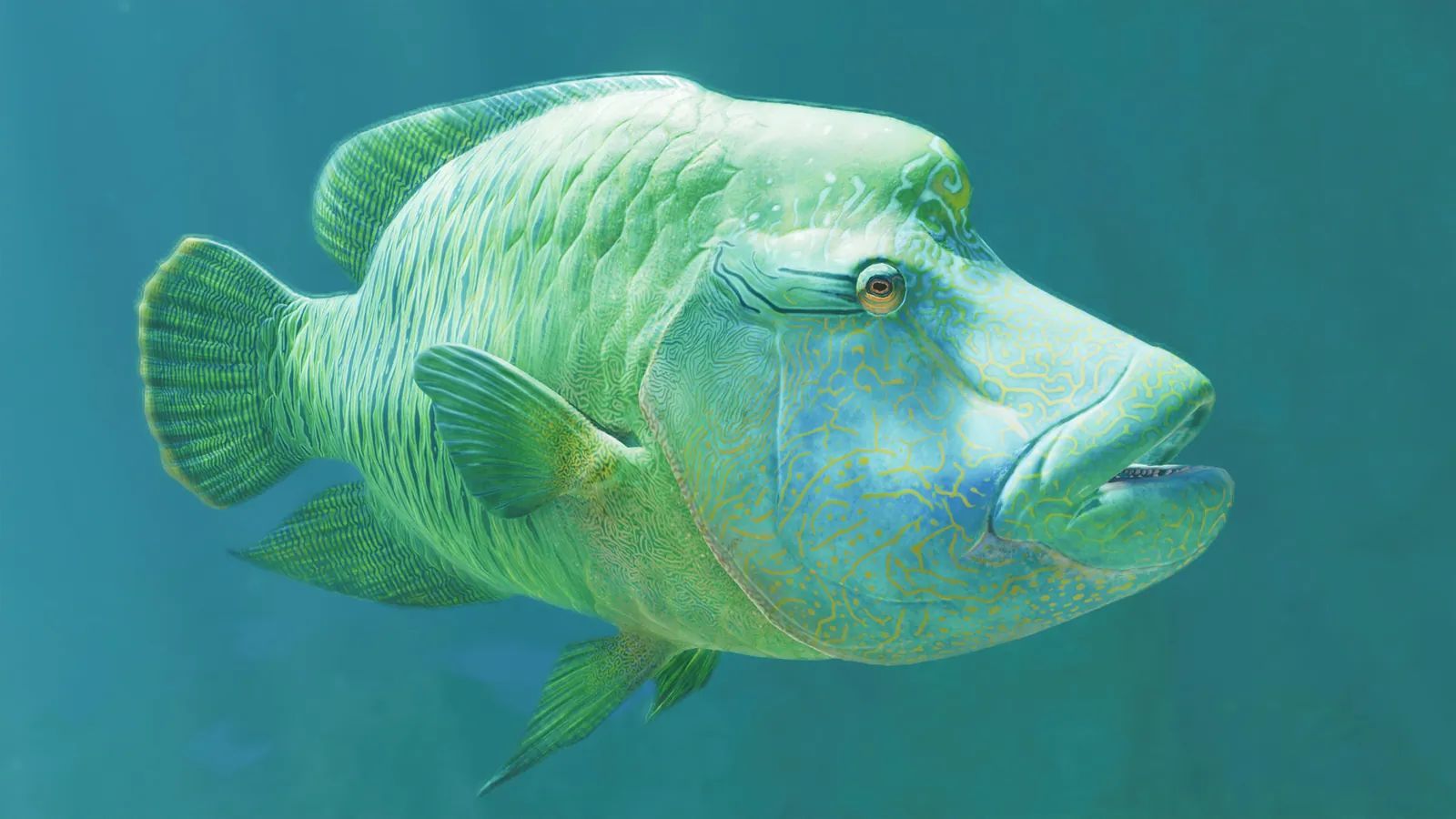
The humphead wrasse (or Cheilinus undulatus), also known as the Napolean wrasse, is a large, reef-dwelling fish found throughout the tropical Indo-Pacific. It inhabits coral reef slopes and lagoons, typically at depths of 1m to 100m where it seeks shelter in reef crevices and feeds on hard-shelled invertebrates. The humphead wrasse is easily recognised by its massive size, thick lips and prominent forehead hump, as well as vibrant blue-green colouration that can vary with age and sex. Females tend to be redder in colour and do not have a forehead hump. Males are significantly larger than females, averaging 100cm to 200cm in length and weighing 15kg to 190kg. Females are smaller, typically reaching 60cm to 110cm and weighing 5kg to 40kg.
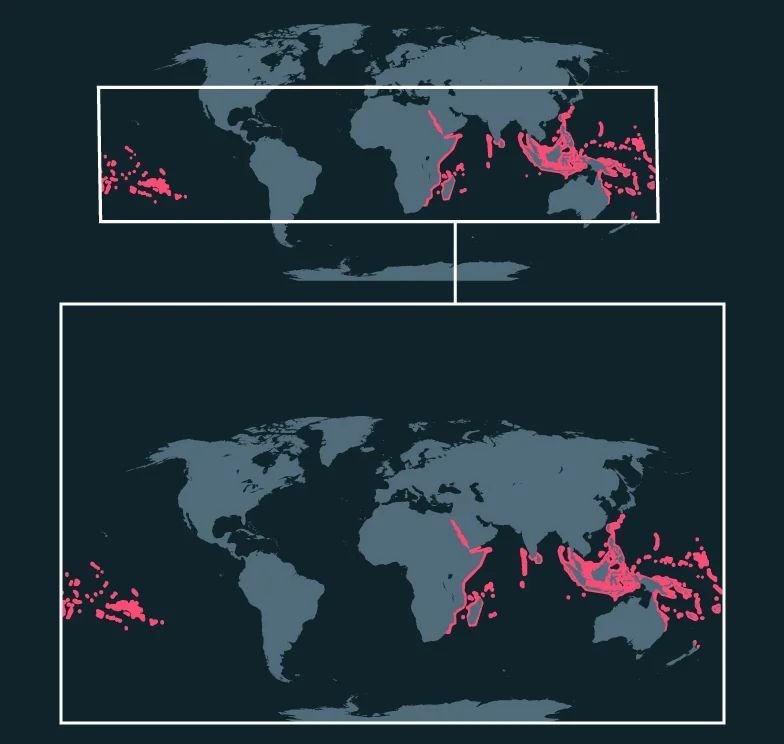
Found in Indo-Pacific reefs and coasts
Regions
- Indian Ocean
- Pacific Ocean
Biomes
- Open sea
- Reef
Size & weight
Size
Nose to rump: 1.45 to 2 m
Measured as Nose to rump. The person stands 1.75 m tall for scale.
Habitat requirements
Barrier grade
Grade 2 of 5
Minimum height
1 m minimum
Climbing & water
Climb proof
Not needed
Water barrier
Not allowed
Combine this animal with others in the barrier planner.
Conservation
IUCN Red List
Endangered
Least concern
Critically endangered
The humphead wrasse is listed as Endangered and faces serious conservation challenges, primarily due to overfishing. Its large size, slow growth, late maturity, and high value in luxury seafood markets make it highly vulnerable to exploitation and high demand in the live reef fish trade. Additionally, their predictable spawning behaviour and tendency to form aggregations make them easy targets during reproductive periods. Habitat degradation from coral reef loss, destructive cyanide fishing, coastal development, and climate change exacerbates these pressures. Some countries have developed buyback-and-release programs, where captured humphead wrasses are reintroduced into protected reef areas. Marine Protected Areas (MPAs) safeguard spawning grounds and critical habitats. Public institutions support captive breeding and awareness to reduce demand for wild-caught individuals. Regulations help control cross-border trade, though enforcement remains uneven. Community-based conservation, improved management of fisheries, and education efforts play vital roles in protecting this species, relying on strong legal protections and collaboration across the species’ range.
Zoopedia sketchbook
Social & reproduction
Keeper notes
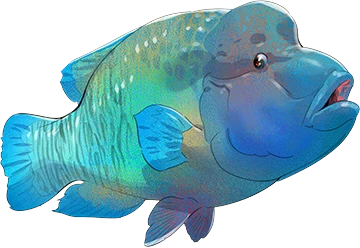
Humphead wrasse are generally solitary, although may live in pairs or small groups temporarily for the purpose of breeding. Breeding season is year-round but typically influenced by lunar cycles. At dawn, males and females gather in spawning aggregations on specific outer reef areas. Dominant males establish temporary territories and engage in courtship displays, using body colour changes and darting movements to attract females. Once a female is receptive, the pair ascends briefly in the water column and simultaneously releases eggs and sperm into the water, where fertilisation occurs externally. The fertilised eggs are pelagic, drifting with ocean currents, and hatch within 18 to 30 hours, depending on temperature. The hatched larvae are tiny, planktonic, and highly vulnerable, feeding on microscopic prey as they grow. After several weeks, surviving juveniles settle onto shallow, sheltered reef areas. Juveniles are secretive and camouflaged, gradually transitioning into more open reef habitats as they grow. The species is protogynous hermaphroditic, meaning all individuals begin life as females. Some females will permanently transition into males over several weeks, usually in the absence of a dominant male, under hormonal and social triggers. The transition results in increased size, a more pronounced head hump, and dominance in spawning events. Humphead wrasses reach sexual maturity around 5 to 7 years of age, typically when they are about 1m long. Most individuals that undergo a change of sex are at least 9 years old.
Animal facts
- Humphead wrasse are resistant to certain toxins and frequently feed on poisonous prey such as box fish and crown-of-thorns starfish.
- Humphead wrasse can change sex; all young wrasse are female and some transition to male as they get older.
- Humphead wrasse are long lived, commonly reaching ages of 30 years and they are thought to be able to live to 50.
- Humphead wrasse will make grunting sounds by rubbing their rasping teeth together and amplifying the sound with their swim bladder.
- Humphead wrasse are ecosystem engineers; they control populations of fish and invertebrates within reef systems and prevent reefs from becoming overrun by poisonous starfish.
Taxonomy
Class
Order
Family
Genus
Species