Overview
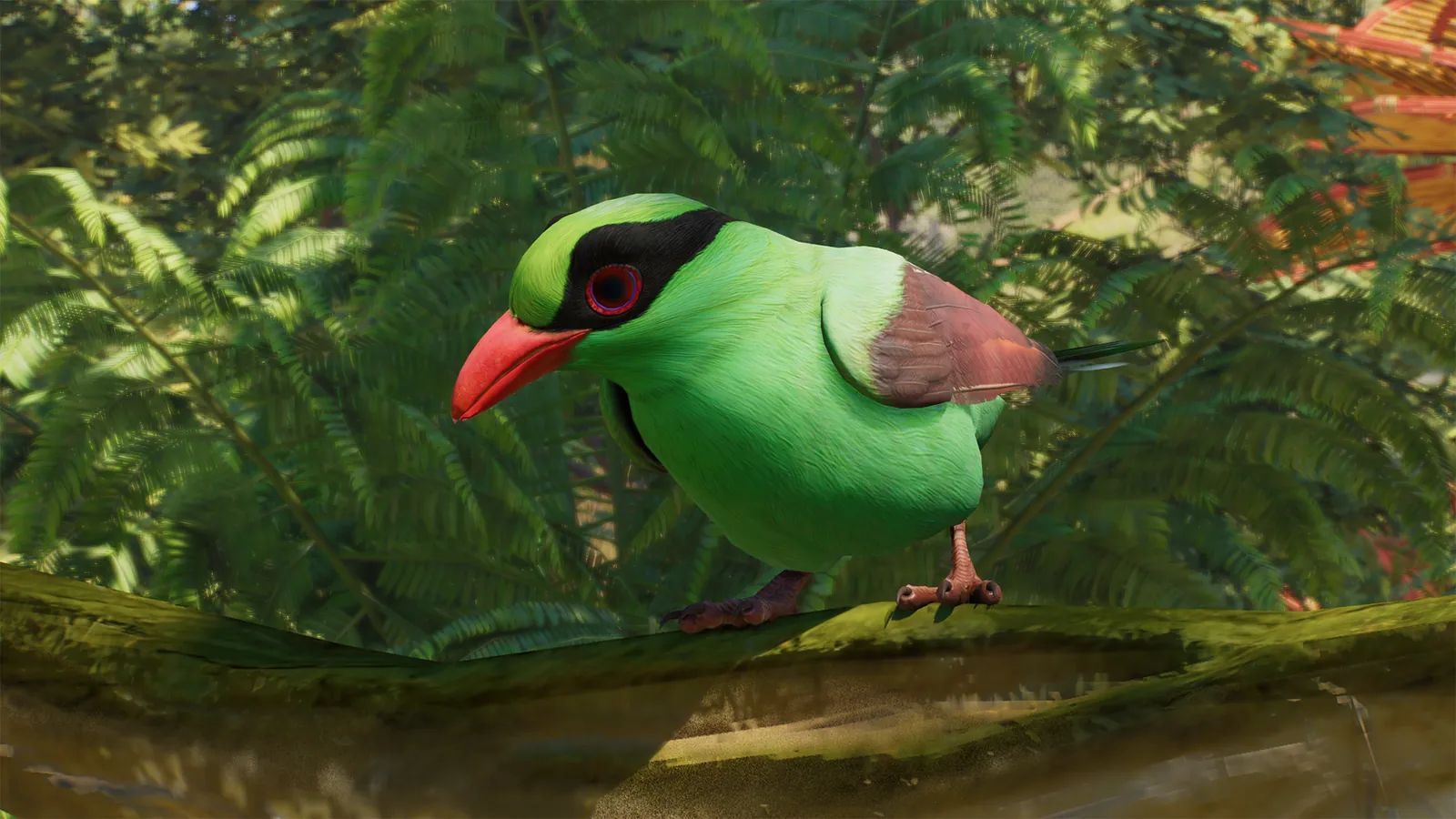
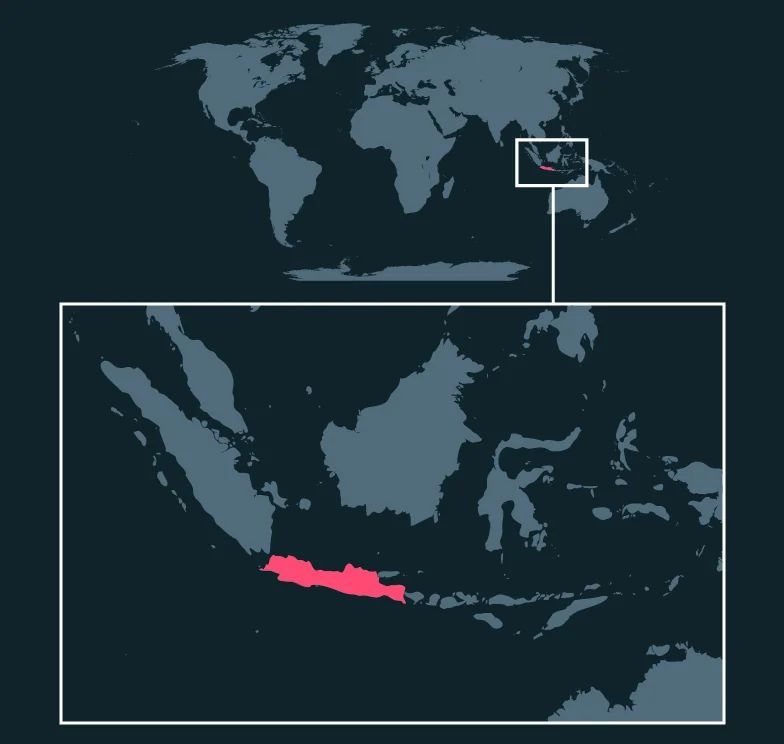
The Javan green magpie (or Cissa thalassina) is an endemic passerine bird species found only on the Indonesian island of Java, primarily in the Western and Central regions. It inhabits dense, humid montane and sub-montane forests with thick vegetation. The species is renowned for its striking bright green plumage and black mask across the eyes, reddish-orange bill, and bluish wings and tail tips. Sexual dimorphism is minimal, but males are generally slightly larger than females. Adults typically measure 29cm to 31cm long, with males weighing around 130g to 140g and females slightly lighter at 120g to 130g.
Found in Southeast Asia
Regions
- Asia
Biomes
- Rainforest
Size & weight
Size
Length: 0.27 m
Measured as Length. The person stands 1.75 m tall for scale.
Habitat requirements
Barrier grade
Grade 1 of 5
Minimum height
1 m minimum
Climbing & water
Climb proof
Not needed
Water barrier
Not allowed
Combine this animal with others in the barrier planner.
Conservation
IUCN Red List
Critically endangered
Least concern
Critically endangered
Wild population
50
50 - 250 in the wild. Rank 1 of 57 species with a known count, smallest first.
The Javan green magpie is Critically Endangered, primarily threatened by illegal trapping and habitat loss. Once widespread, it has been reduced to as few as 50 wild individuals in just four protected areas. Its striking appearance has made it highly sought after in Southeast Asia’s illegal songbird trade. Additionally, deforestation fragments its habitat, making it increasingly difficult for the species to survive in the wild. Concerted conservation efforts are in place to save this bird from extinction. The EAZA focuses on rescuing individuals from the illegal trade and managing captive populations to ensure the species' survival. Many zoos successfully breed Javan green magpies to ensure a healthy insurance population. The Javan green magpie was the face of the ‘Silent Forest’ campaign in European zoos, raising awareness for the songbird trade crisis. In-situ, habitat surveys and monitoring programmes identify viable habitats to guide future strategies, and rehabilitate rescued birds. These combined efforts aim to protect the remaining wild populations and establish a sustainable future for the Javan green magpie.
Zoopedia sketchbook
Social & reproduction
Keeper notes
The Javan green magpie lives in bonded monogamous pairs or small family groups. The Javan green magpie forms long-term monogamous pair bonds. Breeding occurs from October to April, coinciding with high food availability. Courtship involves a combination of vocalisations, mutual preening, and display behaviours, such as tail spreading. Pairs are highly territorial, especially when nesting, to defend their offspring and foraging grounds. Before mating, the birds construct a cup-shaped nest together from twigs, leaves and moss. 2 to 4 eggs are laid into the nest, which are then incubated for 17 to 19 days. Both parents provide food and care for the chicks after hatching, providing insects and small invertebrates. At around 3 to 4 weeks old, the juveniles fledge, but remain near their parents for another few weeks to learn essential foraging skills. Sexual maturity is reached at approximately 2 years old, at which point the young magpies fully disperse and search for their own territory and mate.
Animal facts
- The Javan green magpie is highly vocal, using whistles and calls to maintain contact with mates and family members in dense forest cover.
- The Javan green magpie prefers cool, humid montane forests rather than lowland habitats.
- The Javan green magpie’s nests are typically built 2m to 3m above ground in dense foliage using twigs, bamboo leaves, and moss to provide camouflage.
- Javan green magpies are corvids, thus they are intelligent, showing problem-solving skills and adaptability in captivity.
- Javan green magpies can temporarily lose their green colour if stressed or poorly fed in captivity, as carotenoids in their diet are essential for plumage colouration.
Taxonomy
Class
Order
Family
Genus
Species