Overview
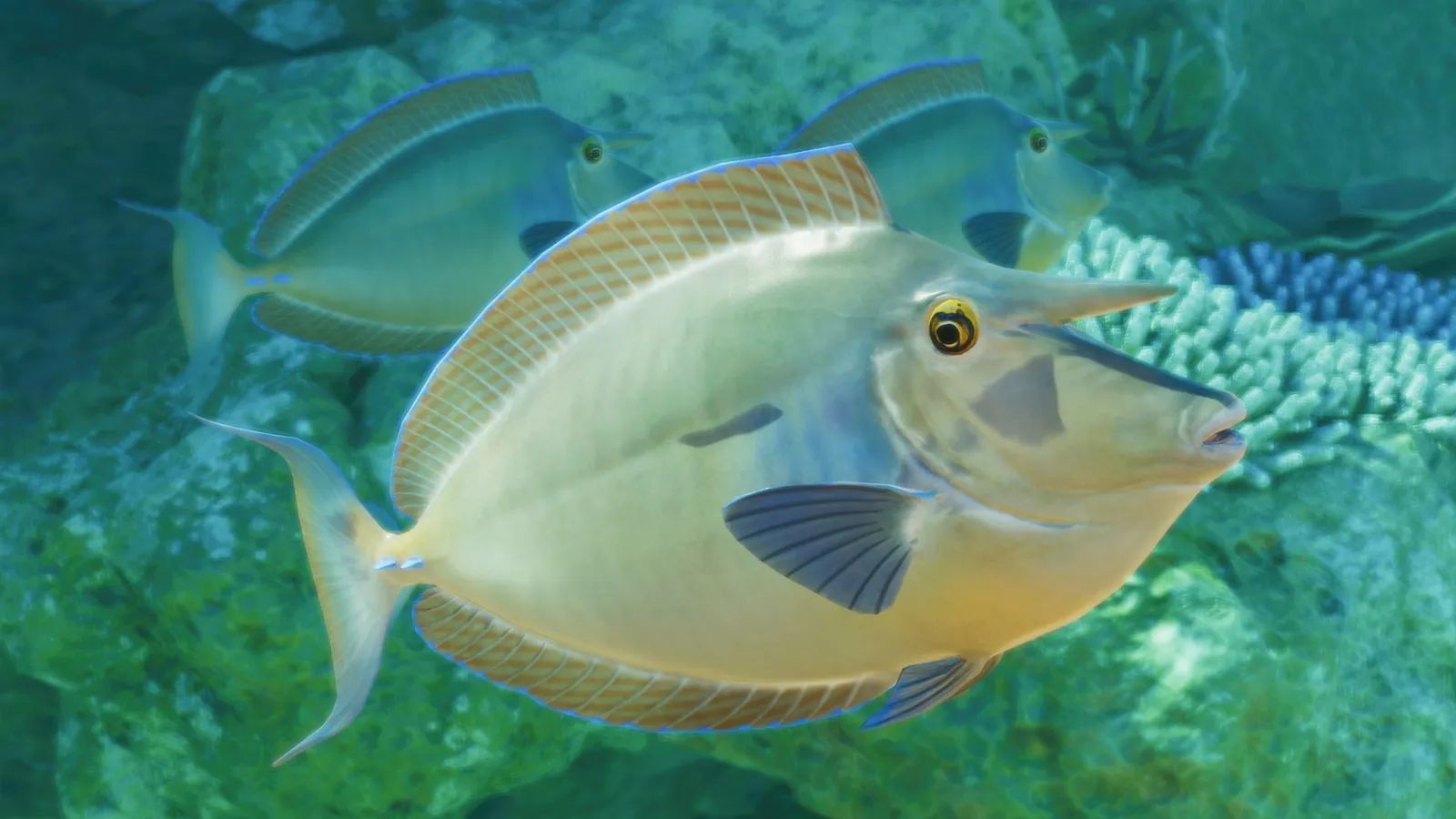
The bluespine unicornfish (or Naso unicornis) inhabits tropical coral reefs, reef slopes, and outer reef drop-offs, where it occupies both shallow coastal waters and deeper reef zones. Its range is extensive across the Indo-Pacific, stretching from the east coast of Africa and the Red Sea through Southeast Asia to Australia, Japan, and the islands of the central Pacific. It has a streamlined, laterally compressed body and grey-blue to olive colouration, with distinctive blue caudal spines near the tail. Mature individuals develop a characteristic horn-like projection on the forehead, giving the species its common name and making it easily recognisable among reef fishes. The bluespine unicornfish typically reaches 45cm to 60cm in length and weighs 3kg to 5.5kg. Males and females are similar in size and appearance, but males have longer horns, fin spines and fin filaments than females.
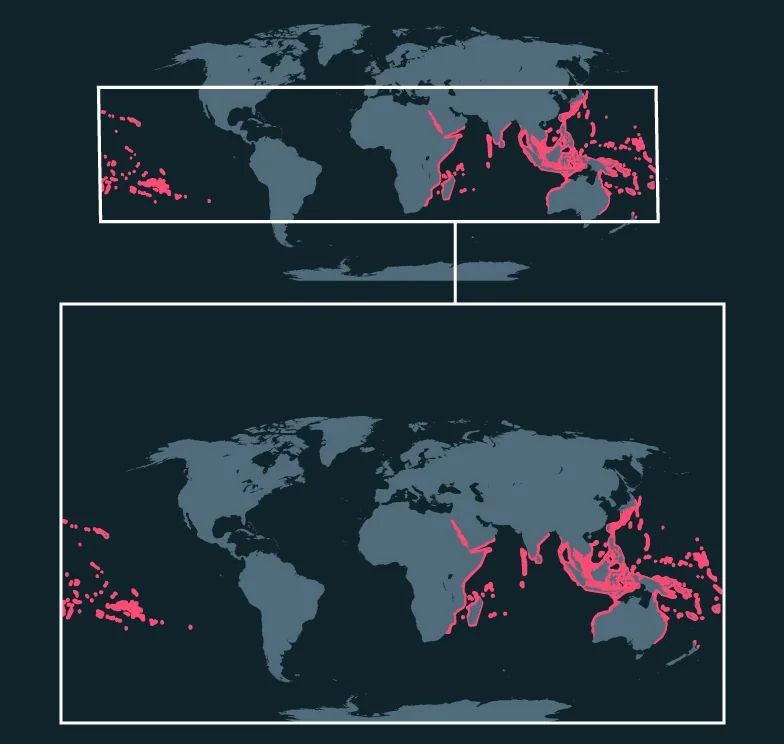
Found in Indo-Pacific reefs and coasts
Regions
- Indian Ocean
- Pacific Ocean
Biomes
- Reef
Conservation
IUCN Red List
Least concern
Least concern
Critically endangered
The bluespine unicornfish is a species of Least Concern, thanks to their broad Indo-Pacific distribution and generally stable populations. They face intensive fishing pressure because of their size and cultural importance as food fish, frequently ranked among the most heavily harvested reef species by biomass, indicating sustained exploitation that can reduce local abundance over time. Bluespine unicornfish are also vulnerable to coral reef degradation driven by climate change, habitat loss, and declining reef complexity. This species has a long lifespan and slow population turnover, making recovery from depletion difficult. Rather than species-specific reintroduction, mitigation efforts focus on management of reefs and fisheries, namely: the establishment of marine protected areas, enforcement of catch limits and fishing permits, and broader reef conservation initiatives. Improved monitoring of reef fish populations, community-based fisheries management, and climate adaptation strategies for coral reefs are all part of the work to maintain healthy bluespine unicornfish populations into the future.
Zoopedia sketchbook
Social & reproduction
Keeper notes
Bluespine unicornfish are generally peaceful and are often observed schooling, particularly as juveniles. Adults may be seen singly, in pairs, or in small groups and are capable of forming large feeding aggregations. They show limited territorial behaviour but may defend feeding areas from similar herbivores. Breeding season varies by region. As the breeding season approaches, adults gather in temporary spawning aggregations, usually at reef edges, passes, or drop-offs where currents are strong. Courtship is relatively brief and subtle, involving increased swimming activity, alignment within groups, and synchronised movements rather than elaborate displays. At the moment of spawning, multiple males and females release sperm and eggs simultaneously into the water column, increasing fertilisation success while reducing individual predation risk. Following fertilisation, the tiny eggs drift freely in the plankton and typically hatch within 24 to 48 hours. The larvae then enter a pelagic larval stage that can last several weeks, during which they are widely dispersed by ocean currents and feed on microscopic plankton. This stage has extremely high mortality, with only a small fraction surviving to settlement. Juveniles eventually settle onto coral reefs, where they adopt a benthic, algae-grazing lifestyle and gradually develop adult body shape and colouration. Growth is relatively slow, with sexual maturity reached at around 3 to 5 years of age, and individuals may live for several decades, repeating seasonal spawning cycles throughout their long lifespan.
Animal facts
- The bluespine unicornfish has leather-like skin caused by their small, non-overlapping scales.
- Bluespine unicornfish mainly eat coarse, leafy brown algae; a key ecological role because this helps control algal growth on coral reefs.
- Adult bluespine unicornfish inhabit reefs, channels, lagoons and surge zones from shallow waters to depths around 180m, while juveniles tend to stay in protected shallow bays or harbours.
- In Pacific Island cultures, the bluespine unicornfish has been an important food fish historically, and appears in art, stamps and logos.
- In Hawaii, the bluespine unicornfish is culturally significant and is called the ‘kala’.
Taxonomy
Class
Order
Family
Genus
Species