Overview
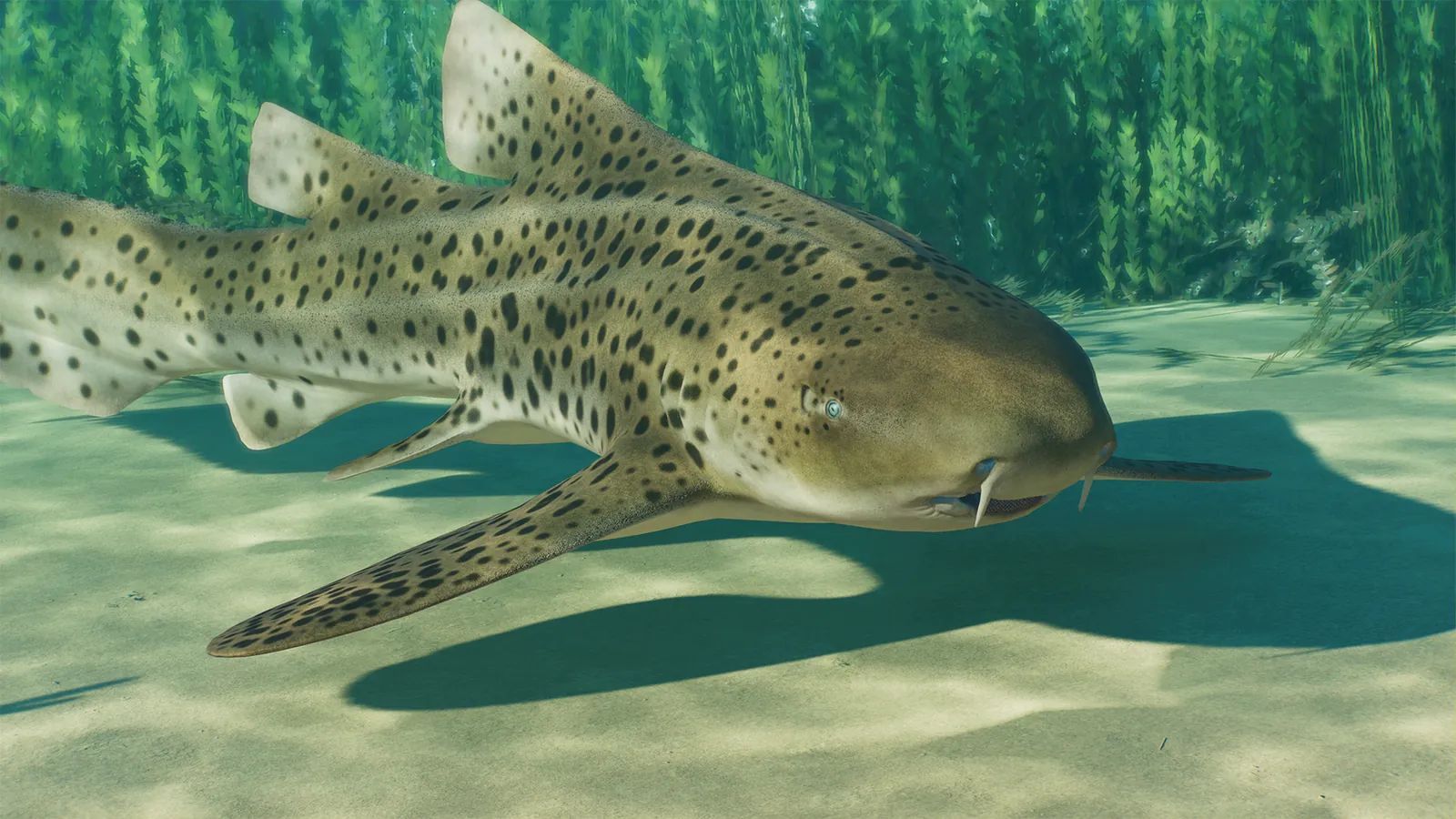
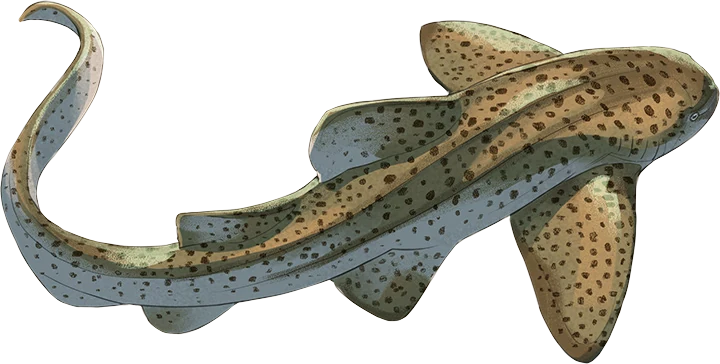
The Indo-Pacific leopard shark (or Stegostoma tigrinum), also known as the zebra shark, is a distinctive and slow-moving benthic shark. It is found throughout the tropical Indo-Pacific region from the Red Sea and eastern coast of Africa to Southeast Asia, northern Australia, and as far north as southern Japan. It inhabits coral reefs, sandy lagoons, and seagrass beds at depths from the surface to 60m. As juveniles, these sharks have black and white bands, hence their former common name, ‘zebra shark,’ but as they mature, their colouration changes to a pale yellow or tan body covered in dark leopard-like spots. They measure between 2.0m and 2.7m long with females generally larger than males, and weigh between 30kg to 50kg.
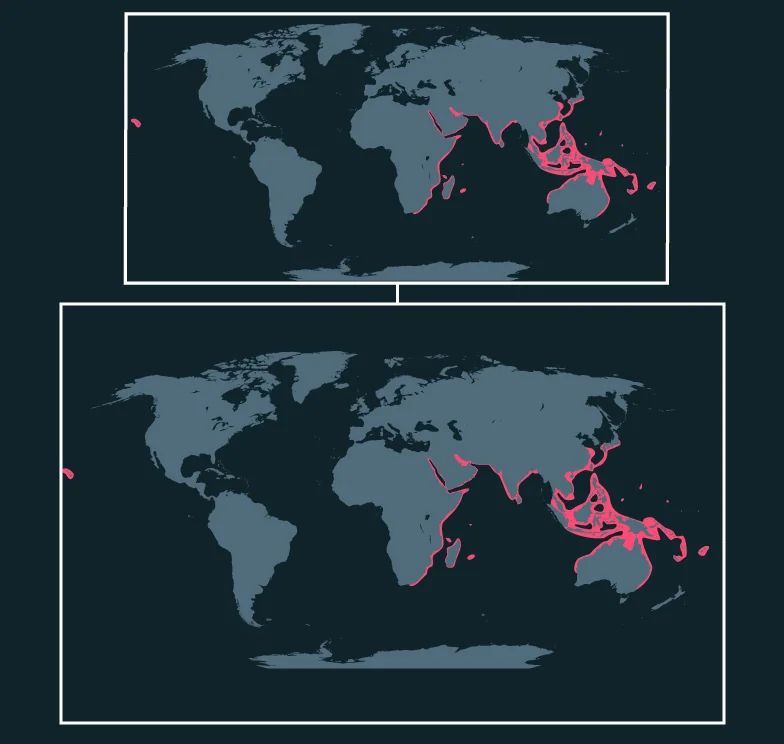
Found in Indo-Pacific reefs and lagoons
Regions
- Indian Ocean
- Pacific Ocean
Biomes
- Estuarine
- Mangrove
- Open sea
- Reef
Size & weight
Size
Length: 1.2 to 1.6 m
Measured as Length. The person stands 1.75 m tall for scale.
Habitat requirements
Barrier grade
Grade 2 of 5
Minimum height
1 m minimum
Climbing & water
Climb proof
Not needed
Water barrier
Not allowed
Combine this animal with others in the barrier planner.
Conservation
IUCN Red List
Endangered
Least concern
Critically endangered
The Indo-Pacific leopard shark is classified as Endangered. Historically abundant in tropical coral reef and lagoon habitats throughout the Indo-Pacific, the species has suffered sharp population declines due to overfishing, particularly for its meat, fins, and liver oil. It is often caught as bycatch when targeting other marine animals. Its slow growth, late sexual maturity, and low reproductive rate make it especially vulnerable to exploitation. It is further threatened by degradation of coral reef ecosystems caused by coastal development, pollution, and climate change. Marine protected areas (MPAs) safeguard critical reef habitats and nursery zones. Public aquariums maintain successful captive breeding programs, reducing wild capture and providing valuable data on reproduction, growth, and health. Education programs raise awareness of the species among coastal communities, while international trade in the species is regulated and monitored. While challenges remain, efforts to improve fisheries management, habitat protection, and public engagement offer hope for the long-term survival of the Indo-Pacific leopard shark.
Zoopedia sketchbook
Social & reproduction
Keeper notes
Indo-Pacific leopard sharks are usually solitary, but may gather in large groups on occasion for reasons unknown. The Indo-Pacific leopard can breed year-round. During mating, males grasp the females using their claspers to initiate copulation. Unlike some shark species, the Indo-Pacific leopard shark lays eggs rather than giving birth to live young. Females are known to store sperm for extended periods, allowing fertilisation to occur long after mating; a trait that has led to successful reproduction in isolated females within aquariums. Females typically lay eggs in pairs, encased in large, tough, fibrous egg capsules that anchor to the seafloor or reef structures. Eggs incubate for 4 to 6 months, depending on water temperature, after which fully formed juvenile sharks hatch, measuring around 20cm to 25cm in length. Leopard sharks grow slowly and have a relatively long lifespan, living up to 25 to 30 years in captivity. They reach sexual maturity at approximately 6 to 8 years for males and 8 to 10 years for females, when they reach a size of around 1.5m to 2m. Growth continues gradually even after maturity, although it slows significantly with age.
Animal facts
- Unlike many shark species, Indo-Pacific leopard sharks do not need to swim to breathe and may remain stationary for hours while breathing through ‘buccal pumping’.
- Indo-Pacific leopard sharks have crushing teeth and prefer to feed on hard-shelled prey like crustaceans and molluscs.
- The long, flexible body of the Indo-Pacific leopard shark allows them to get into small crevices in the reef to feed.
- The eggs of the Indo-Pacific leopard shark are very large, each one measures 17cm to 22cm long.
- Indo-Pacific leopard sharks are very slow swimmers and are usually cruising at speeds of 2km/h.
Taxonomy
Class
Order
Family
Genus
Species