Overview
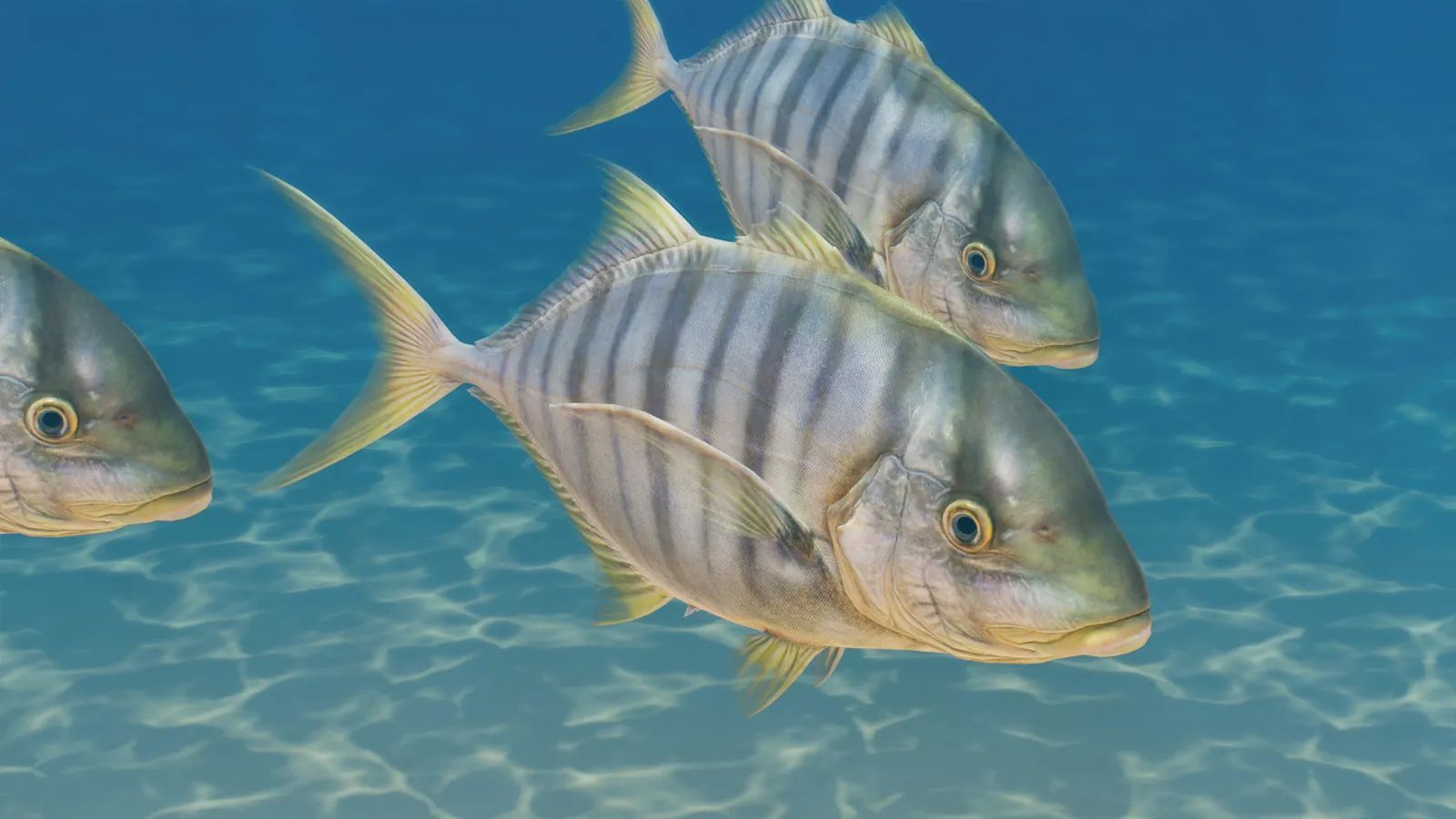
The golden trevally (or Gnathanodon speciosus) is a marine fish found throughout the tropical and subtropical waters of the Indo-Pacific region, ranging from the Red Sea and East Africa to the central Pacific islands. It typically inhabits coastal areas, including lagoons, coral reefs, and sandy/muddy beds, often forming small schools in shallow waters. The species has a bright golden-yellow body in juveniles, with several distinct vertical black stripes. The stripes fade as they mature, turning a silvery-golden colour. Golden trevallies have a laterally flattened body, a sharp head profile, and a forked tail. Adults reach average lengths of 70cm to 100cm and weigh 6kg to 10kg.
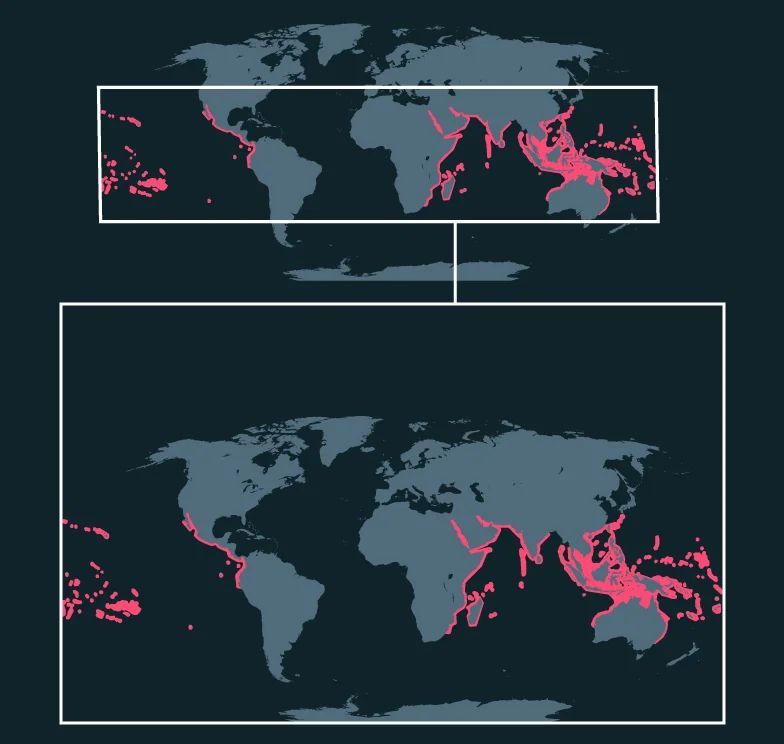
Found in Indo-Pacific reefs and coasts
Regions
- Indian Ocean
- Pacific Ocean
Biomes
- Estuarine
- Reef
Conservation
IUCN Red List
Least concern
Least concern
Critically endangered
Despite its current status as ‘Least Concern’ on the IUCN Red List, the golden trevally faces several conservation challenges. Overfishing in regions where it is a popular target for both commercial and recreational fisheries, poses a significant threat. Additionally, habitat degradation, such as coral reef destruction and pollution, can impact spawning and nursery areas. These pressures reduce population sizes and disrupt their ecological roles. To address these concerns, various conservation initiatives are underway. In some regions, fisheries management practices have been implemented to regulate catch sizes and seasons, aiming to prevent overfishing. Marine protected areas (MPAs) have been established in critical habitats to allow populations to recover. Furthermore, research on aquaculture techniques is being conducted to reduce pressure on wild stocks. For instance, breakthroughs in larval culture have shown promise for sustainable farming of golden trevally. These combined efforts aim to ensure the long-term viability of the species.
Zoopedia sketchbook
Social & reproduction
Keeper notes
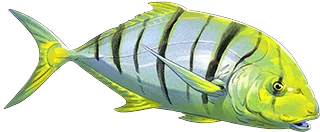
Golden trevally juveniles are schooling fish, and adults are known to school at times as well, and form aggregations while spawning. During the spawning season, which typically peaks in the warmer months around April and May, the golden trevally gather in large aggregations near coastal areas or over coral reefs. Courtship involves synchronised swimming and display behaviours in schools, where males often compete for the attention of females. This schooling and display activity likely helps increase the chances of successful fertilisation while also offering some protection from predators. Reproduction in golden trevallies is oviparous; they release eggs and sperm into the water column for external fertilisation. Each female can release hundreds of thousands of eggs, which drift with the currents until hatching. The larvae are planktonic, feeding on microorganisms before gradually developing into juveniles. Juveniles adopt a bright yellow colouration with vertical black stripes, which provides camouflage and signals their social behaviour, schooling together and sometimes following larger marine animals for protection. As they mature over 2 to 3 years, their colouration fades to a silvery-gold, and they gradually transition to solitary or smaller-group hunting behaviour.
Animal facts
- Golden trevallies possess a protractile mouth, allowing them to suck prey such as crustaceans, molluscs, and small fish from the sand or reef.
- Juvenile golden trevallies are known to have mutualistic relationships with sharks, swimming in front of them for protection and removing parasites from the shark’s skin in return.
- Golden trevallies are farmed in countries like Singapore, Taiwan, Malaysia, and Indonesia for meat and for the aquarium industry.
- Golden trevallies are sought after by sport anglers due to their strong fighting ability.
- Golden trevallies can grow up to 120cm and weigh up to 15kg, making them one of the larger species in the trevally family.
Taxonomy
Class
Order
Family
Genus
Species