Overview
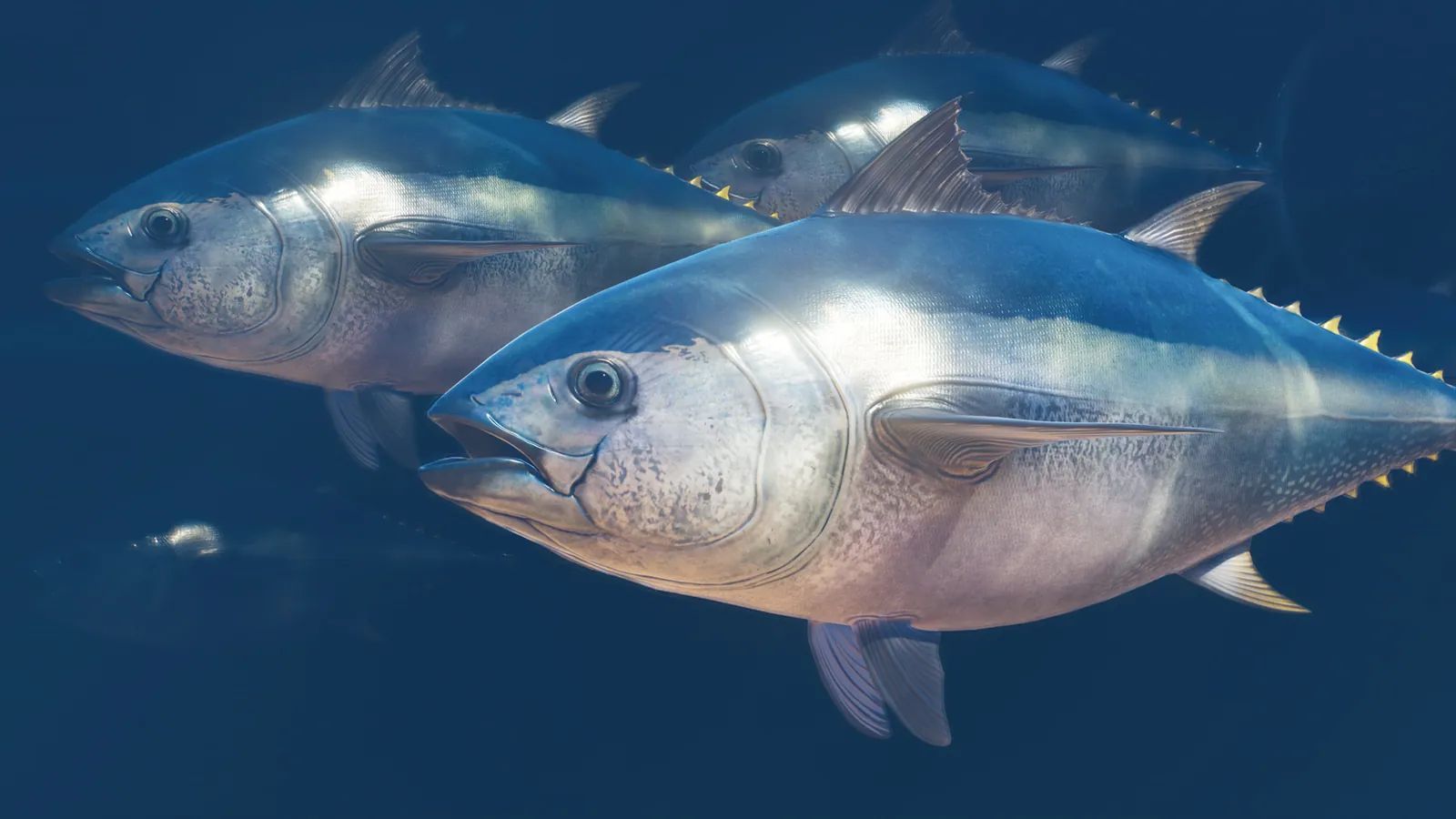
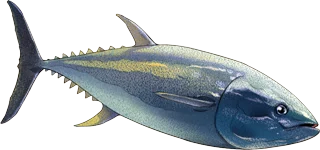
The Pacific bluefin tuna (or Thunnus orientalis) is a large, migratory fish found throughout the North Pacific Ocean, with a range extending from the waters off Japan and Korea, across to the western coast of North America, from Alaska down to Mexico. They inhabit pelagic, open-ocean environments. The Pacific bluefin is a streamlined, metallic-blue fish with a dark blue-to-black back, silver underside, and a series of yellow finlets running from the dorsal to the tail. They measure 1m to 2m in length and 60kg to 200kg in weight on average.
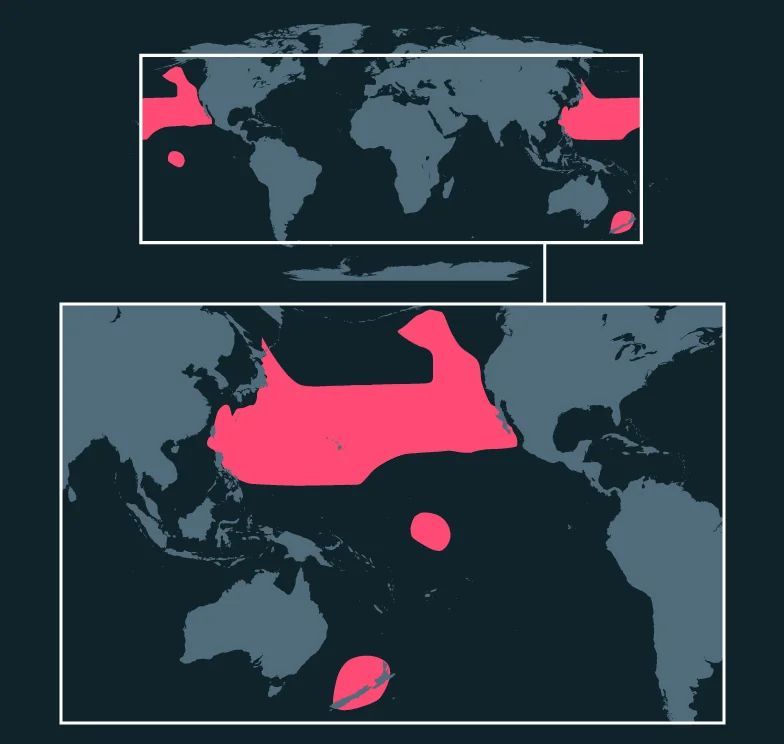
Found in Pacific Ocean
Regions
- Pacific Ocean
Biomes

Habitat needs
Minimum area
Deep water
200 m² + 60 m² per extra animal
Environment
Temperature
17 to 26°C
Plant coverage
0-10%
Water salinity
Saltwater
Enclosure
Aquarium
Diet and enrichment
Diet
- Fish Cuts
- Squid
Conservation
IUCN Red List
Near threatened
Least concern
Critically endangered
The Pacific bluefin is considered a Near Threatened species. This species has historically been caught at rates far beyond sustainable levels. Overfishing, particularly of juveniles that have not yet reached reproductive maturity, has reduced spawning stock biomass to less than 5% of historic levels. Limited spawning areas in the western Pacific make the species especially vulnerable, as disturbances from fishing, habitat degradation and climate change disproportionately affect population stability. Long migrations across international waters require shared responsibility by multiple nations with differing economic interests. International management bodies have implemented stricter catch quotas, seasonal closures, and size limits to protect juvenile fish and allow more individuals to reach maturity. Successful spawning and rearing of Pacific bluefin in captivity in Japan, reduces reliance on wild-caught fish. Ongoing stock assessment programs track migrations and improve population modelling. Tuna stocks remain low, but recent assessments suggest the population is beginning to rebound under combined conservation and management efforts.
Zoopedia sketchbook
Social & reproduction
Keeper notes
Juvenile Pacific bluefin often form large schools, sometimes mixed with other tuna species, which helps reduce predation risk and improves foraging efficiency. As they grow older, their schooling behaviour becomes less tight, but they still travel in groups or loose aggregations, particularly during feeding and migration. Spawning takes place between April and August, when water temperatures reach around 24 to 29°C. The Pacific bluefin tuna has a complex life cycle shaped by its migratory nature and reliance on specific spawning grounds. Courtship and mating occur in the warm waters of the western Pacific, primarily near the coast of Japan, the East China Sea, and the Philippine Sea. Courtship involves group spawning behaviour, with males and females swimming in circles or close proximity before the female releases her eggs into the open water. Fertilisation is external, with males simultaneously releasing sperm. A single large female can release millions of eggs in one spawning season, ensuring high reproductive potential, though most larvae do not survive to adulthood. Once fertilised, the eggs hatch within about 24 to 48 hours, producing tiny larvae that rely on yolk sacs for nourishment before shifting to planktonic food sources. Juveniles remain in the western Pacific for a time, but many undertake the trans-Pacific migration to the coasts of California and Mexico, where they feed and grow rapidly. Around age 5, they reach sexual maturity and eventually return to the western Pacific to spawn.
Group and breeding
Group
Shoal size
10-30
Lifecycle and breeding
Life expectancy
15 years
Age of sexual maturity
5 years
Mating season
Summer
Animal facts
- Pacific bluefin tuna can reach lengths of 3m and weigh up to 450kg.
- Some Pacific bluefin tuna undertake long migrations, travelling thousands of kilometres from the Western Pacific (Asia) to the Eastern Pacific (California and Mexico).
- Pacific bluefin tunas are partially endothermic (warm-bodied); they can maintain body temperatures above the surrounding water, which aids in speed, endurance, and the ability to hunt in cooler waters.
- Pacific bluefin tuna spawn in specific areas, mainly off the coasts of Japan (western Pacific), in the Philippine Sea, and Sea of Japan.
- Pacific bluefin tuna are highly prized for sushi and sashimi, particularly for their fatty belly part (‘toro’). Large specimens fetch very high prices in fish markets, especially in Japan.
Taxonomy
Class
Order
Family
Genus
Species