Overview
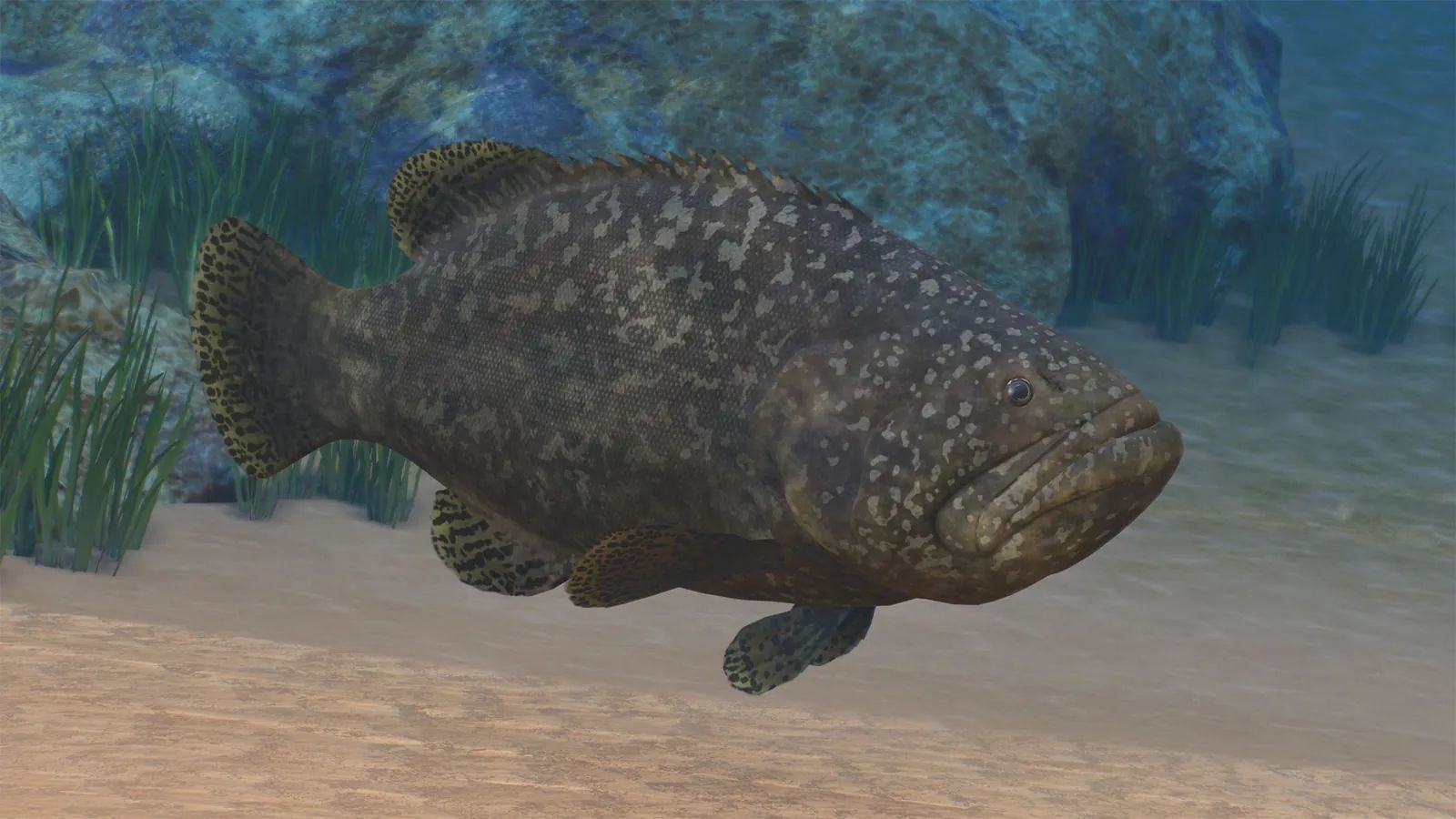
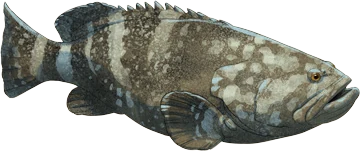
The giant grouper (or Epinephelus lanceolatus) is also known as the Queensland or brindle grouper and inhabits tropical and subtropical marine waters of the Indo-Pacific region, ranging from the Red Sea and East Africa across the Indian Ocean to Southeast Asia, northern Australia, and the western Pacific islands. Giant groupers are typically found in coral reefs, rocky outcrops, lagoons, and deep reef drop-offs. They have a massive, robust body, a broad head with a large mouth and a rounded tail. Their colouration is usually mottled brown, olive, or grey with darker blotches, providing camouflage among reefs. Adults commonly reach 1.5m to 2m in length and they typically weigh 200kg to 400kg.
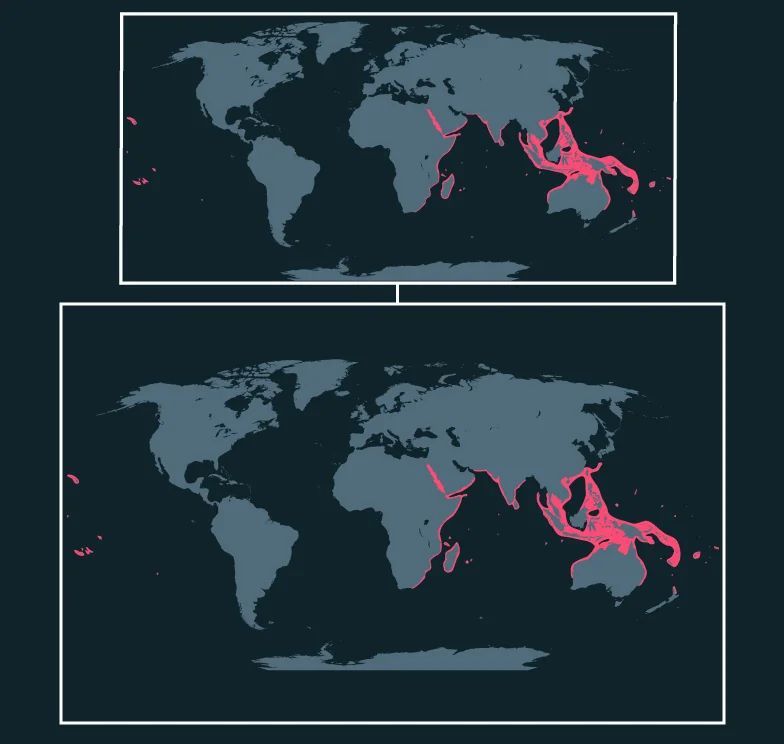
Found in Indo-Pacific reefs and coasts
Regions
- Indian Ocean
- Pacific Ocean
Biomes
- Estuarine
- Mangrove
- Reef
Size & weight
Size
Length: 1 m
Measured as Length. The person stands 1.75 m tall for scale.
Habitat requirements
Barrier grade
Grade 2 of 5
Minimum height
1 m minimum
Climbing & water
Climb proof
Not needed
Water barrier
Not allowed
Combine this animal with others in the barrier planner.
Conservation
IUCN Red List
Data deficient
Least concern
Critically endangered
The giant grouper is currently classified as Data Deficient. There is insufficient long-term data to quantify global population trends, but overall decline is indicated. Overfishing for the live reef food fish trade has driven significant depletion of local stocks. The degradation of coral reefs and loss of mangrove nursery habitats due to coastal development, pollution, destructive fishing and climate change reduces essential shelter and feeding grounds for both juveniles and adults, limiting the species’ ability to recover naturally. Research efforts focus on sustainable aquaculture development and habitat protection at local and regional scales. Captive breeding and larval-rearing techniques are advancing to support sustainable commercial production and reduce pressure on wild stocks. Meanwhile, regions are working to protect coral reef and mangrove ecosystems through marine protected areas, environmental monitoring, and regulatory frameworks. Although population monitoring remains sparse, these conservation actions aim to lessen fishing pressure and preserve the ecological roles of this iconic reef predator.
Zoopedia sketchbook
Social & reproduction
Keeper notes
Giant groupers are solitary fish, although they may form temporary aggregations during spawning. The giant grouper migrates to traditional spawning sites in Spring and Summer. Adults are generally solitary, but form spawning aggregations during specific times of year, linked to lunar cycles, water temperature, and seasonal currents. Courtship is relatively brief and involves changes in behaviour and colouration, such as increased activity, circling, and body posturing. Giant groupers are broadcast spawners: males and females release sperm and eggs into the water column simultaneously, where fertilisation occurs externally. Like many groupers, they are believed to be protogynous hermaphrodites, meaning individuals begin life as females and some later change sex to become males, usually when they reach a large size or when males are scarce in the population. After fertilisation, the pelagic eggs hatch within about 24 to 48 hours, producing transparent larvae that drift with ocean currents for several weeks. As they grow, juveniles settle into shallow coastal habitats such as mangroves, estuaries, and sheltered reefs, which provide protection and abundant food. Juvenile giant groupers have distinctly different colouration from adults, often showing yellowish tones and bold dark markings. Growth is slow but long-term, and individuals may take many years to reach sexual maturity.
Animal facts
- The giant grouper is the largest species of bony reef fish in the world.
- The largest giant groupers can reach lengths of 2.7m and weigh 450kg.
- All giant groupers are born female; the largest females later change into males, usually when social conditions require it.
- Juvenile giant groupers are bright yellow with irregular dark spots, which helps camouflage them among reef crevices and coral rubble.
- As apex predators, giant groupers regulate populations of mid-level predators, maintaining reef balance and healthy prey populations.
Taxonomy
Class
Order
Family
Genus
Species