Overview
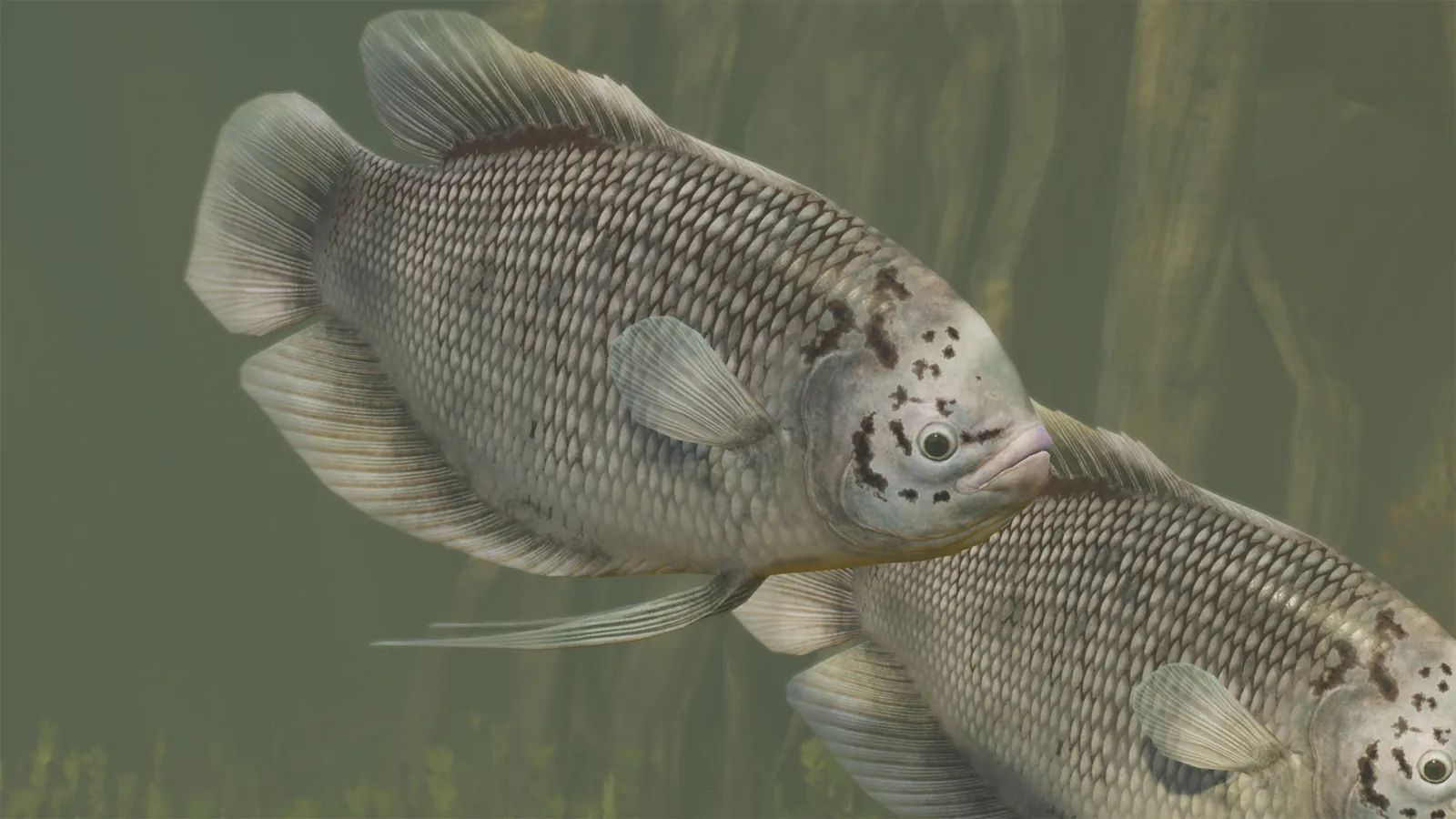
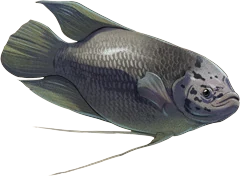
The giant gourami (or Osphronemus goramy) is a large freshwater fish native to Southeast Asia, particularly the Mekong and Chao Phraya river basins, and is now widely introduced across Asia, Africa, and parts of Australia for aquaculture and ornamental purposes. It inhabits slow-moving rivers, swamps, lakes, and man-made reservoirs, preferring warm, shallow waters rich in vegetation. This species is easily recognisable by its laterally compressed, deep body, long dorsal and anal fins and rounded tail. Juveniles are silver with vertical stripes, while adults often lose the stripes and develop a more uniform pale grey, yellowish, or pinkish colouration. Males may develop a pronounced forehead hump with age. Giant gouramis are among the largest members of the gourami family, reaching an average size of 45cm to 60cm and weight of 4kg to 6kg.
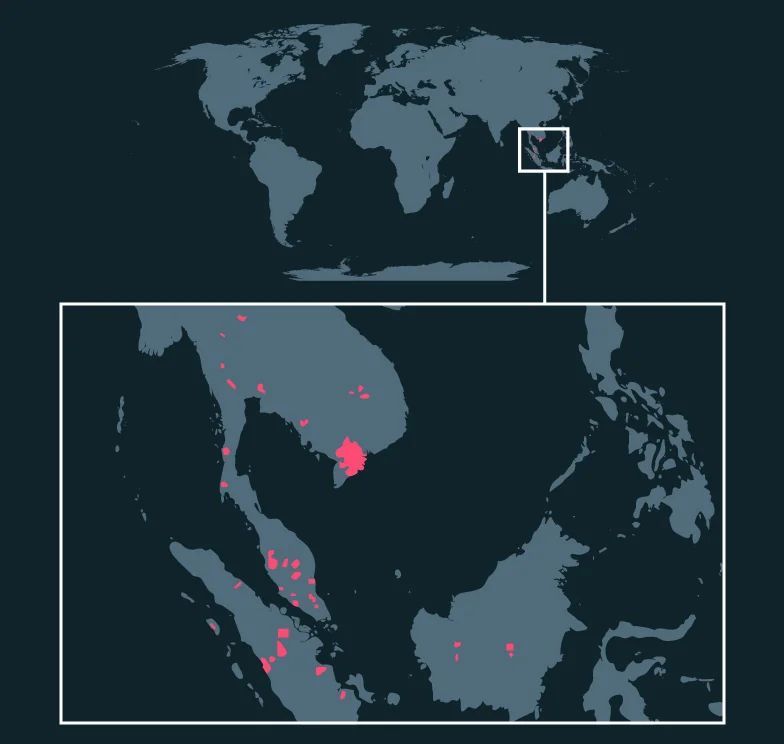
Found in Asia
Regions
- Asia
Biomes
- Lakes & rivers
Conservation
IUCN Red List
Least concern
Least concern
Critically endangered
The giant gourami faces conservation struggles despite being a species of Least Concern. In Southeast Asia, its habitats of slow-moving rivers, lakes, and wetlands are increasingly threatened. Conversion of wetlands for agriculture, deforestation, pollution, and dam construction all contribute to habitat degradation, while sedimentation and fluctuating water temperatures negatively affect spawning and larval growth. Overfishing also adds pressure, as does the risk of disease outbreaks in heavily farmed aquaculture settings. Researchers are working to standardise and improve breeding techniques, fry production, broodfish nutrition, and alternative feed options. Ecological intensification strategies such as co-culturing gouramis with aquatic plants are proving successful. Disease is managed with ongoing surveillance and regulation to minimise viral outbreaks. Ecological risk assessments regulate introductions outside its native range and avoid negative impacts on non-native ecosystems. Together, these approaches aim to balance the importance of giant gourami in aquaculture with the need to protect its long-term ecological and economic viability.
Zoopedia sketchbook
Social & reproduction
Keeper notes
Giant gouramis are moderately social: juveniles often shoal together, but adults become more territorial and may not live in close proximity to others. Breeding season is between April and August, and follows a reproductive strategy typical of many gourami species. During courtship, the male selects a shallow, sheltered area and constructs a large floating bubble nest using plant material and mucus. He actively courts females by displaying his body, spreading his fins, and circling them near the nest. When a receptive female approaches, the pair engages in spawning embraces, with the male wrapping his body around the female to facilitate the release and fertilisation of eggs. The fertilised eggs, which are buoyant, rise into the nest where the male guards them vigilantly against intruders. After spawning, females typically withdraw while the male assumes the role of caretaker. He maintains the nest, repairs it when necessary, and fans the eggs to ensure proper oxygenation. Hatching generally occurs within 24 to 36 hours depending on water temperature. The fry remain under the male’s protection for several days until they are free-swimming and able to feed independently. Growth is relatively rapid, and juveniles shift from planktonic food to a more varied omnivorous diet as they develop. Giant gouramis reach sexual maturity at around 2 to 3 years of age.
Animal facts
- Giant gouramis have a special breathing organ called a labyrinth organ, allowing them to gulp air and survive in low-oxygen waters, even during periods when water quality is poor.
- Giant gouramis tolerate a wide range of water conditions, including slight brackish water, slow or stagnant water, and can survive in poorer dissolved oxygen.
- Giant gouramis are widely farmed and eaten in Southeast Asia (e.g. Indonesia, Malaysia, Thailand). Their flesh is valued, and they are part of local cuisines.
- In the wild, giant gouramis can grow up to about 70cm in length, though many aquarium specimens are smaller.
- Giant gouramis are relatively long-lived for a tropical freshwater fish; in good conditions, they can live 10 to 20 years or more.
Taxonomy
Class
Order
Family
Genus
Species