Overview
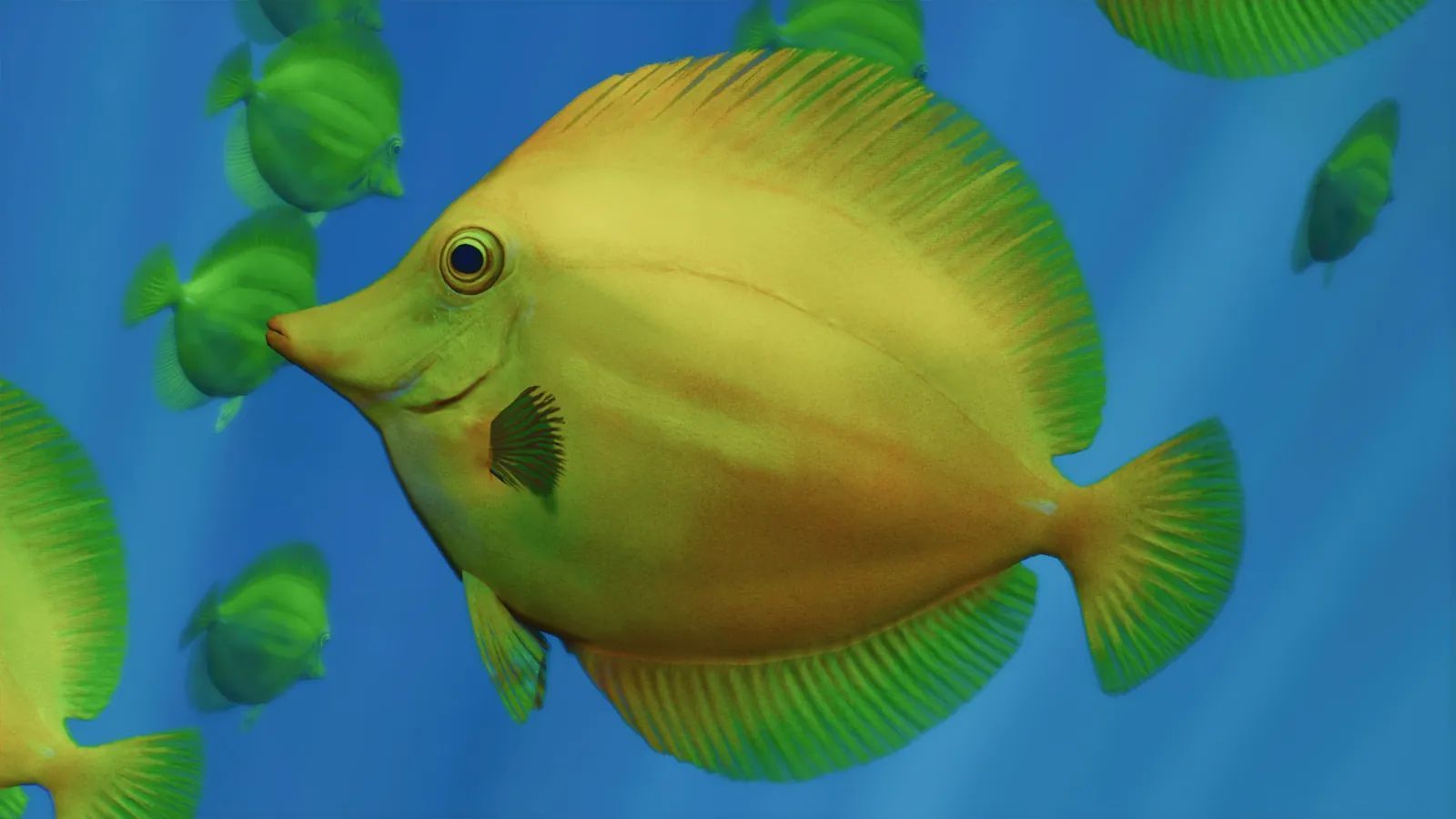
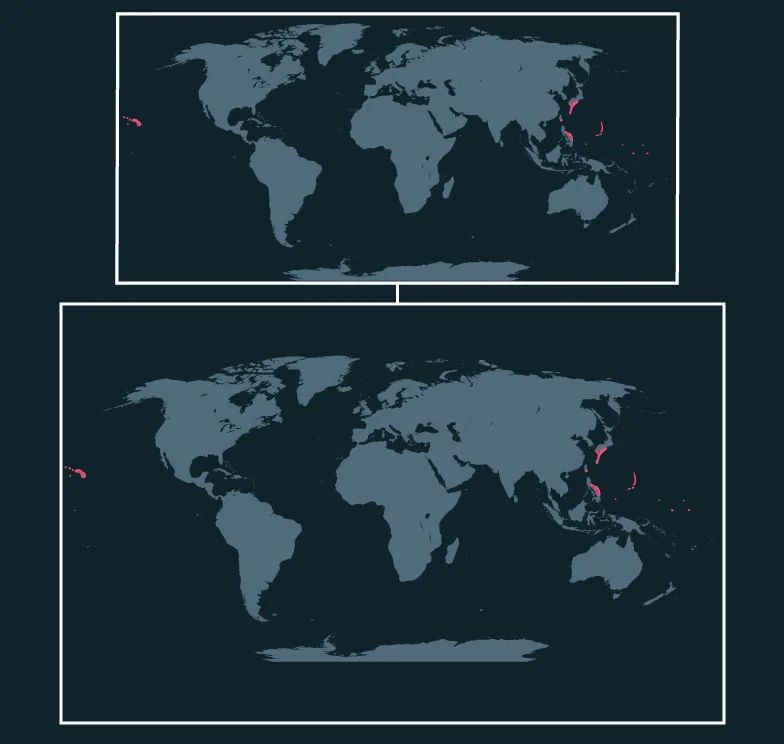
The yellow tang (or Zebrasoma flavescens) is a reef fish native to the central and western Pacific Ocean. They are found from Japan to the Marshall Islands and other Pacific islands. The yellow tang inhabits shallow coral reefs, favouring reef flats, lagoons, and seaward reefs where there are plenty of algae. It is bright yellow, with a laterally compressed disc-shaped body and a distinctive white defensive spine at the base of the tail. Adults usually reach 12cm to 20cm in length and weigh 50g to 80g.
Found in Indo-Pacific reefs and lagoons
Regions
- Pacific Ocean
Biomes
- Reef
Conservation
IUCN Red List
Least concern
Least concern
Critically endangered
The yellow tang is a species of Least Concern. In Hawaii, hundreds of thousands of yellow tangs have been collected annually, putting considerable pressure on local populations. Over-collection of juveniles is of particular concern, impairing the population’s ability to replenish itself. Additionally, coral reef degradation driven by climate change, bleaching, and pollution threatens their habitat, reducing the availability of the turf algae they rely on for food. Hawaii has established Marine Protected Areas which restrict or ban aquarium fish collection in certain zones; research suggests these protected areas have helped boost yellow tang numbers. Captive-breeding techniques have also been developed for yellow tangs, producing viable larvae and juveniles. Captive-bred yellow tangs have been released into the wild, marking one of the first stock-enhancement efforts for a non-food marine species. Concurrently, sustainable harvesting policies are being informed by size-at-maturity research. For example, yellow tangs can spawn at smaller sizes than previously thought.
Zoopedia sketchbook
Social & reproduction
Keeper notes
Yellow tangs form loose social feeding aggregations and may live in close quarters and form spawning groups, but they are not strongly social like schooling fish. Breeding occurs year-round, but peaks around the full moons in March and September, when egg production, gonadal development and the proportion of spawning females are highest. Yellow tangs engage in both group and pair spawning: males change colour and perform a shimmering dance to attract females. When a female is ready, the pair (or group) will swim upward into the water column, releasing their eggs and sperm simultaneously for external fertilisation. Females produce anywhere from 50 to more than 24,000 eggs per spawning event depending on their size. Once fertilised, the eggs drift in the open ocean. Eggs hatch into planktonic larvae which may drift for 50 to 60 days before settling on reef habitat. Once settled, juveniles inhabit mid-depth reef crevices rich in coral, feeding on microalgae until they reach sexual maturity between 4 to 7 years old.
Animal facts
- Yellow tangs change their colour at night for camouflage to a much paler yellow with a white stripe under their pectoral fins.
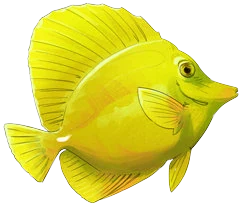
- Yellow tangs are surgeonfish; as such, they have a sharp retractable spine at the base of their tail that they use for protection.
- Yellow tangs are completely transparent when they hatch and do not develop their yellow colouration until later.
- Juvenile yellow tangs act as cleaner fish, removing dead skin and parasites from the scales of other reef fish.
- Yellow tangs are one of the most traded marine aquarium fish; historically, yellow tangs made up to 80% of Hawaii’s aquarium fish exports.
Taxonomy
Class
Order
Family
Genus
Species