Overview
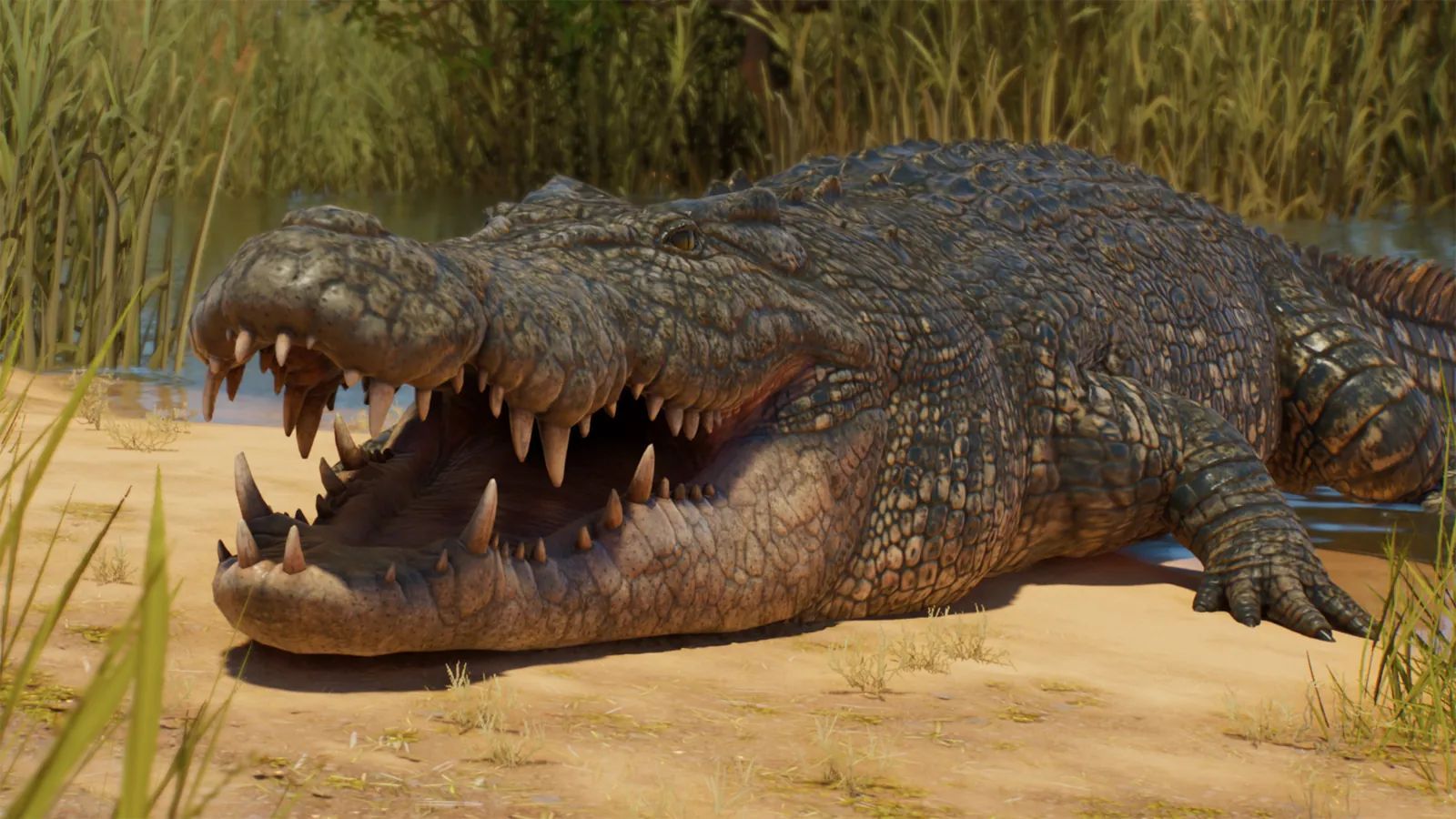
The saltwater crocodile (or Crocodylus porosus) is an extremely large species of reptile native to the coastal areas of Southeast Asia, North Australia and East India. It is an effective and dangerous apex predator, with a broader snout and body compared to other crocodile species. They are tan to greenish grey in colour and there is variation in colour among different populations. Males are capable of growing between 3.5m to 6m long, and weighing between 200kg and 1,000kg. Females are significantly smaller, averaging 2.7m to 3.4m and 120kg to 200kg.
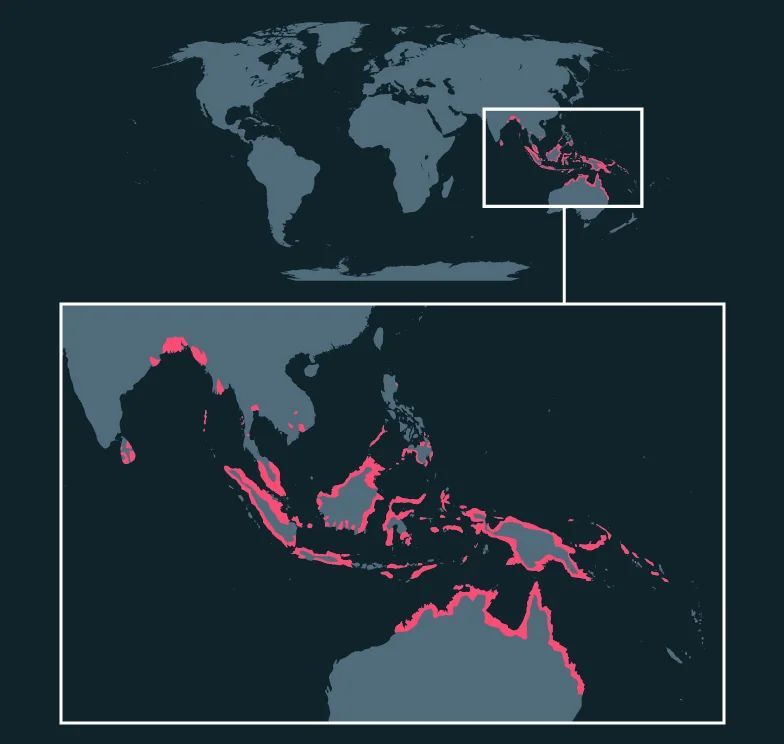
Found in Asia, Oceania
Regions
- Asia
- Oceania
Biomes
- Estuarine
- Mangrove
- Rainforest
Size & weight
Size
Length: 3.1 to 5.2 m
Weight
Male
240 kg
Female
160 kg
Bars use a log scale against the heaviest animal in the Zoopedia, the Common Hippopotamus.
Measured as Length. The person stands 1.75 m tall for scale.
Habitat requirements
Barrier grade
Grade 3 of 5
Minimum height
1 m minimum
Climbing & water
Climb proof
Not needed
Water barrier
Not allowed
Combine this animal with others in the barrier planner.
Conservation
IUCN Red List
Least concern
Least concern
Critically endangered
Wild population
500,000
500,000 in the wild. Rank 50 of 57 species with a known count, smallest first.
Saltwater crocodiles are of Least Concern and not overall in danger, but certain local populations are unstable. Habitat loss due to coastal development alongside hunting for crocodile skins have caused them to be absent in some areas of their range, and they are now relatively rare in Sri Lanka, Thailand and Vietnam. There are efforts to stabilise and protect the local populations of saltwater crocodiles in many countries. In India, there have been successful captive reintroduction programmes. Burma and Australia have crocodile farms that control the breeding and conservation of saltwater crocodiles as well as monitoring their numbers. Papua New Guinea protects areas where crocodiles breed and monitors breeding by counting eggs and hatchlings and tagging crocodiles in these common breeding areas.
Zoopedia sketchbook
Social & reproduction
Keeper notes
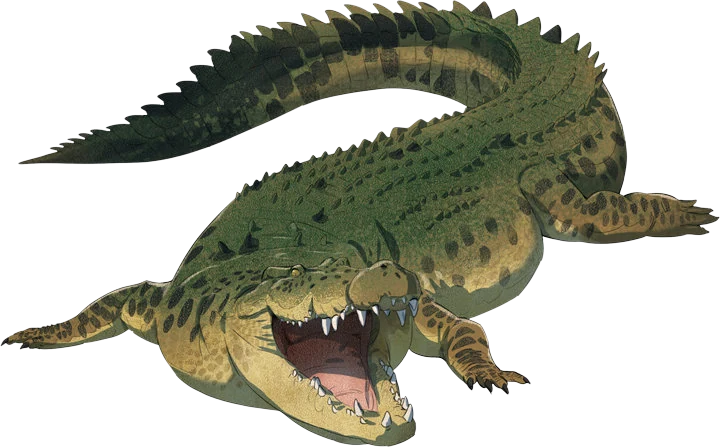
Saltwater crocodiles are solitary, territorial and extremely aggressive. Males will tolerate females living on their territory, and females will look after their hatchlings for the first 8 months of their life, but otherwise they spend their lives alone. During the breeding season from September to October, a male saltwater crocodile will approach a female on his territory. If she lets him get near, the two will court by rubbing their heads together before mating underwater. The pregnant female will carry her eggs with her for 1 to 2 months before building a nest on the edge of a tidal river or lagoon, laying the clutch inside. She will guard them fiercely for 80 to 98 days, at which point the young crocodiles will hatch and be cared for over the first 8 months of their lives. It is at this point they become large enough to become independent, fending for themselves now they are no longer vulnerable. At the age of 2 and a half, they will start showing territorial behaviour, with females reaching sexual maturity at 12 to 14 years old, and males at 16. Both sexes continue to grow slowly throughout their whole lives.
Animal facts
- The saltwater crocodile is statistically the joint most dangerous crocodile to humans, alongside the Nile crocodile. Saltwater crocodiles have the strongest recorded bite force of any animal.
- Saltwater crocodiles exhibit the greatest sexual dimorphism of any crocodilian; males are 4 to 5 times larger than the females.
- Saltwater crocodiles do not require fresh drinking water. Like other crocodiles, they have special glands in their mouths that secrete excess salt allowing them to drink saltwater.
- Saltwater crocodiles have been seen to knock primates out of trees into water with their tails to make catching their prey easier.
- Unlike other crocodiles, saltwater crocodiles are immune to cane toad toxins, allowing them to eat cane toads to sustain themselves if necessary.
Taxonomy
Class
Order
Family
Genus
Species