Overview
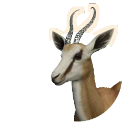
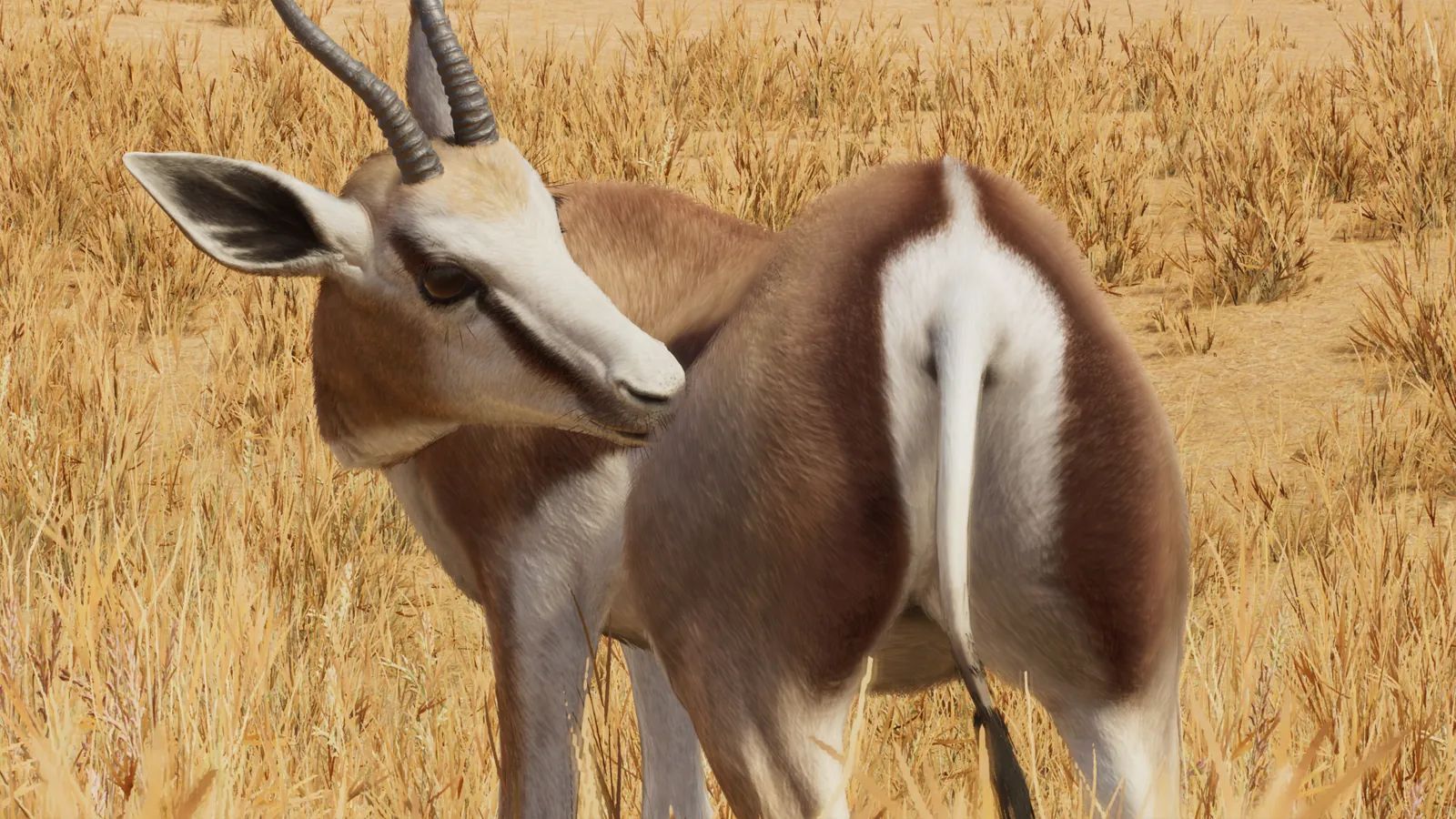
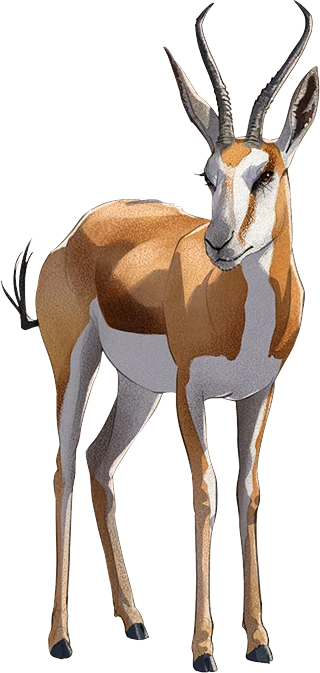
The springbok (or Antidorcas marsupialis) is a small species of antelope native to the savannahs of Southern Africa. They have lyre-shaped black horns, a tan coat with dark brown markings, a white belly and face, with dark brown tear marks from their eyes to their muzzle. Males and females are a similar size and both have 35cm to 50cm long horns, although the male's are more robust. The average height at the shoulder ranges from 0.71m to 0.86m, head-body length from 1.2m to 1.5m, and adult weight ranges from 27kg to 42kg.
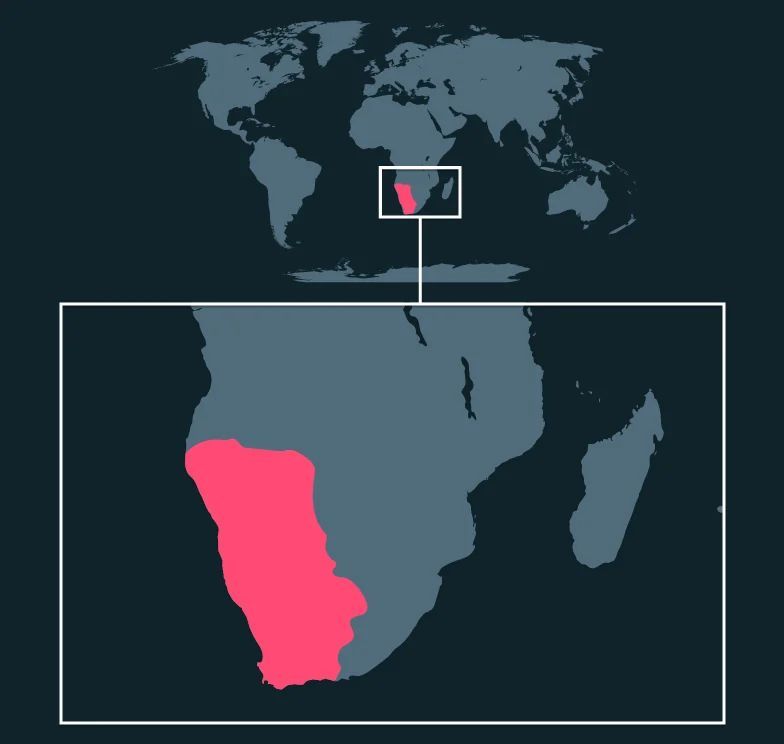
Found in Southern Africa
Regions
- Africa
Biomes
- Desert
- Savannah
Size & weight
Size
Shoulder height: 0.8 m
Weight
Male
35 kg
Female
35 kg
Bars use a log scale against the heaviest animal in the Zoopedia, the Common Hippopotamus.
Measured as Shoulder height. The person stands 1.75 m tall for scale.
Habitat requirements
Barrier grade
Grade 2 of 5
Minimum height
1.25 m minimum
Climbing & water
Climb proof
Not needed
Water barrier
Not allowed
Combine this animal with others in the barrier planner.
Conservation
IUCN Red List
Least concern
Least concern
Critically endangered
Wild population
2,000,000
2,000,000 - 2,500,000 in the wild. Rank 55 of 57 species with a known count, smallest first.
Springboks are a species of Least Concern, though compared to the massive migratory herds that historically roamed the Karoo and Kalahari, they today also experience habitat fragmentation challenges. Agricultural expansion, livestock fencing and overgrazing reduce food and water access, particularly during droughts. Where they are commercially hunted, game managers selectively breed for unusual colour variants, which may reduce genetic integrity if mismanaged. Many National Parks preserve key arid and semi-arid habitats and allow for more natural population dynamics. Private conservancies and game reserves also play a major role in maintaining viable populations across southern Africa, often integrating springbok into mixed-species systems that mimic natural grazing assemblages. Improved wildlife corridor planning and the removal or modification of internal fencing in some reserves help restore ecological connection. Ongoing monitoring of population trends, genetic management on game ranches, and adaptive responses to drought conditions are central to ensuring that springbok remain abundant and ecologically functional across their native range.
Zoopedia sketchbook
Social & reproduction
Keeper notes
Springboks have a complex and changeable social structure. Like most ungulates, they live in herds that can be composed of multiple group types. These include mixed groups of non-dominant males, females and juveniles; bachelor groups of juvenile and young adult males; solitary dominant males who are territorial and defend their range from other males; and breeding harems comprised of a dominant male and multiple receptive females. The composition of these groups, as well as the numbers within them, change depending on the time of year and the availability of food. For example, during the rainy season, there will be more breeding harem groups than at other times of year. Springboks mate year-round, though mating is more common in the rainy season. To mate, a territorial dominant male will herd females passing through and foraging on his territory, creating a harem. He will display to them by pronking and defending his range from rival males. Courting a female in his harem involves approaching her and tapping his foot on the ground multiple times. If she's receptive, she will allow him to mate with her. After a pregnancy of 5 to 6 months, the mother will give birth to a single calf, which at first remains hidden away while the female forages. They rejoin the herd after about a month. The calf is weaned by the time it is 4 months old. Springboks reach sexual maturity as early as 7 months old, and while females stay with their natal herd, males leave to join a bachelor herd from 6 months old onward. When they are about 2 years old, they reach social maturity and establish their own territory, however, many males never become dominant and will never acquire a harem, mating instead with receptive females within a mixed group.
Animal facts
- Springboks will often jump up to 2m into the air, especially during the mating season. This jumping behaviour is known as 'pronking'.
- Springboks are incredibly fast; they can run up to 97km/h.
- Springboks do not need to drink water, they can get all the water they need from their food.
- Springboks can breed all year round but are more likely to breed during the rainy season.
- Black springboks and white springboks occur naturally but rarely and are sought after by trophy hunters.
Taxonomy
Class
Order
Family
Genus
Species