Overview
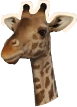
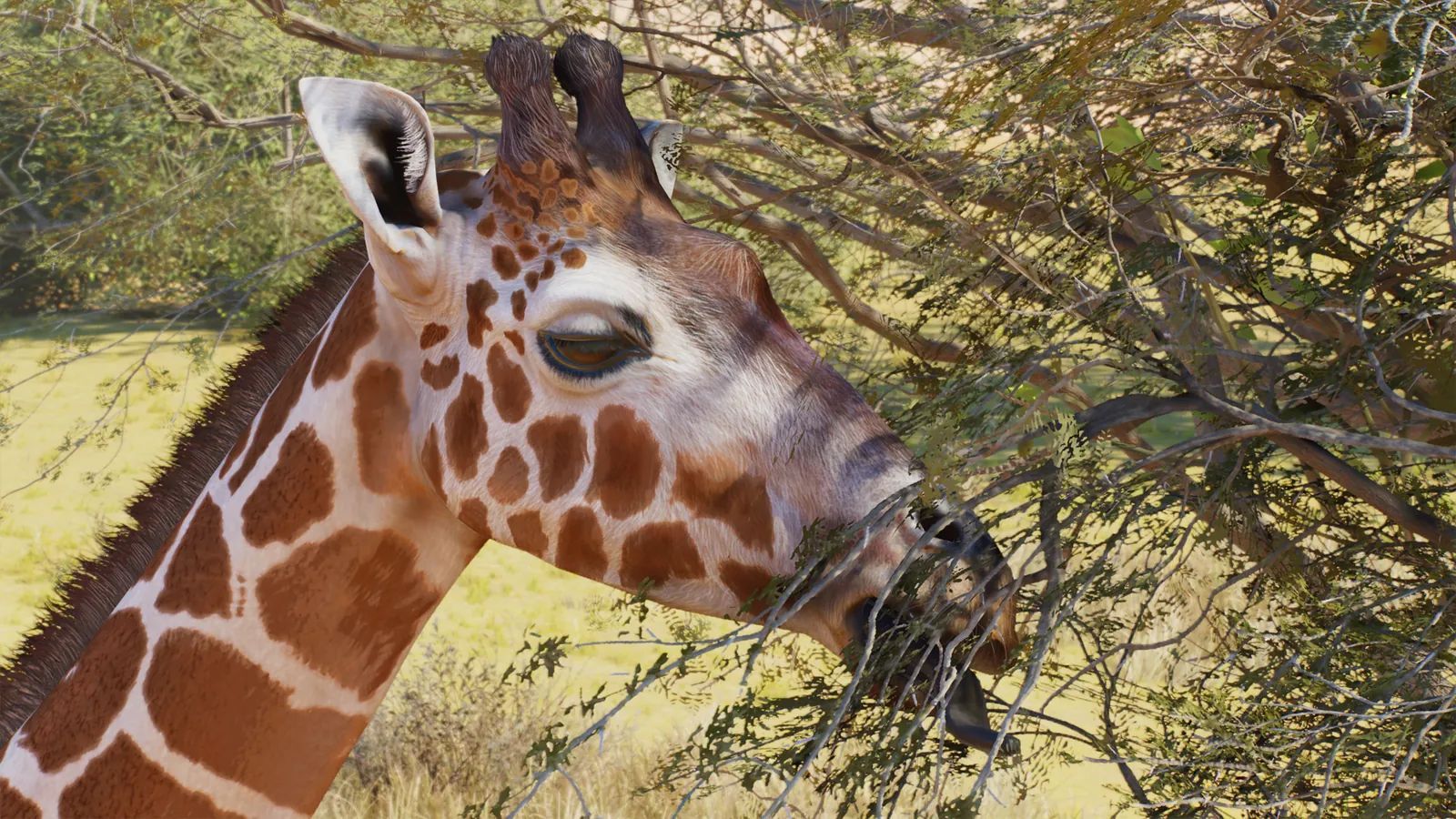
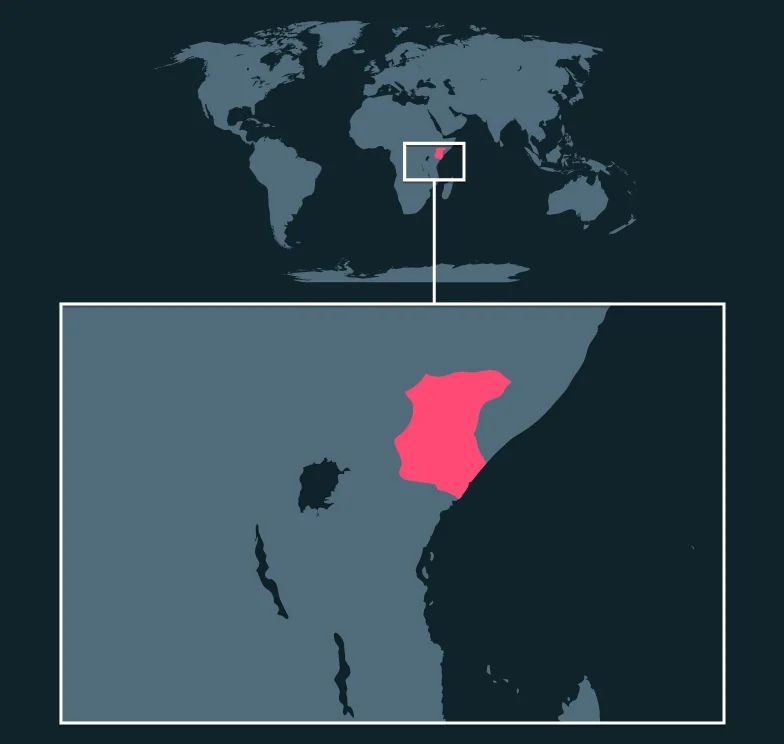
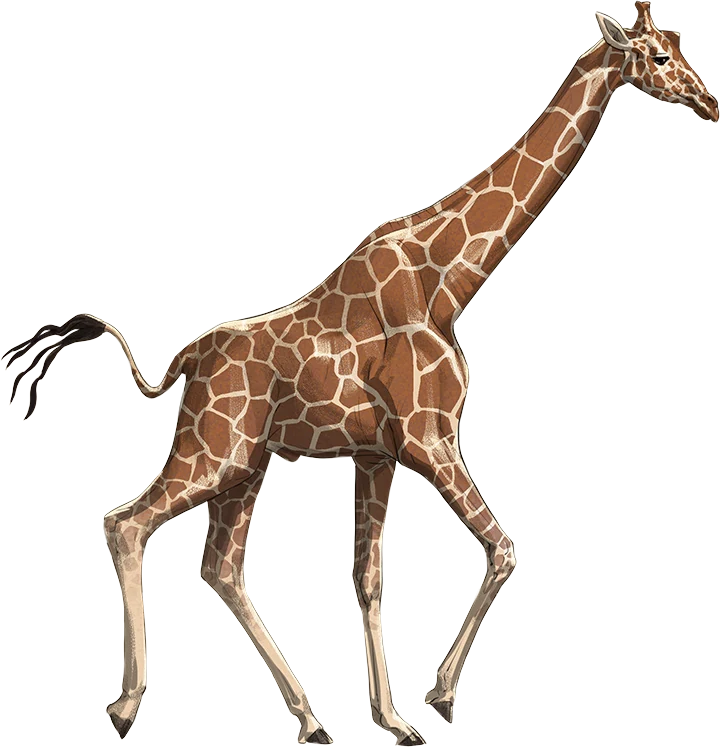
Also known as the Somali giraffe, the reticulated giraffe (or Giraffa reticulata) is a giraffe that lives in the savannahs and open forests of Kenya, Somalia and Ethiopia. It is distinguishable from other giraffe species thanks to its large, polygonal spots, which are tan to red in colour and divided by white interconnecting lines. Giraffes are famous for their long neck, which is used for accessing leaves that are out of reach to other animals. Like all giraffes, the reticulated giraffe exhibits marked sexual dimorphism. While both sexes have two bony horns – ossicones – on their head, those of the females are smaller and thinner. Males may also develop a third, median horn on their forehead. Males are also significantly larger than females, standing an average of 5.1m, but up to 5.7m tall and weighing an average of 1,200kg. Females stand around 4.45m tall and weight about 800kg on average.
Found in Africa
Regions
- Africa
Biomes
- Savannah
Size & weight
Size
Height: 4.6 to 5.4 m
Weight
Male
1,190 kg
Female
830 kg
Bars use a log scale against the heaviest animal in the Zoopedia, the Common Hippopotamus.
Measured as Height. The person stands 1.75 m tall for scale.
Habitat requirements
Barrier grade
Grade 3 of 5
Minimum height
2 m minimum
Climbing & water
Climb proof
Not needed
Water barrier
Not allowed
Combine this animal with others in the barrier planner.
Conservation
IUCN Red List
Endangered
Least concern
Critically endangered
Wild population
11,050
11,050 in the wild. Rank 20 of 57 species with a known count, smallest first.
The reticulated giraffe is considered Endangered, its decline primarily driven by habitat loss, poaching and human-wildlife conflict. Across its range savannah and woodland habitats are being fragmented or converted for agriculture, settlements and infrastructure. The isolated populations have reduced access to mates and food and are more vulnerable to predators. Giraffes are also poached for meat, hides, and trophies, and compete with livestock for limited grazing and water resources in drought-prone regions. Political instability in parts of their range hampers law enforcement and conservation efforts. A combination of habitat management, anti-poaching programmes and community conservation initiatives aim to help the giraffes. In several reserves, giraffe populations are monitored and protected, and local communities are offered incentives to protect rather than hunt giraffes, for example by promoting ecotourism. Captive breeding and translocations can further support population recovery, though their success depends on the ability to maintain or increase genetic diversity and suitable, connected habitats.
Zoopedia sketchbook
Social & reproduction
Keeper notes
Reticulated giraffes live in loosely-bonded groups. Females live in herds that forage and travel together, but may leave and join several groups in their lifetime. Males live in bachelor herds or are solitary and follow the female herds with the hope of mating. The older the male is, the longer he spends tracking females. Reticulated giraffes are aseasonal breeders and mate year-round. Mature males track female groups and check for signs of receptivity. The oestrus cycle of females takes roughly 2 weeks, with 1 to 2 fertile days per period. Males will fight rivals in aggressive necking fights to ensure exclusive access to the herd. Courtship includes nuzzling the female until she allows the male to mate. After a pregnancy of about 14 months, the female gives birth to one calf. Twin births occur very rarely. Giraffes are precocial, and the juveniles are able to walk within an hour of being born. The mother keeps a newborn hidden away from the group until it is about three weeks old. Weaning begins at 1 month old and is complete at around 1 year old. Juveniles begin to gradually distance themselves from their mothers from 1.5 years old. Sexual maturity is reached between 3 and 5 years old. Males leave their natal herds at about 3 years of age to join a bachelor herd. They become more solitary with age, until fully separating themselves at about 7 to 8 years old when they have reached their maximum growth and are likely to be able to compete for mates with other males. Females remain with their mothers for longer, but may drift into other female herds occasionally throughout their lives.
Animal facts
- Until recently, giraffes were all thought to be subspecies of one species, Giraffa camelopardalis, but DNA analysis has revealed most of them to be distinct species.
- Male giraffes darken with age, some to an extent that they have been misidentified as melanistic giraffes.
- The closest living relative to the giraffe is the Okapi.
- The kicks of an adult giraffe are extremely powerful, and can be lethal to predators. It is rare for an adult giraffe to be predated.
- The ancient Greeks and Romans believed that giraffes were a cross between camels and leopards, thus the Latin name for 'giraffe' is 'camelopardalis'.
Taxonomy
Class
Order
Family
Genus
Species