Overview
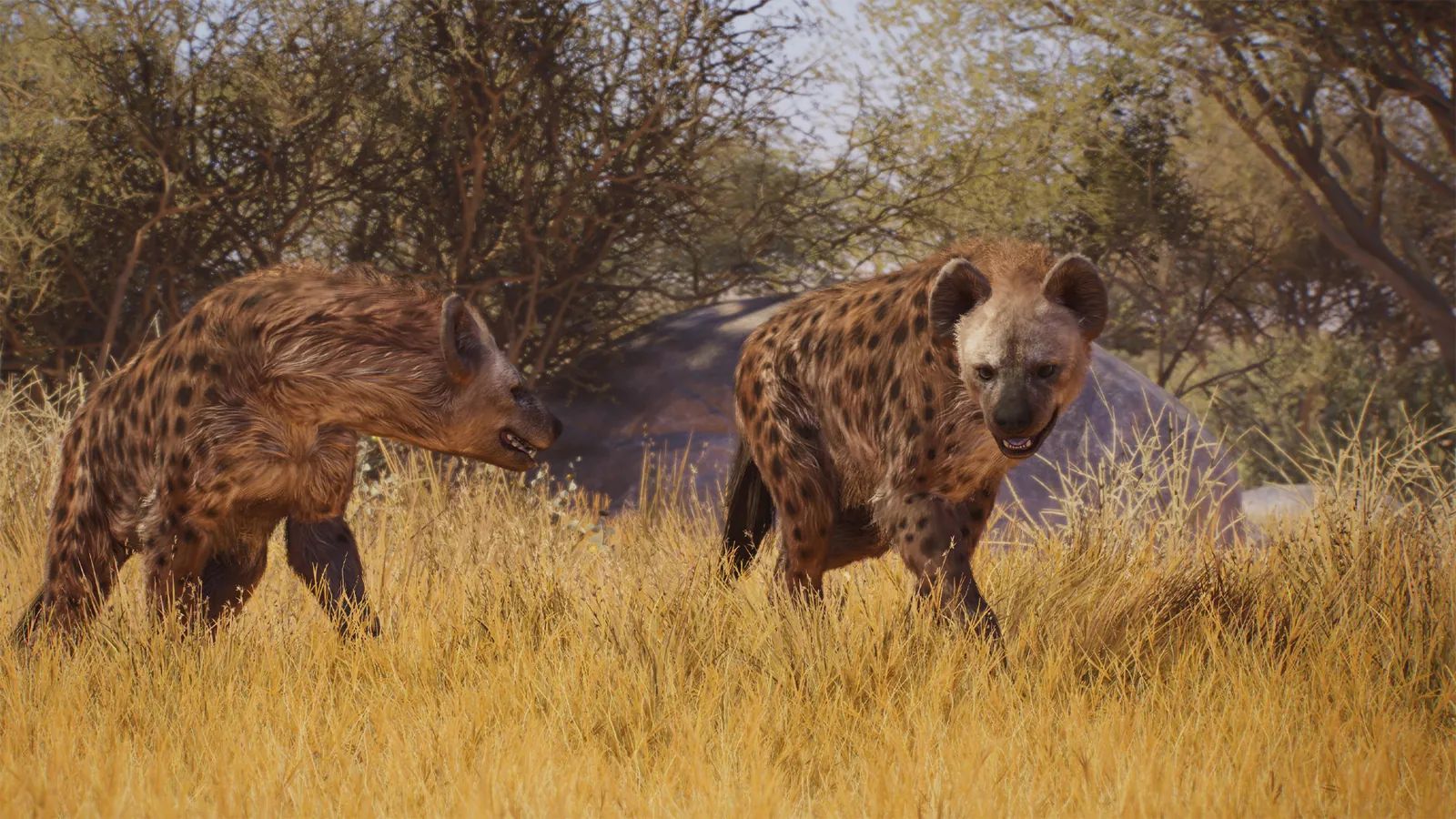
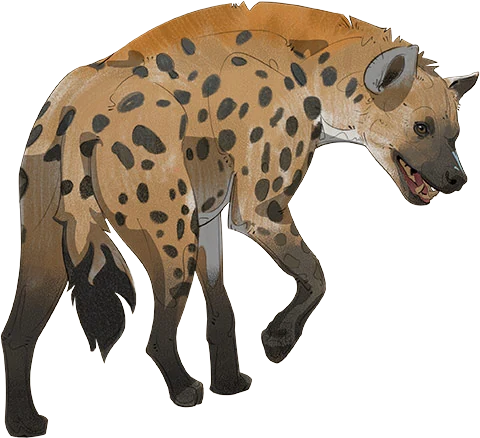
The spotted hyena (or Crocuta crocuta), also known as the laughing hyena, is native to sub-Saharan Africa. They are generalist predators that can live in most environments – although they are not found in rainforests or deserts – and their strong forelimbs, well-muscled neck, and comparatively weaker hind limbs give them a distinctive appearance. Their head is broad with a wide snout and they have sandy fur with black spots, as well as a mane down their neck to their mid back. Adult spotted hyenas stand 70cm to 92cm tall at the shoulder, with females being larger and also heavier than males. On average, males weigh 40kg to 55kg, while females weigh 44kg to 64kg.
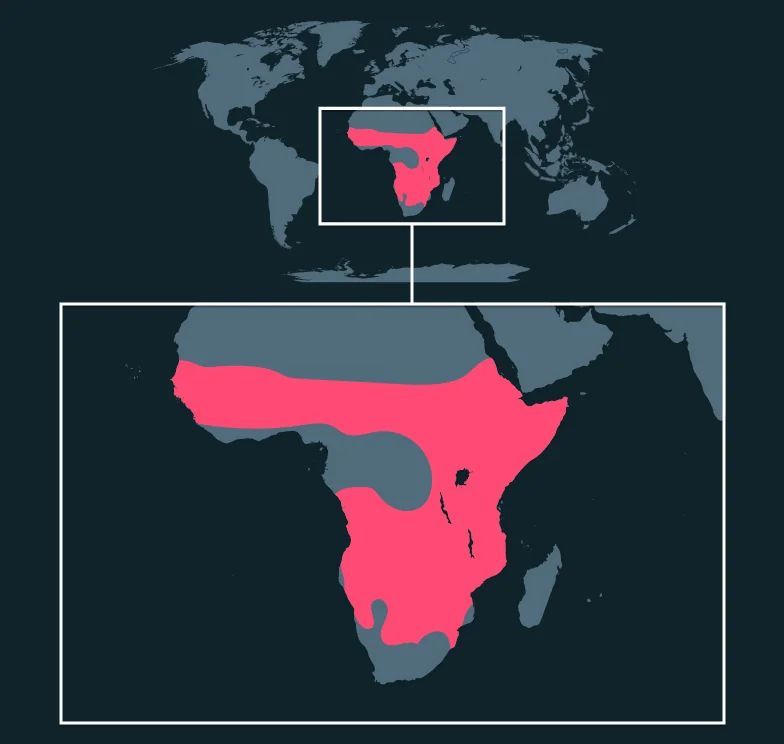
Found in Africa
Regions
- Africa
Biomes
- Desert
- Savannah
Size & weight
Size
Shoulder height: 0.81 to 0.86 m
Measured as Shoulder height. The person stands 1.75 m tall for scale.
Habitat requirements
Barrier grade
Grade 3 of 5
Minimum height
3 m minimum
Climbing & water
Climb proof
Not needed
Water barrier
Not allowed
Combine this animal with others in the barrier planner.
Conservation
IUCN Red List
Least concern
Least concern
Critically endangered
Wild population
27,000
27,000 - 47,000 in the wild. Rank 30 of 57 species with a known count, smallest first.
Spotted hyenas are of Least Concern, but are affected by human-wildlife conflict as populations expand. Their reputation as scavengers has long subjected them to cultural stigma, with many communities viewing them as pests or symbols of witchcraft. As human settlements expand and fragment natural hyena habitats, hyenas often turn to preying on domestic animals and, in turn, are killed through poisoning, trapping or shooting by farmers attempting to protect their livestock. In some regions, parts of hyenas are also trafficked for traditional medicine and rituals. Community outreach programs aim to dispel myths and emphasise the ecological importance of hyenas as scavengers and disease controllers that help maintain healthy ecosystems. Non-lethal conflict mitigation techniques such as improved livestock enclosures, compensation schemes, and predator-proof fencing, have proven effective in parts of Kenya and Tanzania. Additionally, monitoring programmes improve understanding of hyena social structures, movements, and tolerance of human-altered landscapes, informing more targeted management.
Zoopedia sketchbook
Social & reproduction
Keeper notes
Hyenas are social animals that live in 'clans' of related females, immigrant males and their cubs. They have a communal den which as many as 90 spotted hyenas share for sleeping, mating and giving birth. When individuals leave the den to hunt and roam, they spend this time alone or in small groups of 2 to 4. In captivity, adults should be kept in compatible pairs and trios. Although hyenas live in large groups in the wild, they live in a fission-fusion society where they do not spend all their time together and often roam alone or in small groups. They are an aggressive species, so large groups in an enclosed space could result in violent interactions. Spotted hyenas breed year-round. Males gain favour with females by being submissive and friendly, and once trust has been established, females may allow males to mate with them. Following a pregnancy of 3 or 4 months, a female gives birth to 1 or 2, occasionally 3, cubs over which she is very protective. Higher ranking females produce more aggressive cubs, and cubs may kill each other after birth. The infants nurse from their mothers for 1 to 1.5 years, but begin eating solid food from 3 months old. Male cubs remain with their mother's clan until they are around 2.5 years old, at which point they will leave and attempt to join an unrelated clan. Females remain with their mother's group for their entire lives.
Animal facts
- The spotted hyena's 'laugh' is a distress call that a hyena gives when it is being chased or attacked. Despite popular perception, spotted hyenas are formidable predators, not scavengers.
- Hyenas are the only members of the order 'Carnivora' that give birth to young with open eyes and fully developed teeth.
- Females are larger than males and dominate in spotted hyena society. They are hyper-masculinised; their external reproductive parts look male.
- Spotted hyenas are extremely intelligent; their group cooperation and skill learning abilities are on par with chimpanzees.
- Spotted hyenas have an extremely strong bite that allows them to routinely crush bone; their bite is stronger than a lion's. They can be very dangerous, in Malawi, in 1962, a pair of spotted hyenas killed 27 people.
Taxonomy
Class
Order
Family
Genus
Species