Overview
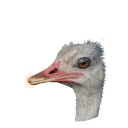
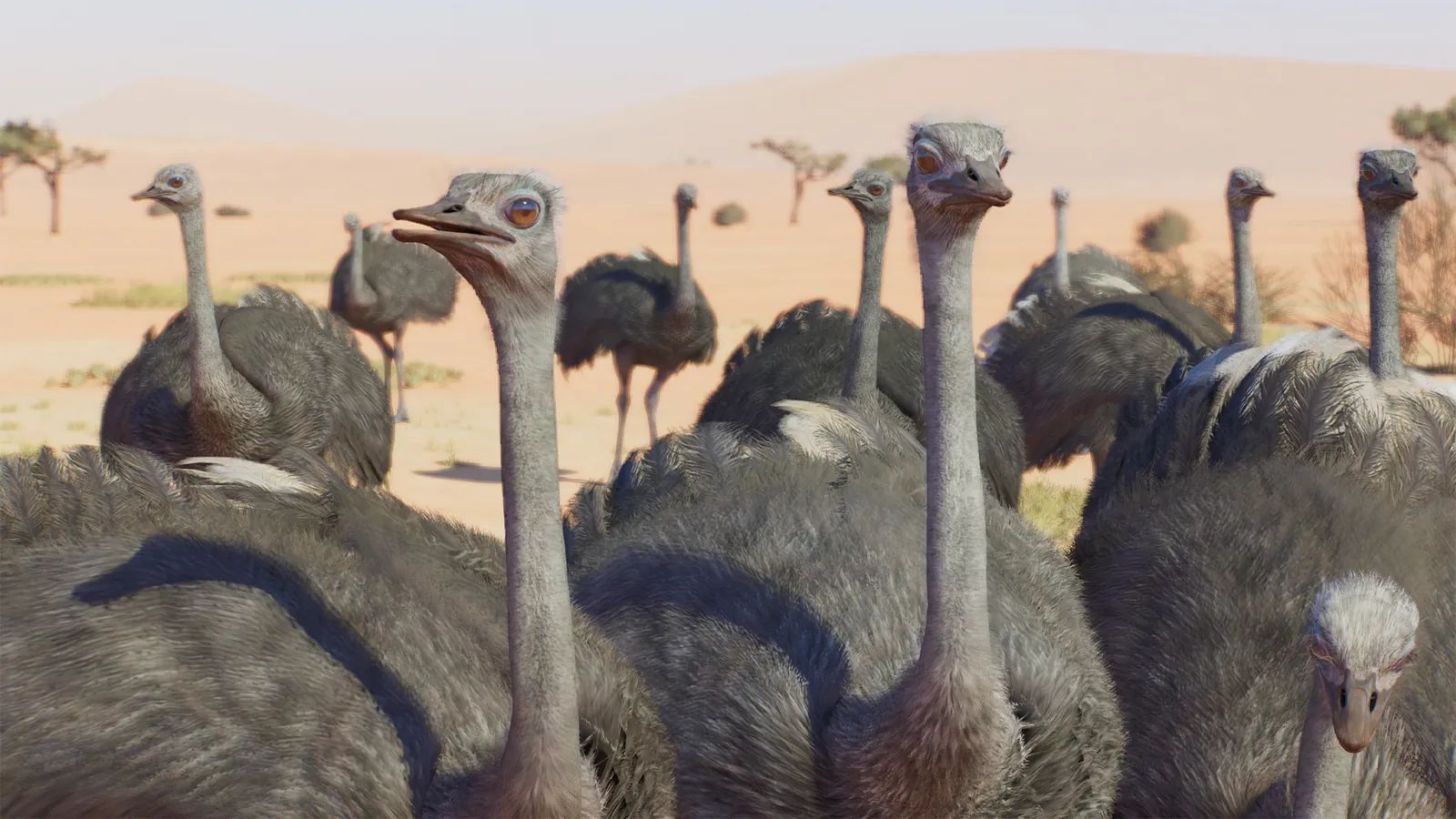
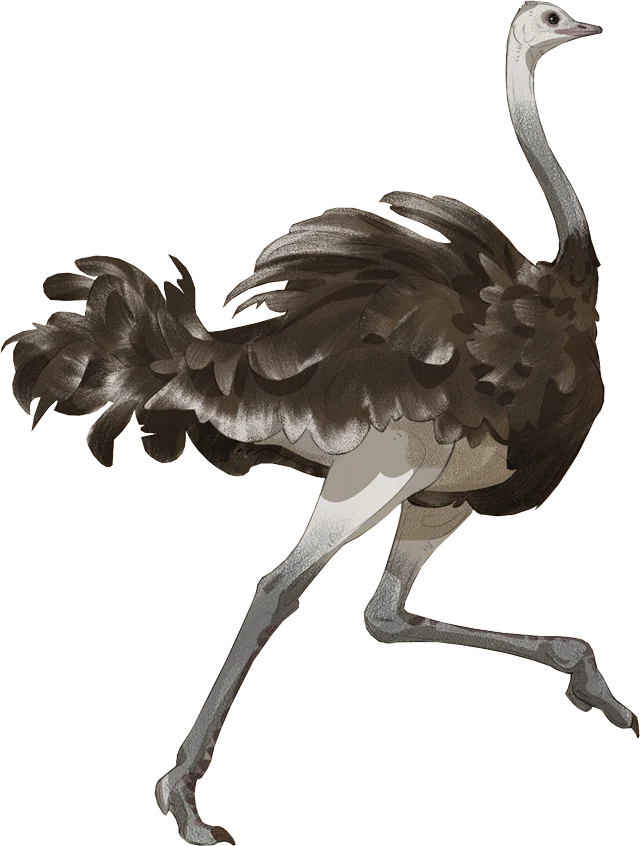
The common ostrich (or Struthio camelus) is the largest known bird species in the world. Males have black body feathers and white feathers on their wing-tips and tails, while females have grey-brown body feathers. On both sexes, the head, neck and legs are pink to white in colour, and there is some variation in appearance depending on the bird's original location in Africa. The males have an average height of 2.1m to 2.8m, whereas females are smaller, measuring between 1.7m and 2.0m.
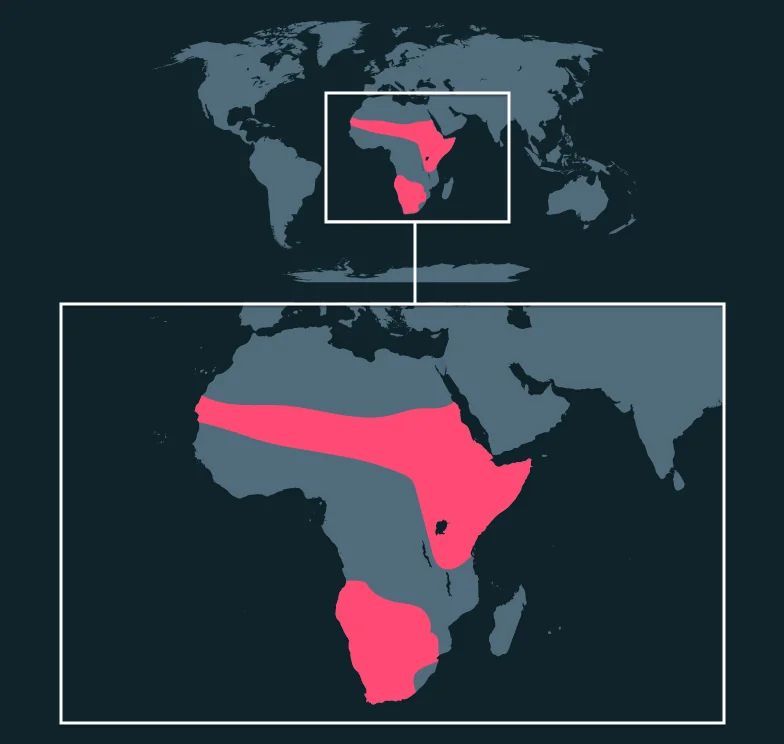
Found in Africa
Regions
- Africa
Biomes
- Savannah
Size & weight
Size
Height: 1.85 to 2.5 m
Weight
Male
125 kg
Female
110 kg
Bars use a log scale against the heaviest animal in the Zoopedia, the Common Hippopotamus.
Measured as Height. The person stands 1.75 m tall for scale.
Habitat requirements
Barrier grade
Grade 2 of 5
Minimum height
1.25 m minimum
Climbing & water
Climb proof
Not needed
Water barrier
Not allowed
Combine this animal with others in the barrier planner.
Conservation
IUCN Red List
Least concern
Least concern
Critically endangered
Wild population
300,000
300,000 - 900,000 (estimated) in the wild. Rank 47 of 57 species with a known count, smallest first.
Despite being of Least Concern, the common ostrich is affected by habitat loss and fragmentation. Urban, agricultural and infrastructural development reduce their savannah and grassland habitats. Overhunting for meat, feathers, and eggs has historically contributed to local population declines. They may still be retaliatorily killed for raiding crops. Additionally, egg predation limits population expansion, particularly in fragmented landscapes where predator pressure is higher. Climate change-induced resource scarcity further increases existing pressures. Many countries have established protected areas and reserves where ostriches can live with reduced hunting and habitat disturbances. Community-led conservation involves local populations in protecting ostriches with economic incentives, such as ecotourism and regulated ostrich farming: Sustainable farming and captive breeding help relieve hunting pressure on wild-living populations in some areas. Law enforcement on illegal hunting also plays an important role. Together, these measures aim to keep wild ostrich populations viable, preserving the species and its role in the ecosystems.
Zoopedia sketchbook
Social & reproduction
Keeper notes
In the wild, ostriches are primarily social animals. During the breeding season, a small group of females will inhabit the territory of a dominant male, who temporarily joins their herd. During other times of year, ostriches live in large nomadic herds that move through the Savannah, often alongside other species of grazing animals. During the breeding season from March to September, a top hen and her group of females will search for a dominant male with good territory. The group will remain with this chosen male for the entire breeding season. In order to mate, the male will court the top hen with a 'dance' in which he alternates the beating of his wings and ritualistic pecking at the ground, 'wooing' the female into crouching down and allowing him to mate with her. Then, he will dig a nest; a shallow dip in the ground in which the top hen will lay 7 to 10 eggs. Subsequently, the male will mate with all females in the group. These females will each lay their eggs around the top hen's, who in turn will then remove some of the eggs that are not hers. Once approximately 20 eggs are in the nest (up to a total of 60 may have been laid) the top hen will incubate them during the day, while the alpha male will incubate them during the night. After 35 to 45 days, the eggs will hatch and the male will take care of them until they are about 10 months old and capable to fend for themselves. After 18 months the ostriches will be full size, and between 2.5 and 4.5 years old they will be able to reproduce themselves.
Animal facts
- The ostrich is the largest living species of bird. They are also the fastest bird on the ground: they can run for long distances at 54km/h and sprint at 69km/h.
- Ostriches have the largest eggs in the world, but the smallest eggs of any bird relative to body size.
- When incubating a nest, the alpha female sits on the nest during the day, her grey-brown feathers blending with the dusty ground, and the alpha male sits on the nest at night, with his black feathers difficult to see in the dark.
- Ostrich males raise the ostrich chicks when they hatch.
- Contrary to popular belief, ostriches do not bury their heads in the sand. To hide from predators, they lie flat against the ground and their body blends with the horizon and the dust.
Taxonomy
Class
Order
Family
Genus
Species