Overview
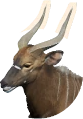
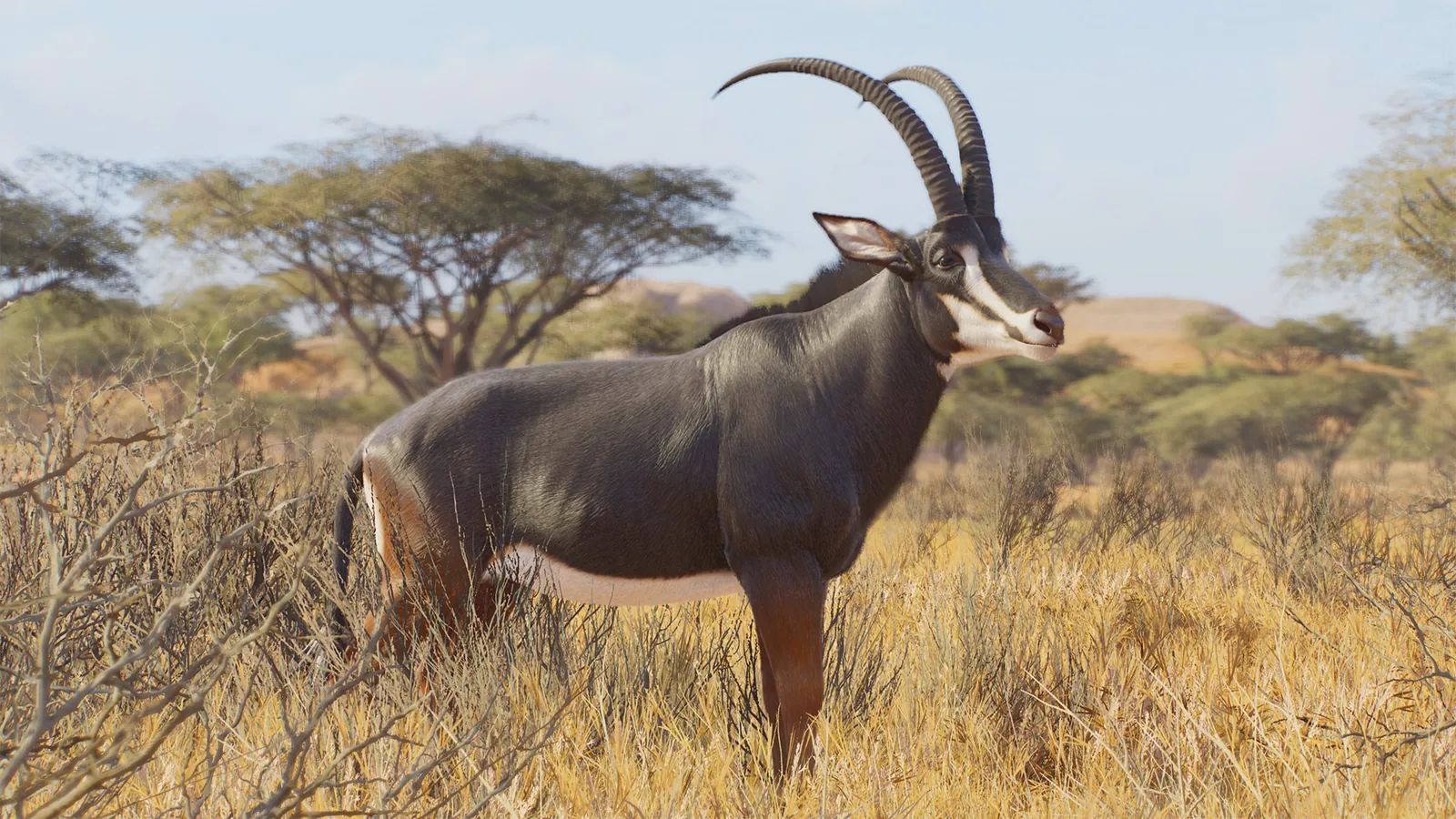
The sable antelope (or Hippotragus niger) is a species of ungulate that lives in South-Eastern Africa, where they graze and browse on the savannah, preferring lightly wooded areas to completely open ones. They have long, notched horns that curve backwards from their face, a tan-to-black coat with a white underbelly, chin and throat, as well as white tear-marks on their face. Males are larger, darker and have longer horns than females. Males stand between 1.17m and 1.4m tall at the shoulder, weigh 210kg to 260kg and grow horns from 0.81m to 1.65m long, while females reach a height of 0.95m to 1.12m, weight of 200kg to 240kg, and have 0.61m to 1.02m long horns.
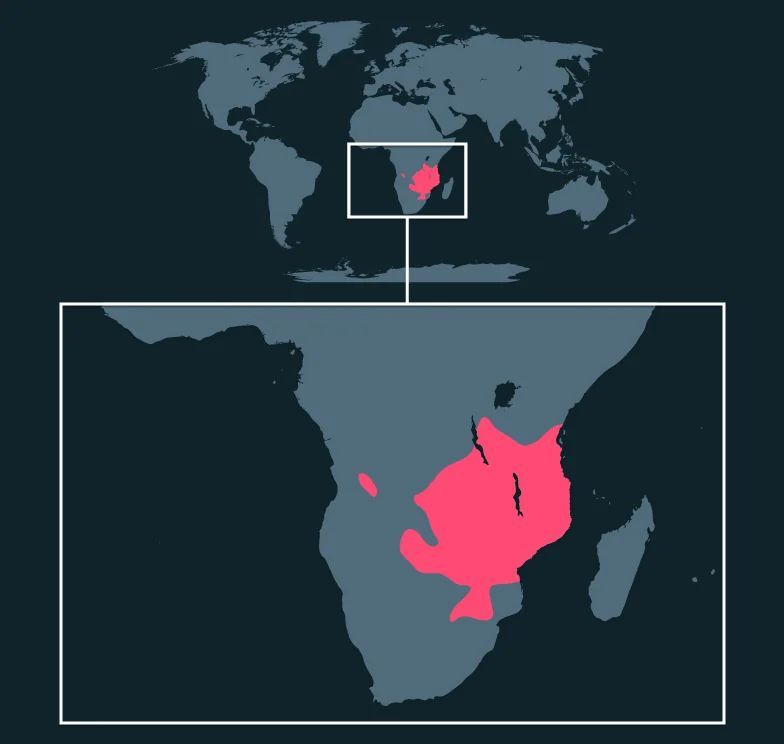
Found in Africa
Regions
- Africa
Biomes
- Savannah
Size & weight
Size
Shoulder height: 1.1 to 1.25 m
Weight
Male
235 kg
Female
220 kg
Bars use a log scale against the heaviest animal in the Zoopedia, the Common Hippopotamus.
Measured as Shoulder height. The person stands 1.75 m tall for scale.
Habitat requirements
Barrier grade
Grade 2 of 5
Minimum height
1.25 m minimum
Climbing & water
Climb proof
Not needed
Water barrier
Not allowed
Combine this animal with others in the barrier planner.
Conservation
IUCN Red List
Least concern
Least concern
Critically endangered
Wild population
50,000
50,000 - 60,000 in the wild. Rank 34 of 57 species with a known count, smallest first.
The sable antelope is considered of Least Concern on a species level, however, the giant sable antelope subspecies of Angola is Critically Endangered. They are threatened by habitat loss and competition with livestock. As savannah landscapes are converted for agriculture or fragmented for infrastructure, sable antelopes lose access to their feeding grounds. Additionally, poaching for meat and trophies can affect populations locally. Prolonged droughts intensify pressure especially on the giant sable antelope, whose sources of low-hanging browse are lost in the long stretches without water. Protected areas and wildlife reserves have been established and expanded to ensure herds have secure habitats where they can forage, breed and migrate naturally. Anti-poaching patrols and improved law enforcement have helped reduce illegal hunting. Monitoring data informs land management decision, and community-based initiatives also play a growing role in sustainable land use and an interest to protect wildlife.
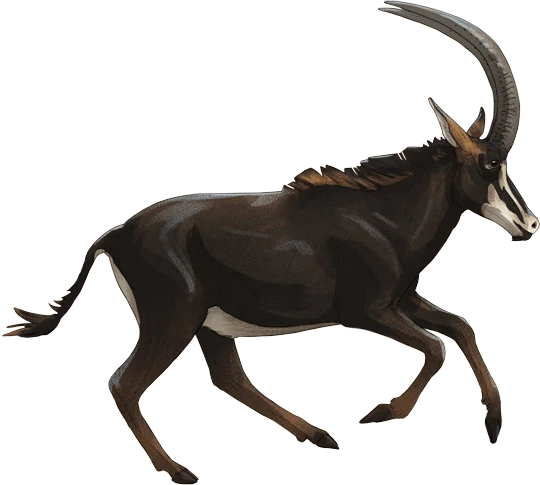
Zoopedia sketchbook
Social & reproduction
Keeper notes
The sable antelope is a social herd species and in the wild live in two two types of groups: in breeding groups of related females, their young, and one unrelated dominant male; or in bachelor herds of young males who have not yet acquired a harem of females. During the mating season from May to July, the dominant male sable antelope in a herd will mate with all receptive females on his territory. 8 to 9 months after, a pregnant female will leave her herd to give birth in isolation, with the newborn calf remaining hidden for the first 4 weeks of its life. After this period, it will rejoin the group to forage and graze and will be fully weaned at 8 months old. Sable antelopes are sexually mature at 18 months, but they are unlikely to reproduce until much older. Females remain with their mother's group and likely have their first calf at 2.5 years old, whereas males will be ousted from their family at approximately 3 years old, at which point they will join a bachelor herd of other young males. At around 5 or 6 years of age males will leave to establish their own territory attempt to join a female herd as the dominant bull.
Animal facts
- The females have strong hierarchies within their herd, with the dominant female being the strongest, healthiest individual. They are also hostile towards new female group members.
- In the wild, sable antelope chew bones to gain minerals from them.
- Sable antelope get darker as they get older. The darkness of the coat often indicates seniority of group members, with alpha females and males being dark brown to black in colour.
- Young males will often play fight as practice and older males will challenge each other by butting heads and pushing each other with their horns, but fights rarely become violent.
- Sable antelopes do not always flee from predators but stand their ground, often attacking with their horns. They have been known to kill lions.
Taxonomy
Class
Order
Family
Genus
Species