Overview
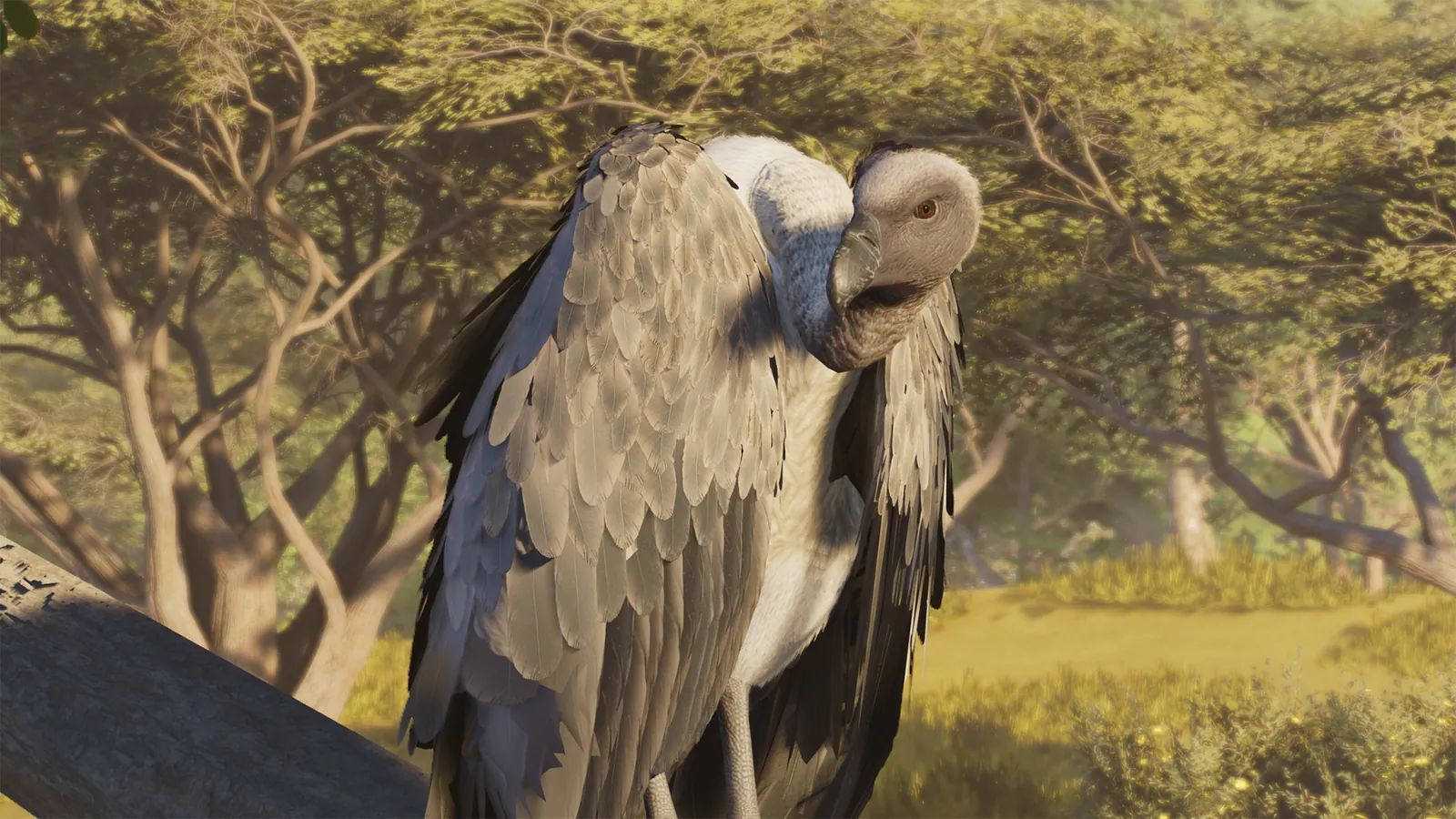
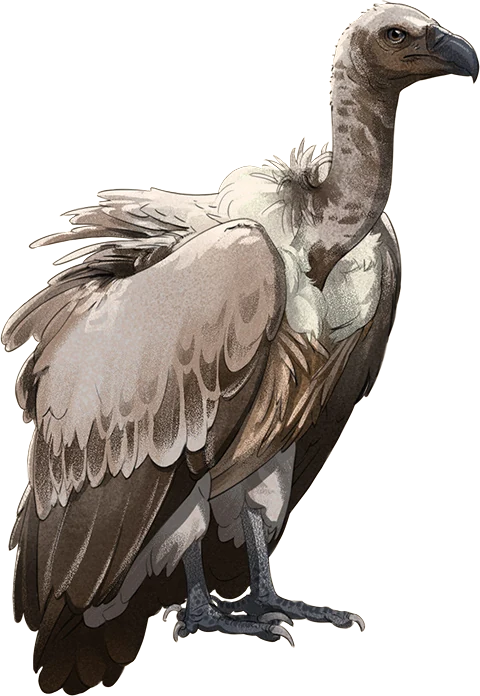
The white-backed vulture (or Gyps africanus) is a large raptor native to sub-Saharan Africa, commonly found in open savannas, dry woodlands, and grasslands where it can easily locate carrion. Its range extends from Senegal and Ethiopia in the north to South Africa in the south. This vulture has a distinctive appearance, with a dark brown body, contrasting white back and rump, and a bald, pale head. Adults measure around 78cm to 98cm in height, with a wingspan of 1.96m to 2.25m. They typically weigh between 4.2kg and 7.2kg, with females about 10% heavier than males.
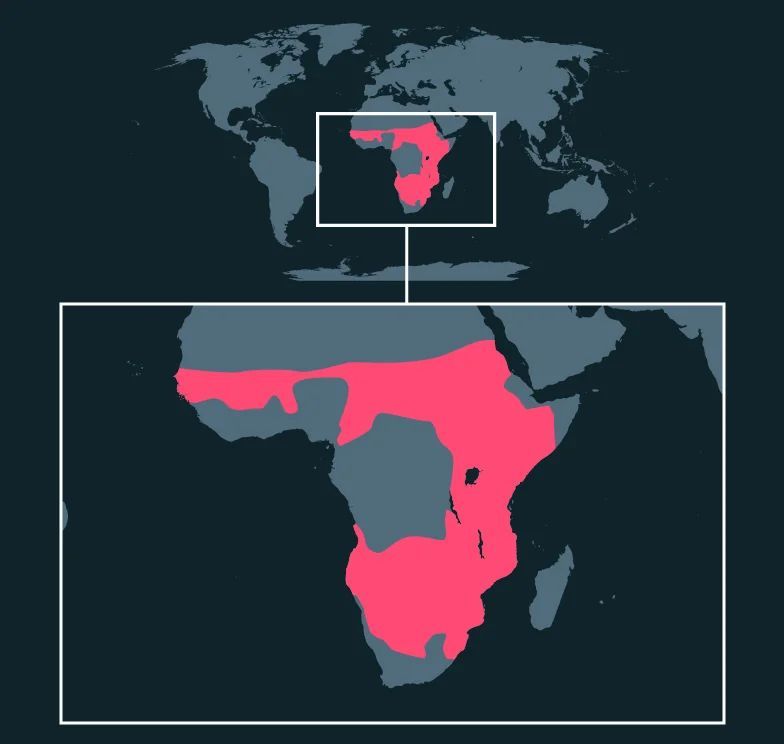
Found in Africa
Regions
- Africa
Biomes
- Desert
- Grassland
Size & weight
Size
Leg span: 2.02 to 2.4 m
Measured as Leg span. The person stands 1.75 m tall for scale.
Habitat requirements
Barrier grade
Grade 2 of 5
Minimum height
1 m minimum
Climbing & water
Climb proof
Not needed
Water barrier
Not allowed
Combine this animal with others in the barrier planner.
Habitat needs
Minimum area
Land
475 m² + 100 m² per extra animal
Flying
60 m² + 25 m² per extra animal
Shelter
10 m² per animal
Environment
Temperature
14 to 41°C
Plant coverage
10-40%
Enclosure
Roofed Habitat
Terrain
- Short Grass 20-80%
- Sand 10-70%
- Soil 10-70%
- Rock 0-20%
- Waterlogged 0-10%
Diet and enrichment
Diet
- Nutritionally Complete Meat
- Small Carcasses







Conservation
IUCN Red List
Critically endangered
Least concern
Critically endangered
Wild population
27,000
27,000 - 51,300 (estimated) in the wild. Rank 31 of 58 species with a known count, smallest first.
The white-backed vulture has experienced a dramatic population decline and is considered Critically Endangered. One of the greatest threats is poisoning, either accidentally when livestock carcasses contain substances like diclofenac, a veterinary drug highly toxic to vultures, or deliberately poisoned carcasses left by poachers so that circling vultures won’t alert anti-poaching patrols. Habitat loss due to human expansion reduces foraging and nesting grounds. Electrocution and power line collisions pose a threat, too, as vultures often nest or perch on tall structures. Their slow reproductive rates make population recovery difficult. In response, protected areas seek to protect and stabilise vulture populations in safe habitats with minimal human disturbance. Rehabilitation centres and ‘vulture restaurants’ provide care and clean carrion for poisoned birds. Satellite tracking is used to identify threat hotspots, and local engagement raise awareness about the vulture’s importance and danger of poisons. Additionally, there is a push to ban harmful veterinary drugs. Combined efforts aim to secure a future for this vital scavenger species.
Zoopedia sketchbook
Social & reproduction
Keeper notes
White-backed vultures are social birds, often gathering in groups of 10 to 12, feeding together and relying on each other to find carcasses. White-backed vultures form monogamous pairs with strong pair bonds reinforced through courtship behaviours like mutual preening and synchronised flight displays. The breeding season varies depending on the region, but is generally in the dry season, when carcasses are easier to locate. A pair constructs a nest together, high in trees out of range of predators. These nests are often refurbished and reused year-on-year, fostering strong site fidelity. After mating, the female vulture lays a single egg into the nest, which both parents incubate in turns for about 55 days. The chick is entirely dependent on its parents to feed it regurgitated carrion and grows rapidly until fledging at 3.5 to 4 months old. Parental care continues for several weeks post-fledging as the juvenile learns to forage and feed independently. The young vultures reach sexual maturity at around 5 to 7 years of age, and will find a mate of their own to bond with.
Group and breeding
Group
Group size
6-80 (up to 40 males, up to 40 females)
Male bachelor group
1-40
Female bachelor group
1-40
Offspring dispersal
None
Lifecycle and breeding
Life expectancy
19-25 years
Age of sexual maturity
6 years
Age of sexual sterility
Death
Gestation or incubation
1.8 months
Interbirth period
10.2 months
Clutch size
1
Mating system
Monogamous
Mating season
Autumn
Reproduction in captivity
Difficult
Animal facts
- As obligate scavengers, white-backed vultures help prevent disease by cleaning up carrion. Their specialised stomachs kill many pathogens that would be harmful to other animals.
- White-backed vultures may travel hundreds of kilometres in a single day to locate food.
- White-backed vultures do not have a ‘syrinx’, the organ that usually allows birds to sing, and so they mostly vocalise with grunts and hisses.
- White-backed vultures belong to the genus Gyps, which is derived from the Ancient Greek word ‘gups’, meaning vulture.
- White-backed vultures have exceptional eyesight and can spot a carcass from a great distance, meaning other scavengers often follow them to find food.
Taxonomy
Class
Order
Family
Genus
Species