Overview
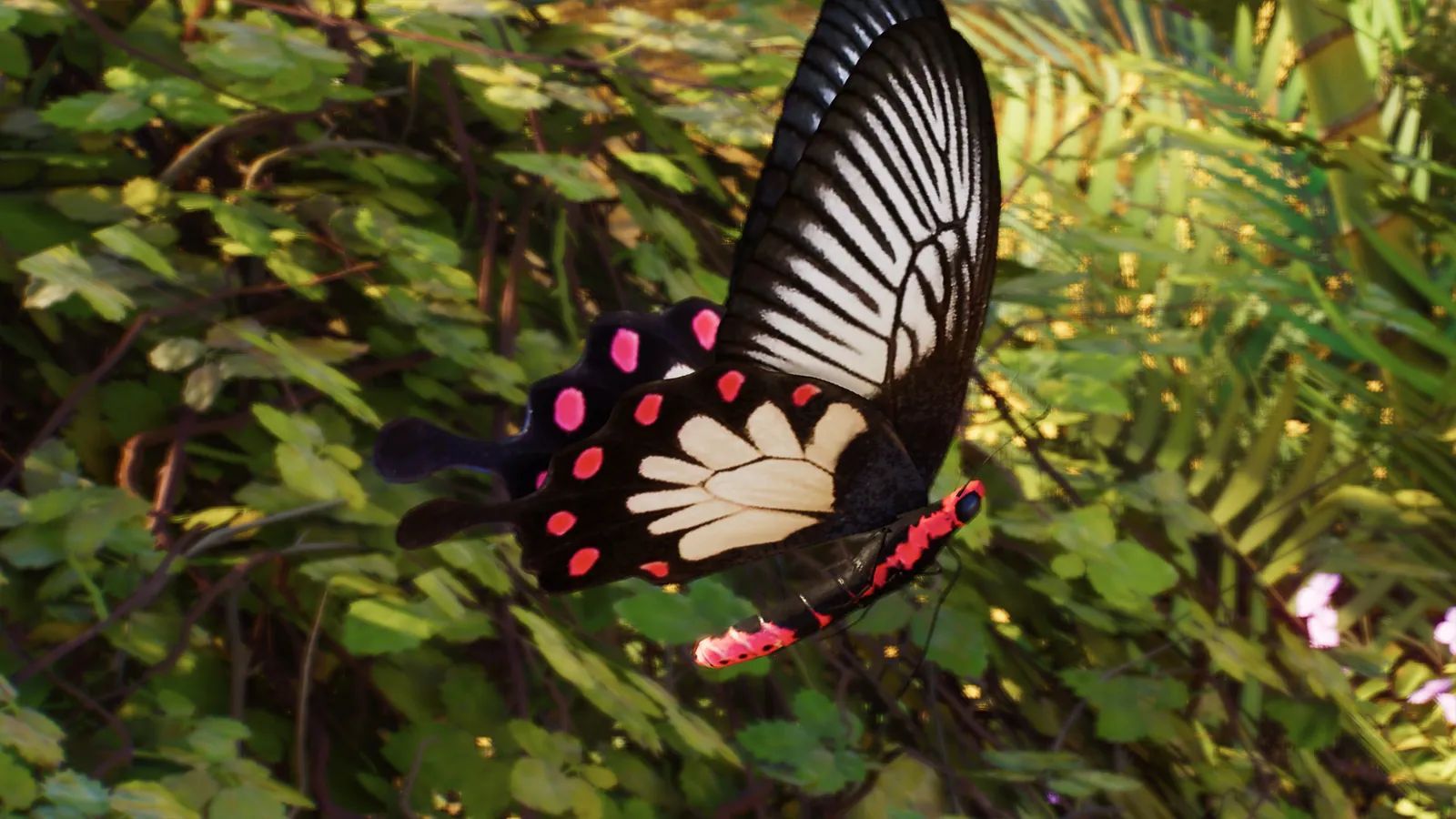
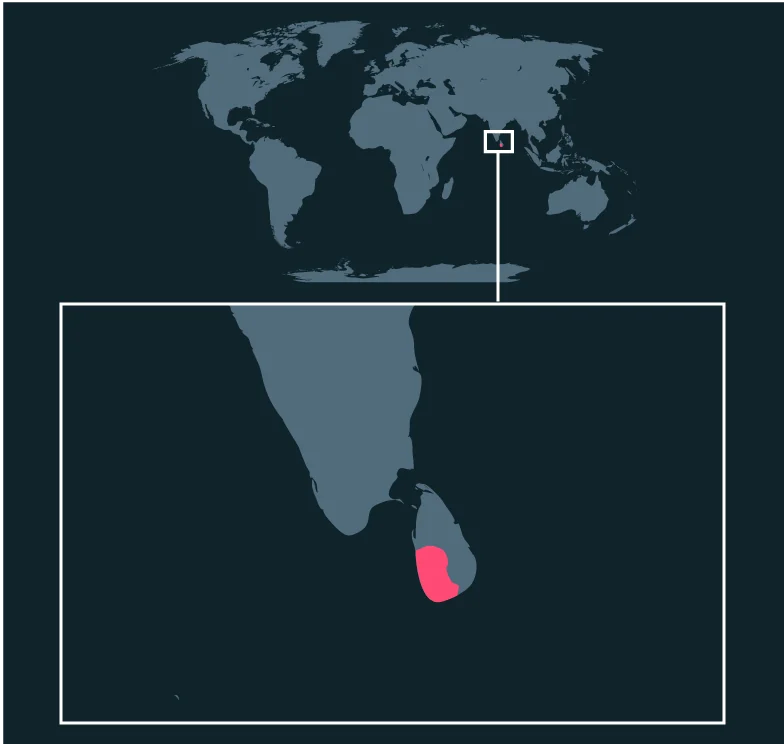
The Sri Lankan rose (or Pachliopta jophon), also known as the Ceylon rose, is a swallowtail butterfly native to the rainforests of Southwestern Sri Lanka. It has white wings with black rims and veins, with red accents on the edge of the hindwing cells. Like many swallowtail butterflies, it has ‘tails’ extending from the hindwings. The body of the Sri Lankan rose is black, with red stripes around the abdomen. Caterpillars of this species are black, with red antennae, except for one white segment in the middle of the body. Males and females look similar, though the female’s forewings are slightly larger with more visible patterns. The wingspan of the Sri Lankan rose is 9cm to 13cm.
Found in Asia
Regions
- Asia
Biomes
- Tropical
Size & weight
Size
Leg span: 0.15 m
Measured as Leg span. The person stands 1.75 m tall for scale.
Habitat needs
Environment
Temperature
21 to 35°C
Humidity
40-60%
Conservation
IUCN Red List
Endangered
Least concern
Critically endangered
As an Endangered species, the Sri Lankan rose suffers from habitat loss in its already restricted habitat. The dense, tropical forests of Sri Lanka are being cut to make space for agricultural land. Additionally, it is sought after by insect collectors and may be targeted by illegal animal trading. Restricted to a smaller area than many butterfly species, the remaining forest area of its range is under protection and undergoing scientific research. The species is traded for collection, but is covered under some regulation and thereby no longer the most pressing threat. The outlook for the Sri Lankan rose is uncertain, with unknown population trends and limited recent information on the species. It would benefit from additional study and monitoring.
Social & reproduction
Keeper notes
The Sri Lankan rose is usually more solitary than other butterflies but may be found in pairs. Given abundant resources, larger groups can cohabit. Sri Lankan rose butterflies mate year-round but may be more prolific during the rainy season from May to September. Males locate females on forest edges or clearings. Readiness to mate is communicated via pheromones and wing fluttering. When a female accepts a male, the pair will land on nearby branches and mates for 30 to 60 minutes. Soon after, the female will seek out suitable host plants, and lays her eggs on the underside of young leaves or stems. Sri Lankan roses lay very few eggs, only 1 or 2 eggs per leaf, and around 50 to 100 eggs in total. This is thought to minimise competition between caterpillars. Eggs will hatch after 3 to 5 days, and caterpillars feed on the host plants, which builds up the toxins protecting the animal from predators. This stage lasts for up to 3 weeks, in which the caterpillar will moult 5 times, and then spin a chrysalis. After pupating in the chrysalis for about two weeks, the adult Sri Lankan rose emerges, usually in the morning. The warming sun aids the initially soft wings to dry and harden and allow them to take flight. They reach sexual maturity a few days after emerging, and live for about a month after.
Group and breeding
Lifecycle and breeding
Life expectancy
0.5-1 years
Gestation or incubation
1.2 months
Interbirth period
10.8 months
Litter size
1
Mating season
Summer
Animal facts
- The Sri Lankan rose was considered a subspecies of the ‘crimson rose’, a related and more widespread butterfly of the same genus.
- The genus name ‘Pachliopta’ is made up from the Greek roots for ‘thick’ and ‘appearance’.
- The striking, bright colouration of the Sri Lankan rose are a form of ‘aposematism’, a way of communicating to predators that the individual is toxic or inedible.
- As caterpillars, the Sri Lankan rose feeds on toxic plants, such as from the Aristolochia genus, which makes it unpalatable to predators. This toxin is retained even in the adult after emergence.
- The species was first described in 1853 by British zoologist John Edward Gray.
Taxonomy
Class
Order
Family
Genus
Species