
Overview
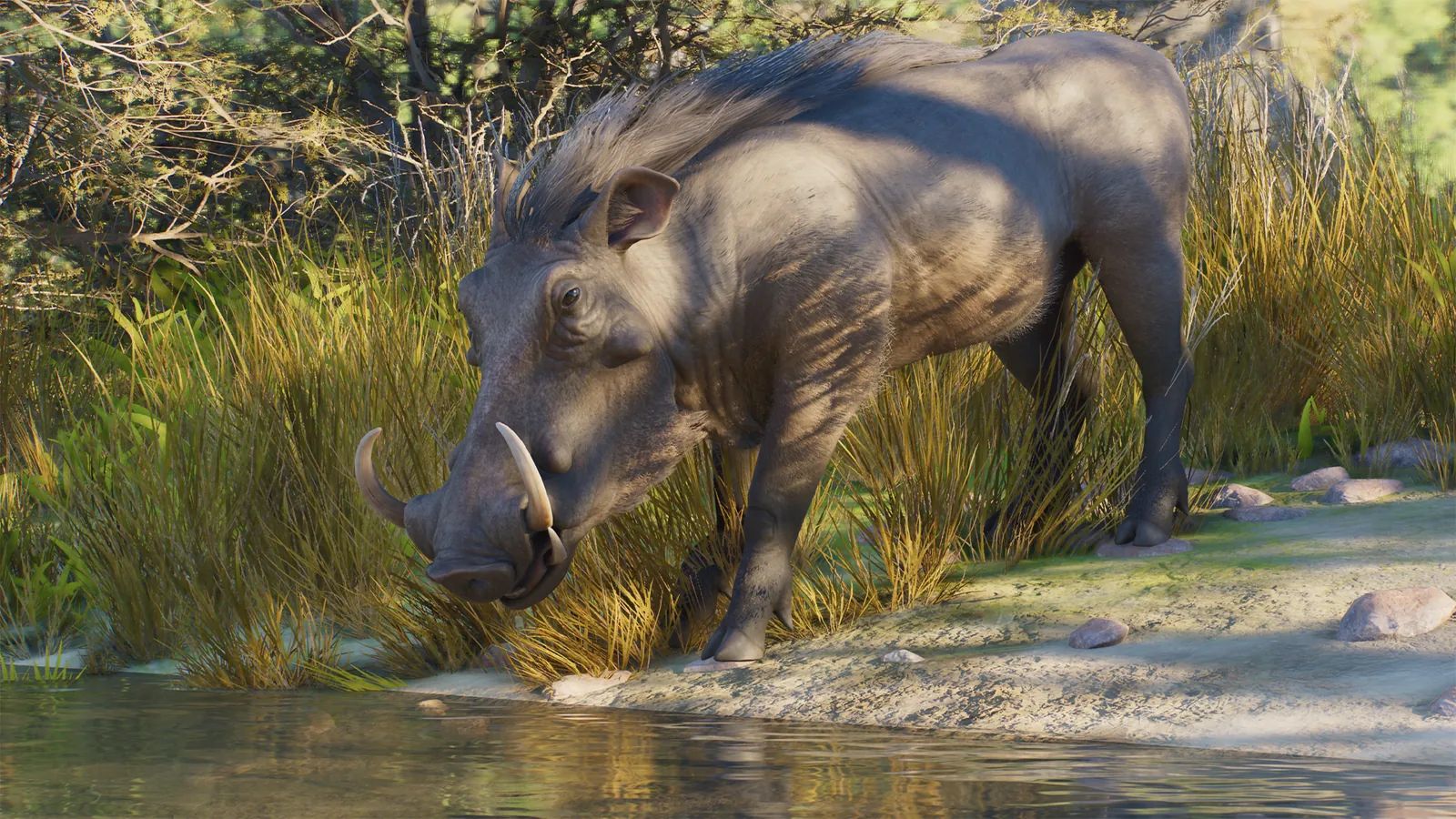
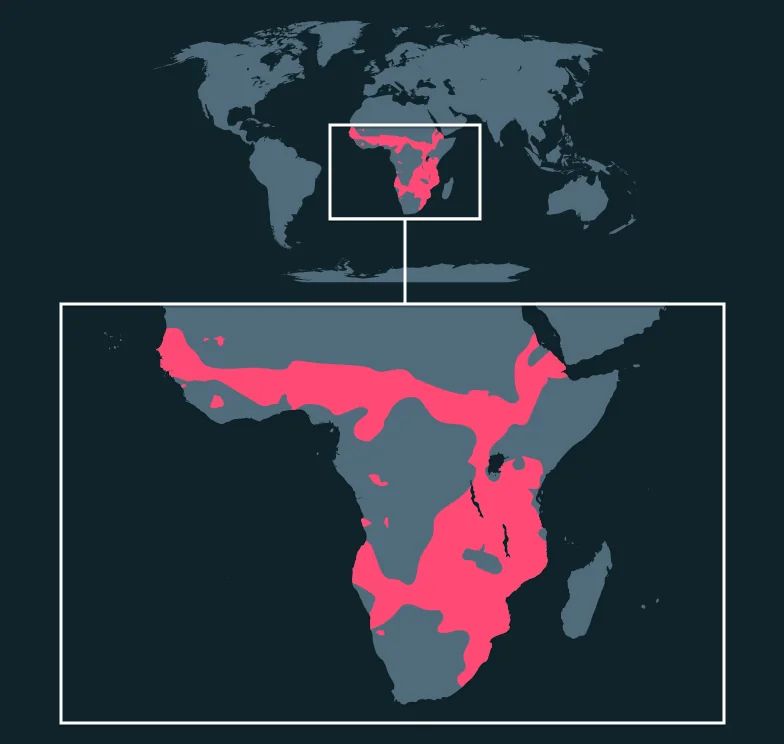
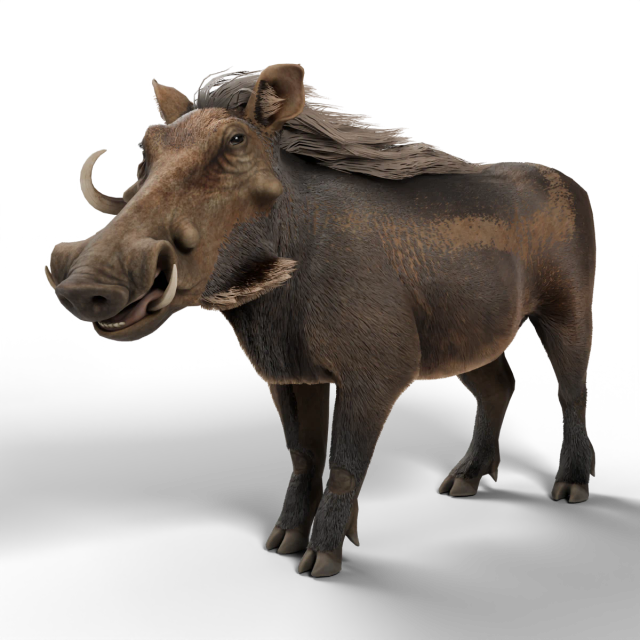
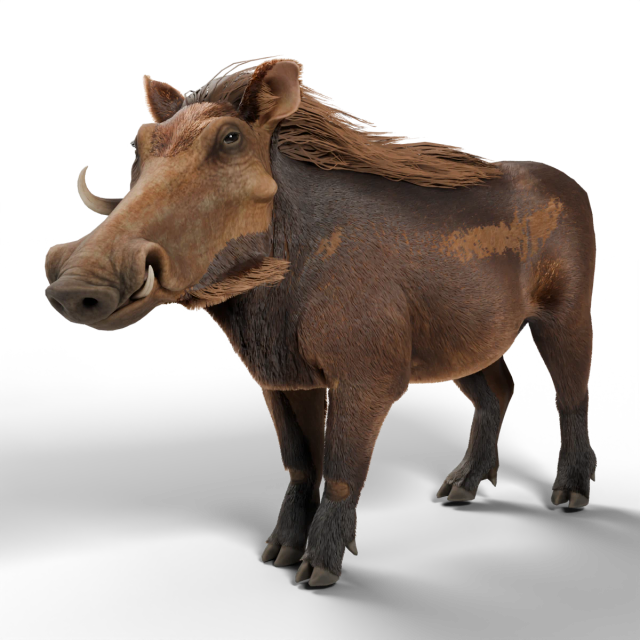
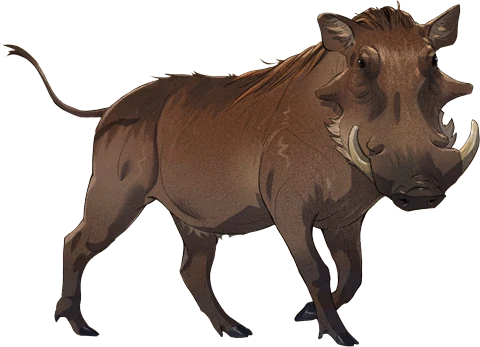
The common warthog (or Phacochoerus africanus) lives throughout Sub-Saharan Africa in a wide variety of environments. The common warthog has a large head with a coarse mane of hair and distinctive tusks. The upper tusks are large, thick and blunt, while the lower tusks are short and sharp. Warthogs also have large cartilaginous protrusions on their cheeks. The males average between 1.3 and 1.5m in length and between 60 and 150kg in weight, whereas females are shorter and lighter, averaging between 0.9 to 1.3m long and 45 to 75kg in weight.
Found in Africa
Regions
Biomes

Appearance
Male
Female
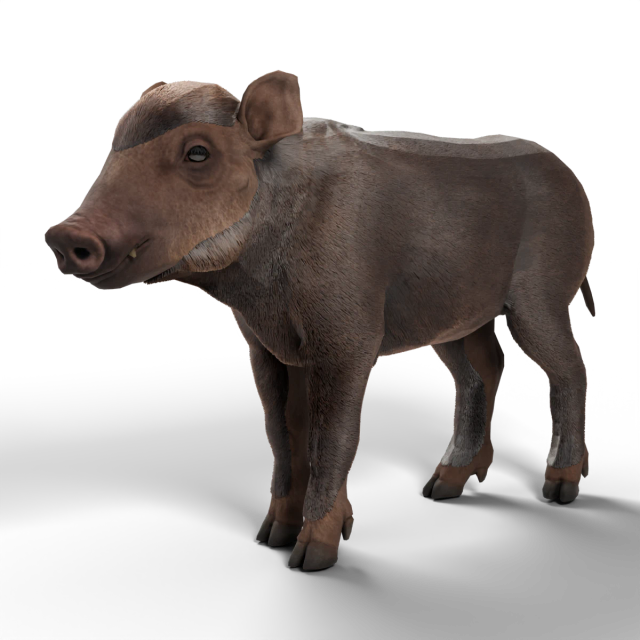
Juvenile
Colourmorphs
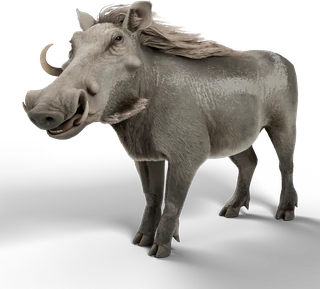 Leucistic male
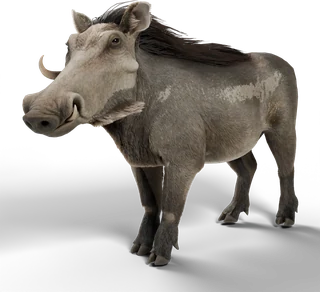 Leucistic female
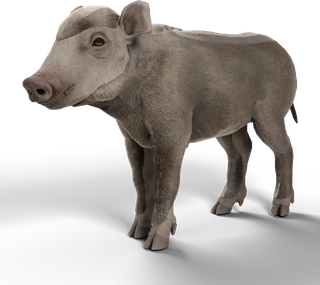 Leucistic juvenile
Size & weight
Size
Shoulder height: 70 to 80 cm
Weight
Male
105 kg
Female
60 kg
Bars use a log scale against the heaviest animal in the Zoopedia, the Common Hippopotamus.
Measured as Shoulder height. The person stands 1.75 m tall for scale.
Habitat requirements
Barrier grade
Grade 2 of 5
Minimum height
1.25 m minimum
Climbing & water
Climb proof
Not needed
Water barrier
Not allowed
Barriers at this grade
Barrier types with resistance grade 2.



Habitat needs
Minimum area
Land
290 m² + 10 m² per extra animal
Shelter
10 m² per animal
Environment
Temperature
14 to 36°C
Plant coverage
10-40%
Enclosure
Habitat
Dislikes
Rain and snow
Terrain
- Short Grass 25-80%
- Sand 0-30%
- Soil 20-60%
- Rock 0-20%
- Waterlogged 0-30%
Thriving Relationships
African Savannah: sharing a habitat with one of these species fulfils a Thriving requirement.













Diet and enrichment
Diet
- Hay
- Herbivore Pellets












Water sources


Conservation
IUCN Red List
Least concern
Least concern
Critically endangered
Wild population
250,000
250,000 in the wild. Rank 47 of 58 species with a known count, smallest first.
Although populous, adaptable, and of Least Concern, the common warthog does experience some pressure from habitat loss and human-wildlife conflict. Human expansion results in loss of access to savannah and grassland habitats, reducing availability of food and burrow sites. Additionally, they are sometimes killed by farmers trying to protect crops or livestock, as their foraging destroys harvest and they may spread diseases to other animals. Poaching and trophy hunting also contributes to localised population declines. Common warthogs benefit from general conservation efforts across their range, such as habitat protection, campaigns for sustainable land-use practices, and community-based wildlife management, such as ecotourism initiatives or crop-protection strategies. Specific monitoring efforts and enforcement of anti-poaching laws further support their long-term survival, aiming to ensure that common warthogs remain a resilient and integral part of Africa’s savannah ecosystems.
Zoopedia sketchbook
Social & reproduction
Keeper notes
Warthogs have a complex social structure. Mature females tend to live in interrelated groups with their offspring. However, year-old piglets may leave their mother's group and live in sibling groups, before splitting up as they get older. The young females usually return to their mother's group, whereas young males will form bachelor herds until they are old and strong enough to become solitary. Common warthogs mate from January to June. Male warthogs have two strategies for mating. These are called 'tending' and 'roaming'. A tending male will join a sounder of females during the mating season and block other males from coming close; as well as try to stop females going to other males. Roaming males search for multiple sounders and attempt to mate with females from these groups, often competing with the tending male. Female common warthogs are pregnant for 5-6 months before giving birth to 1 to 5 piglets in their burrow, away from their sounder. They nurse their piglets there for several weeks, before returning to the sounder. The young piglets begin eating solid food at 3 weeks old and are fully weaned by 6 months old. Piglets reach sexual maturity at 2 years old, although males are unlikely to mate for the first time until they are 4 to 5 years old. Females remain with their sounder, while males join bachelor groups, becoming fully solitary as they age.
Group and breeding
Group
Group name
Sounder
Group size
1-7 (up to 1 male, up to 7 females)
Male bachelor group
1
Female bachelor group
1-4
Offspring dispersal
Male offspring
Lifecycle and breeding
Life expectancy
11-21 years
Age of sexual maturity
2 years
Age of sexual sterility
Death
Gestation or incubation
5 months
Interbirth period
7 months
Litter size
1-5
Mating system
Promiscuous
Mating season
Summer
Reproduction in captivity
Easy
Dominance
Males fight for right to mate. Females have rank in groups based on age.
Research
Research levels
| Level | Unlocks | Research gate |
|---|---|---|
| Level 1 | Thriving Requirement 1: Heavy Soil terrain | |
| Level 2 | Thriving Requirement 2: Mud Bath, at least 1; Common Warthog Fact Sheet | |
| Level 3 | Release groups and release to the wild | |
| Level 4 | Thriving Requirement 3: Food Grade 2; Fertility Level 1 (+15% fertility) | Before this level: an Observation Network (Observation Platform) in Great Rift Valley Reserve and this species released in Great Rift Valley Reserve |
| Level 5 | Thriving Requirement 4: at least 50% native plants | |
| Level 6 | Thriving Requirement 5: African Savannah Social Group; Fertility Level 2 (+30% fertility) |
Researched by
Vets
Researched at
Habitat or exhibit and Research Centre
Wildlife Reserve
Great Rift Valley Reserve
Every level of this species' research, with its unlock conditions.
Release groups
Valid release groups
| Group | Type | Animals |
|---|---|---|
| Male Bachelor Herd | Male group | 3 males |
| Female Sounder | Female group | 4 to 6 females |
| Solitary Male | Solitary male | 1 male |
Release requirements
| Requirement type | Requirement |
|---|---|
| Ecosystems Required | Either Grassland or Shrubland |


Release groups, reserve requirements and the roles this species fills.
Animal facts
- The warthog's genus name, Phacochoerus, derives from the Ancient Greek words 'phakós' - wart and 'khoîros' - pig.
- The upper tusks of the common warthog can grow up to 25cm long.
- Common warthogs sleep in the abandoned burrows of other animals, usually aardvarks.
- The tusks of the warthog shear against each other, making the bottom tusks razor sharp. Warthogs use these for attacking predators.
- Common warthogs back into their burrows so that they are facing outwards and can charge at predators if they are at risk.
Taxonomy
Class
Order
Family
Genus
Species