Overview
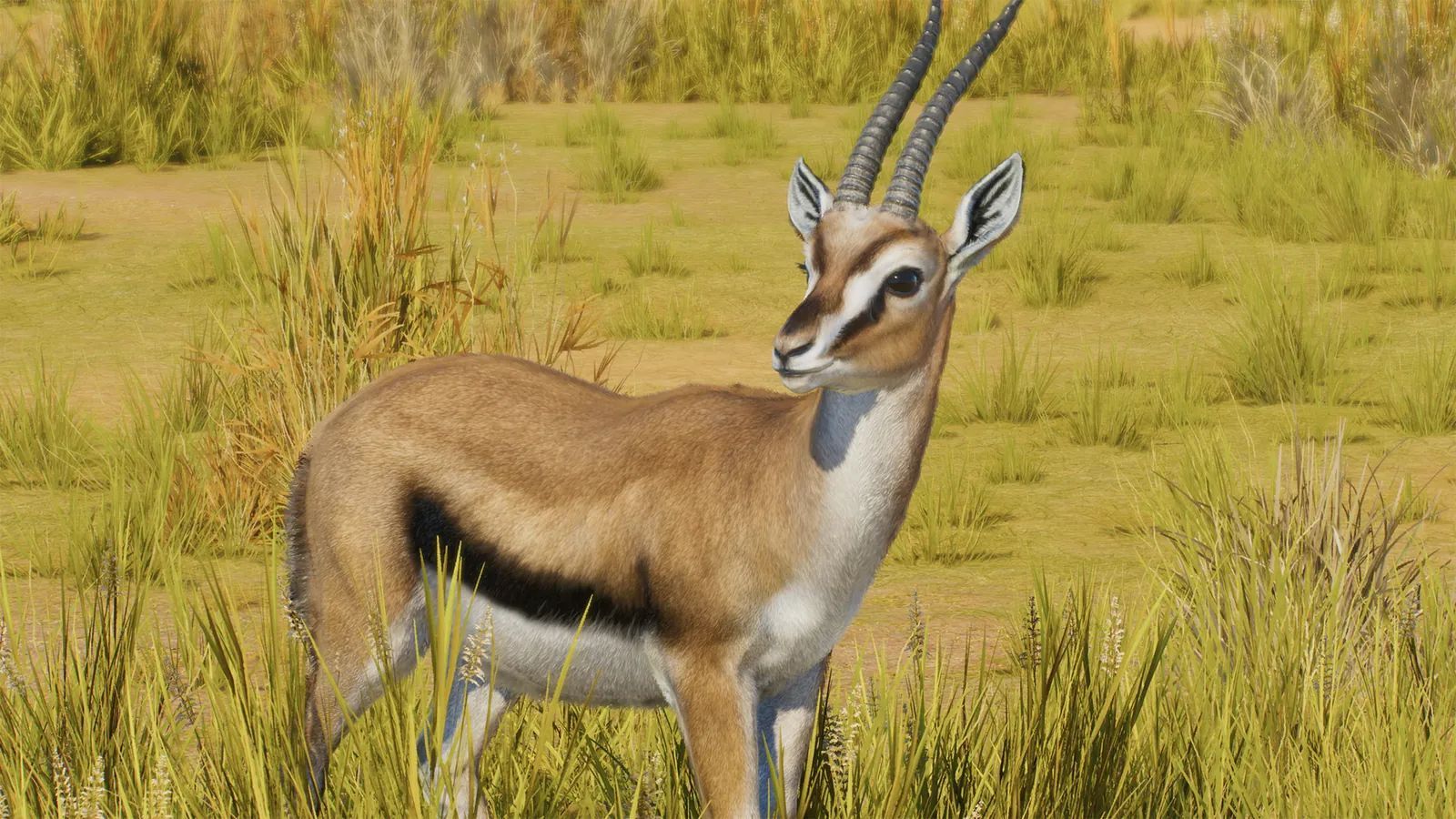
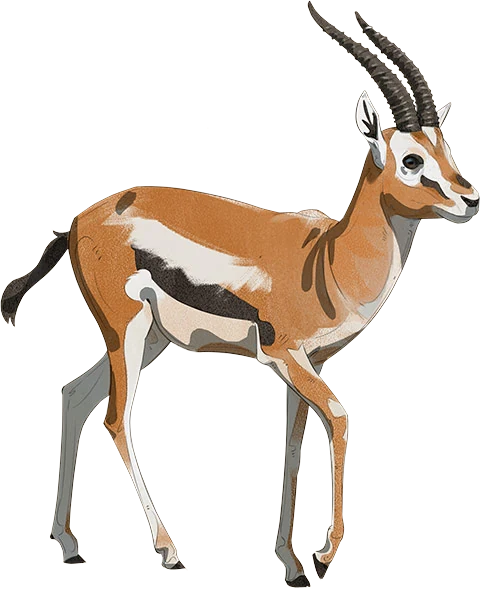
Thomson's gazelle (or Eudorcas thomsonii) is a small species of grazing mammal that lives in Africa's Serengeti regions of Tanzania and Kenya. It prefers to live in dry grassland – although is also found in woodland – and has a tan-coloured back, white underside and a dark stripe on their flank. They also have a tan muzzle, white cheeks and eye region, as well as black streaks running from their eyes to the start of the muzzle. Both sexes have dark, heavily ridged horns – although the males' are longer and more robust – they both measure an average of 55 to 82cm tall, 80 to 120cm long, and weigh between 20 and 35kg.
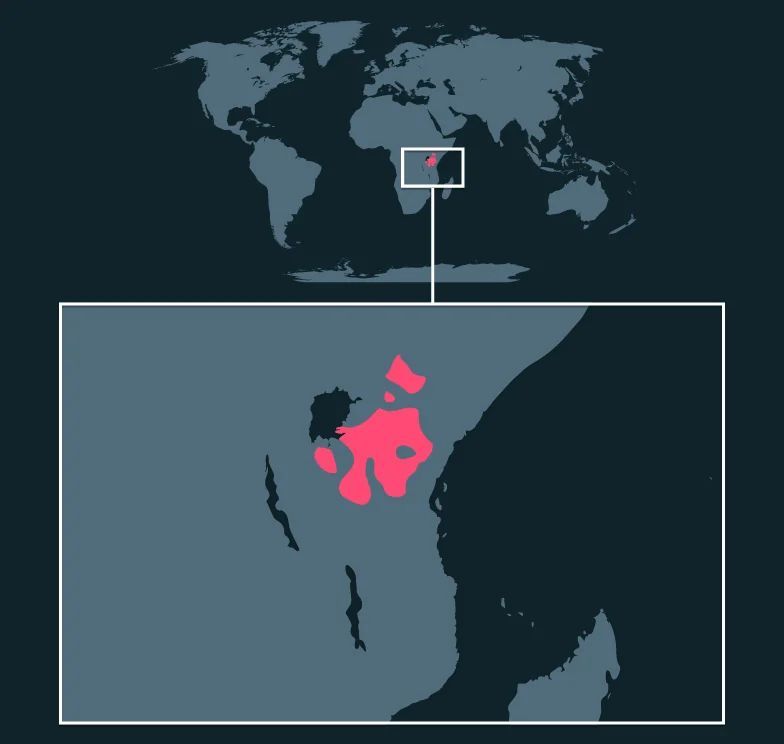
Found in Africa
Regions
- Africa
Biomes
- Grassland
Size & weight
Size
Shoulder height: 0.75 m
Weight
Male
27 kg
Female
27 kg
Bars use a log scale against the heaviest animal in the Zoopedia, the Common Hippopotamus.
Measured as Shoulder height. The person stands 1.75 m tall for scale.
Habitat requirements
Barrier grade
Grade 2 of 5
Minimum height
1.25 m minimum
Climbing & water
Climb proof
Not needed
Water barrier
Not allowed
Combine this animal with others in the barrier planner.
Habitat needs
Minimum area
Land
425 m² + 55 m² per extra animal
Shelter
11 m² per animal
Environment
Temperature
14 to 36°C
Plant coverage
0-40%
Enclosure
Habitat
Terrain
- Short Grass 25-100%
- Sand 0-20%
- Soil 0-60%
- Rock 0-20%
- Grass 30-100%
- Waterlogged 0-10%
Diet and enrichment
Diet
- Hay
- Herbivore Pellets















Conservation
IUCN Red List
Least concern
Least concern
Critically endangered
Wild population
145,000
145,000 in the wild. Rank 42 of 58 species with a known count, smallest first.
The Thomson’s gazelle, is classified as Least Concern but faces conservation challenges related to habitat loss, fragmentation, and human-wildlife conflict. Expansion of agriculture, infrastructure development, and increasing livestock grazing have reduced and fragmented natural savannah habitat across East Africa. Thomson’s gazelles are vulnerable to predation pressures when populations are restricted to smaller, isolated areas. Poaching and illegal hunting also pose localised threats, in areas with weak wildlife law enforcement. Conservation efforts focus on habitat protection and sustainable land management practices that integrate wildlife conservation with community development. Protected areas provide crucial refuges for Thomson’s gazelles, and programs work with local communities to promote coexistence through anti-poaching initiatives, education, and ecotourism. Wildlife corridors and buffer zones connect fragmented habitats, allowing gazelles and other wildlife to move freely across the landscape. Continued monitoring and research are ensuring the long-term viability of Thomson’s gazelle populations in a changing environment.
Zoopedia sketchbook
Social & reproduction
Keeper notes
Thomson's gazelle have a complex and changeable social structure. Like most ungulates, they live in herds composed of multiple group types: mixed groups of non-dominant males, females and juveniles; bachelor groups of juvenile and young adult males; solitary dominant males that are territorial and defend their range from other males; as well as breeding harems comprised of a dominant male and multiple receptive females. Group composition and numbers changes depending on food availability and the time of year. During breeding season, which is year-round, but more likely during rainy seasons, dominant territorials bull will chase and herd any fertile females feeding and moving through their range in hopes of getting her into his harem. Males establish their dominance with loud grunts towards rivals, stand in a challenging posture and mark their territory by defaecating. Males will court a female in oestrus by approaching and tapping their foot on the ground multiple times. If she is receptive, the two will mate several times in the following hours. After a 6 month pregnancy, the mother will leave the herd to give birth to 1 calf, which will remain hidden for the first 3 to 4 weeks of its life feeding on milk, before it begins to feed on young grasses. It will be fully weaned by 5 to 8 months old, when the mother is likely to be pregnant again. Females stay with their mother's herd unless herds are broken up by mating season, whereas males leave at approximately 6 months old, joining a bachelor herd or an unrelated mixed herd. Subadult males will fight for dominance, establishing a range and territory once strong enough to fight off rivals. They mark it with urine, scent, and horn scratches, engaging in ritual displays to establish boundaries with other mature males. Thomson's gazelles reach sexual maturity at 2 years old.
Group and breeding
Group
Group size
3-36 (up to 1 male, up to 35 females)
Male bachelor group
1-36
Female bachelor group
1-36
Offspring dispersal
Male offspring
Lifecycle and breeding
Life expectancy
10-20 years
Age of sexual maturity
2 years
Age of sexual sterility
Death
Gestation or incubation
6 months
Interbirth period
6 months
Litter size
1
Mating system
Polygynous
Mating season
Aseasonal
Reproduction in captivity
Very Easy
Dominance
Territorial bulls
Animal facts
- Thomson's gazelle can run at speeds of up to 96mk/h.
- Thomson's gazelle are preyed upon by cheetahs, leopards, lions, hyenas, crocodiles, pythons, eagles, African wild dogs, jackals and baboons.
- Young male Thomson's gazelle use their horns to fight for dominance, whereas mature males rarely fight and instead engage in ritual displays.
- The Thomson's gazelle very rarely drinks, getting the water they need for survival from their diet.
- Thomson's gazelle are social animals and often live in large groups, with herds of 700 being seen in the wild.
Taxonomy
Class
Order
Family
Genus
Species