Overview
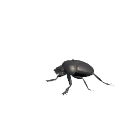
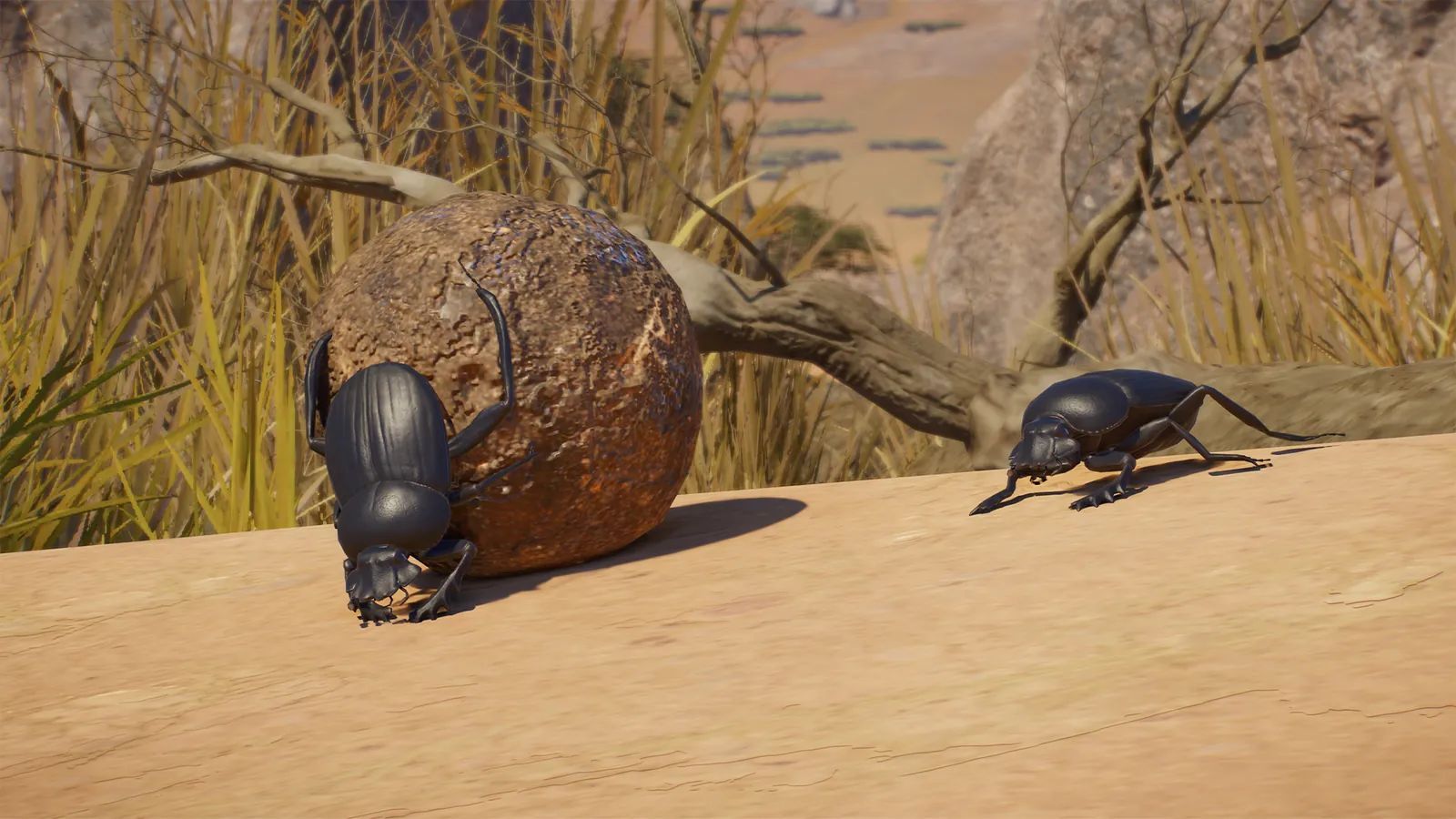
The sacred scarab beetle (or Scarabaeus sacer) is a dung beetle native to the coastal dunes and marshes around the Mediterranean Sea in Northern Africa, Europe and the Middle East. The head of the scarab beetle has 6 oblong projections, and its front legs have an additional 4 each, giving the appearance of an arc of rays on the beetle’s front end. The sacred scarab beetle is 10mm to 25mm long and has a shiny, black carapace.
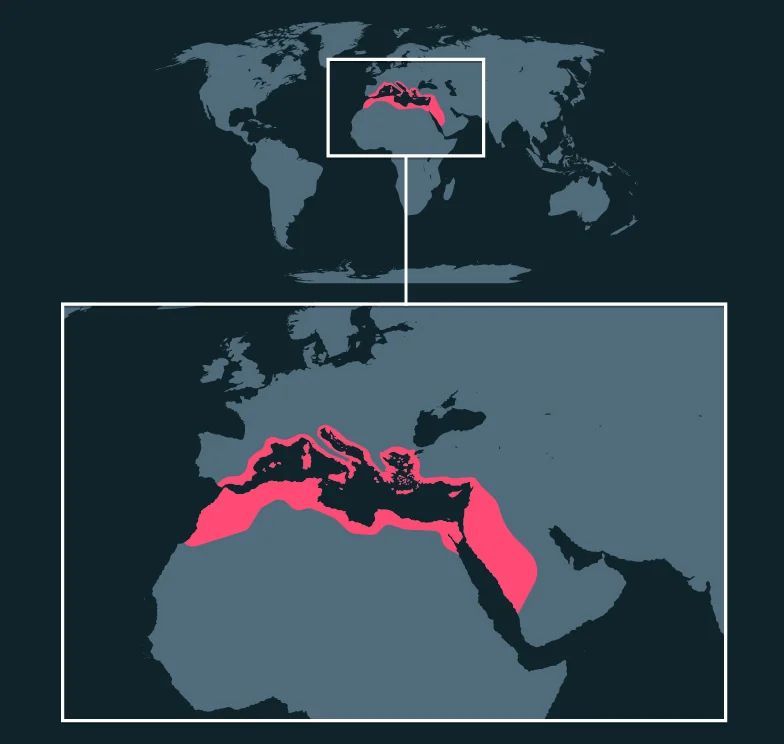
Found in Africa, Europe, Asia
Regions
- Africa
- Asia
- Europe
Biomes
- Desert
Size & weight
Size
Length: 0.02 m
Measured as Length. The person stands 1.75 m tall for scale.
Habitat needs
Environment
Temperature
20 to 35°C
Humidity
40-60%
Conservation
IUCN Red List
Not evaluated
Least concern
Critically endangered
The conservation status of the sacred scarab beetle has not been evaluated. While widely distributed and unlikely to be threatened, the sacred scarab beetle is nonetheless negatively affected by habitat loss due to land conversion, agricultural management, and pollution. Dung of livestock is often contaminated with poorly metabolised remains of medication, which leads to localised population reductions in livestock-rich areas. Conservationists are working on improved monitoring for the beetle populations to detect population changes, including cooperation with hobby entomologists in citizen conservation initiatives. Information campaigns about dung beetle’s role in the ecosystem can raise public awareness, while improved farming practices may help keeping a diverse and safe habitat for beetles in place. Continued work is required to implement protective legislation and improve research to protect this and many other species of beetles so vital for soil and ecosystem health across their range.
Social & reproduction
Keeper notes
Sacred scarab beetles are solitary in the wild, but males and females will come together for nesting, and to compete for mates and dung balls. Sacred scarab beetles mate year-round. When a female is ready to breed, she creates a dung ball for nesting. These balls are usually made from dung with a finer texture than those collected for feeding. Males will create dung balls to attract females, and often fight over or steal other males’ balls. Males who manage to keep their ball and deposit it into the burrow will win mating rights. After mating in the burrow, the female modifies the shape of the ball by adding more dung on top and creating a pear shape. She will create a small tunnel through the tip of the dung ball to lay her egg in the centre of the ball, then abandons the burrow. The larvae hatch from the eggs after several days and feed on the dung ball. After 1 to 4 weeks, they will pupate. Young adult beetles will emerge after a month, though this time varies dependent on temperature and humidity. Scarab beetles do not reproduce straight away, but will spend time feeding and allowing their gonads to develop. This may take several months based on environmental conditions and food availability.
Group and breeding
Lifecycle and breeding
Life expectancy
3-6 years
Gestation or incubation
1 month
Interbirth period
10.9 months
Litter size
1-3
Mating season
Aseasonal
Dominance
None, though males may fight over females and dung balls
Animal facts
- Sacred scarab beetles use the projections on their head and front legs to shape dung into spheres.
- Scarab beetles can roll balls of dung that are 50 times their weight.
- Sacred scarab beetles roll dung by pushing it with their back legs.
- The sacred scarab beetle was seen as a representation of the Sun God Ra by Ancient Egyptians, who likened the rolling of dung balls to the sun rolling across the sky.
- The larvae of scarab beetles play an important ecosystem role in recycling the nutrients from detritus and dung.
Taxonomy
Class
Order
Family
Genus
Species