Overview
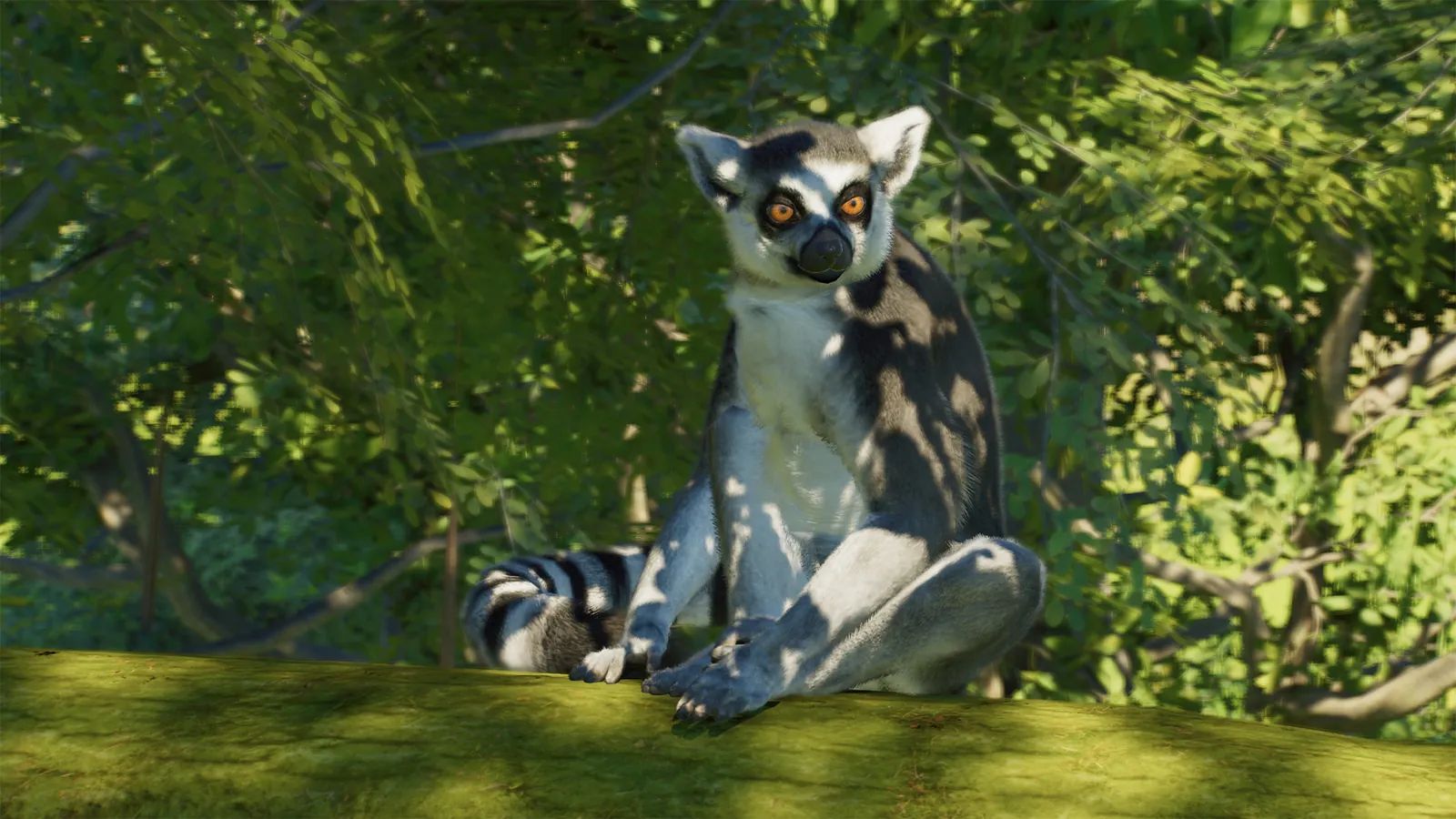
Like all species of lemur, the ring-tailed lemur (or Lemur catta) is native to Madagascar and is not naturally found anywhere else in the world. Ring-tailed lemurs have a pointed muzzle, cat-like ears, and a long tail that has 12 or 13 white rings, 13 or 14 black rings, and a tip that is always black. They are usually between 39cm and 46cm in size with a tail of 56cm to 63cm. They have an average weight of 2.2kg.
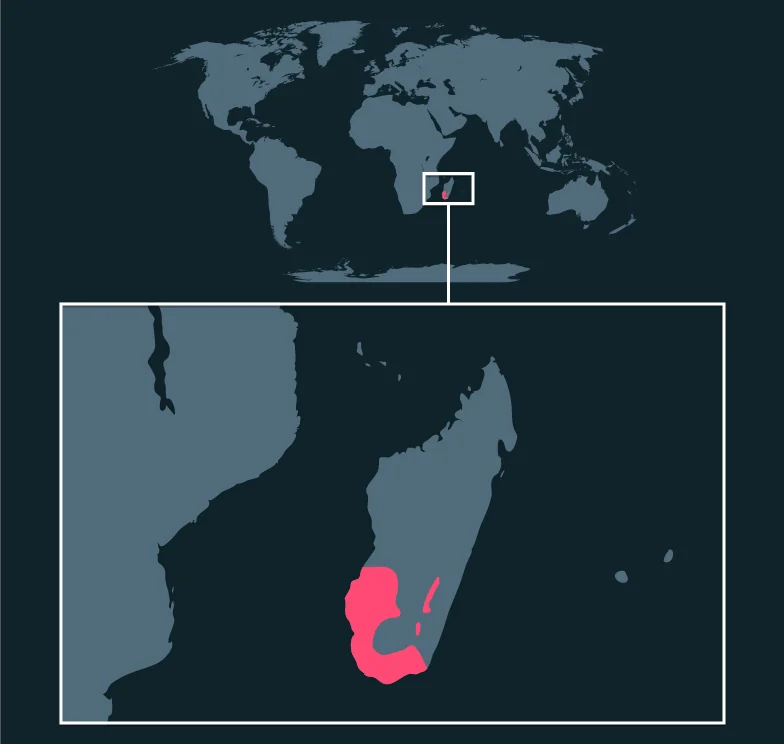
Found in Africa
Regions
- Africa
Biomes
- Rainforest
Size & weight
Size
Standing height: 0.55 to 0.6 m
Weight
Male
2.7 kg
Female
2.7 kg
Bars use a log scale against the heaviest animal in the Zoopedia, the Common Hippopotamus.
Measured as Standing height. The person stands 1.75 m tall for scale.
Habitat requirements
Barrier grade
Grade 2 of 5
Minimum height
3 m minimum
Climbing & water
Climb proof
Needed
Water barrier
Allowed
Water barrier size
3 m wide, 1 m deep
Combine this animal with others in the barrier planner.
Conservation
IUCN Red List
Endangered
Least concern
Critically endangered
Wild population
2,000
2,000 in the wild. Rank 8 of 57 species with a known count, smallest first.
The ring-tailed lemur is Endangered, with population estimates showing severe declines in recent decades. Deforestation, driven by slash-and-burn agriculture, charcoal production, and logging, has dramatically reduced the lemur’s natural habitat, fragmented populations and limited their access to food and mates. Additionally, ring-tailed lemurs are often hunted for bushmeat and captured for sale in local and international pet markets. Madagascar can also have harsh weather conditions and extended periods of drought that can kill large numbers of the population. Protected areas have been established and managed to conserve key habitats. Conservation programs involve local people in sustainable land management and provide alternative livelihoods that reduce dependence on forest resources. Education discourages hunting and the pet trade, while captive breeding programs and research efforts, including those led by zoos and conservation institutions globally, support conservation. Together, these efforts are critical to ensuring the survival of the species, though ongoing support and enforcement remain essential.
Zoopedia sketchbook

Social & reproduction
Keeper notes
Ring-tailed lemurs live in family groups of up to 30 individuals called 'troops' that will travel and forage together. The females are interrelated, and the males migrate from their family group when they reach adulthood. Lemur troops spend daylight hours foraging for leaves and fruit, moving several kilometres a day. They are playful and friendly towards members of their own group but may be aggressive to other lemur troops. Breeding season lasts from the middle of April to the middle of May. Ring-tailed lemurs are promiscuous; both males and females will mate with multiple partners. Who mates with whom depends on the dominance structure within the troop, with low ranking males unlikely to mate at all. Female lemurs will be pregnant for 4.5 months, before giving birth to 1 or 2 babies. Infants will be carried by their mother until they are 6 months old, when they will move around completely independently. Females remain with their mother's group for life, whereas young males leave their mother's group at 3 to 5 years of age in search of an unrelated group. They will move groups several times throughout their life. Ring-tailed lemurs are sexually mature around 3 years old.
Animal facts
- The ring-tailed lemur's Latin name is 'Lemur catta': it is named for its cat-like looks.
- The ring-tailed lemur's tail is longer than its body.
- Lemurs have specialised lower teeth that form a 'dental comb' used in grooming.
- Ring-tailed lemurs have specialised eyes with an adapted reflective layer in the retina that gives them excellent night vision.
- Male ring-tailed lemurs engage in 'stink fighting' when in competition for females: they drag their tails through strong-scent secreting glands located on their wrists and shoulders, and then waft their tails at each other.
Taxonomy
Class
Order
Family
Genus
Species