Overview
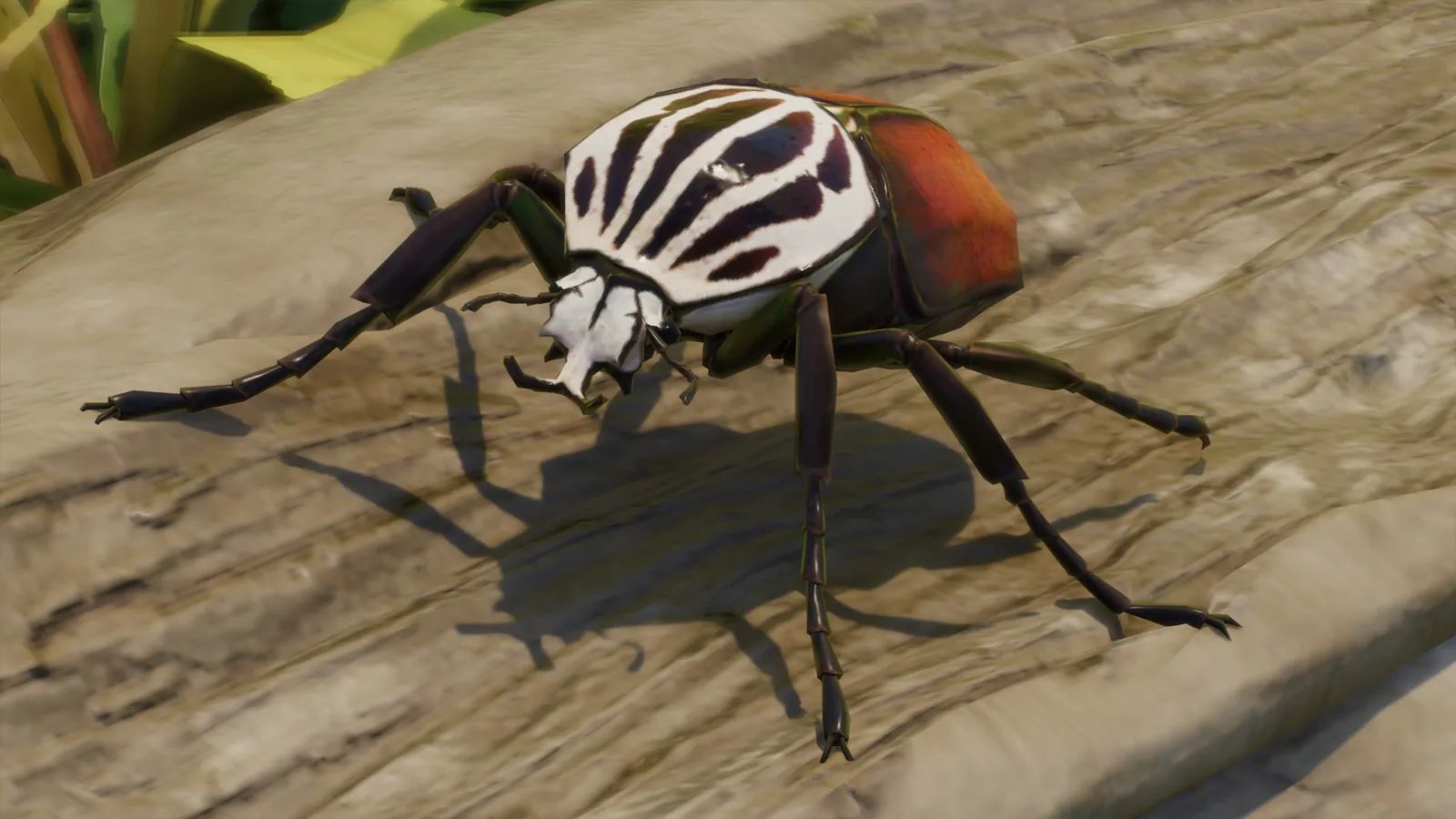
The Goliath beetle (or Goliathus goliatus) is a large species of insect that lives in the savannah and rainforests of Central Africa. The males and females are different in appearance and size: The males are larger - between 60mm and 100mm - with a dark brown abdomen, a brown thorax with white stripes, black legs, as well as a white head with a Y-shaped horn. The females have shorter, thinner stripes on the thorax, are smaller in size - between 50mm and 80mm - and do not have a horn.
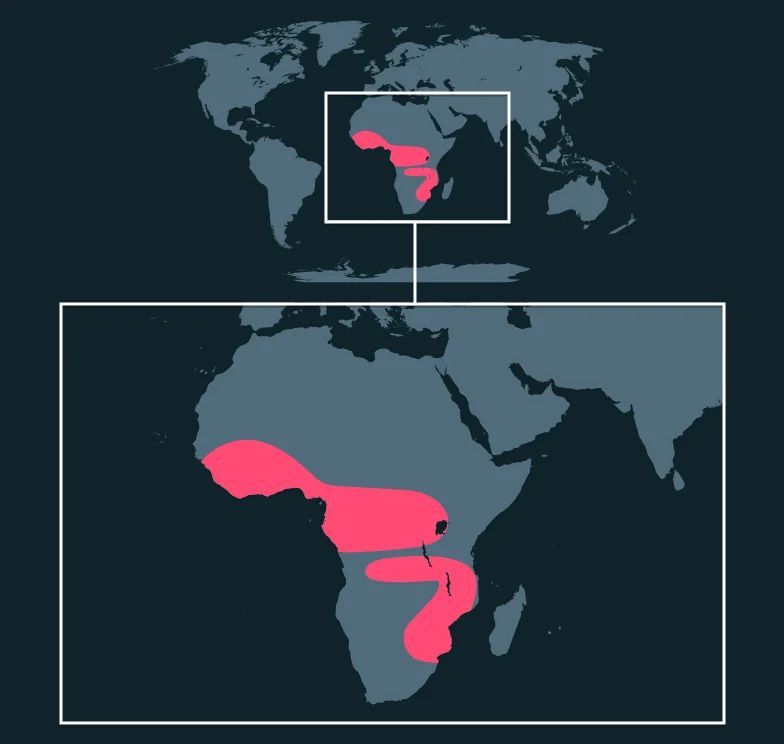
Found in Africa
Regions
- Africa
Biomes
- Rainforest
- Savannah
Size & weight
Size
Length: 0.07 to 0.08 m
Measured as Length. The person stands 1.75 m tall for scale.
Conservation
IUCN Red List
Not evaluated
Least concern
Critically endangered
The conservation status of goliath beetles has not been evaluated, though it has been suggested to list them as Near Threatened. The population is in decline in some regions due to habitat loss from deforestation. As one of the largest beetles in the world, wild specimens are often taken for the international insect trade, and experiences considerable collection pressure in some of its range. While there currently are no conservation projects aimed at goliath beetles, they passively benefit from the establishment of several national parks or reserves across their range. Restrictions to the international wildlife trade could further help in stabilising the population trend.
Social & reproduction
Keeper notes
Goliath beetles are solitary animals – other than to mate or compete over mates, they do not interact in the wild. At the end of the rainy season, males track females via her pheromones. Males are territorial; they will fight any other males off with their horns and mate with any females passing through. After mating, the female goliath beetle will dig a shallow hole in sandy soil and lay her eggs inside. The eggs hatch into larvae between 12 to 14 days later. The larvae will forage on decaying plant and animal matter on the forest floor until they reach approximately 100g in weight; at this point they will bury themselves in the ground and pupate, remaining there for 5 months, hatching after the rainy season has made the ground moist. It takes approximately 1 year for an egg to become an adult, and these fully-grown beetles emerge to begin to search for mates.
Animal facts
- Goliath beetles are part of the scarab beetle family.
- The Goliath beetle can reach record lengths of 110mm.
- The Goliath beetle uses its tarsi (feet claws) to scratch at the bark of trees and extract sap.
- The larvae of the Goliath beetle require a high protein diet to achieve their large size as adults, so it is very important where a female chooses to lay her eggs.
- Goliath beetles have a short lifespan as adults; when they emerge from their pupa, they begin searching for a mate and will die soon after mating.
Taxonomy
Class
Order
Family
Genus
Species