Overview
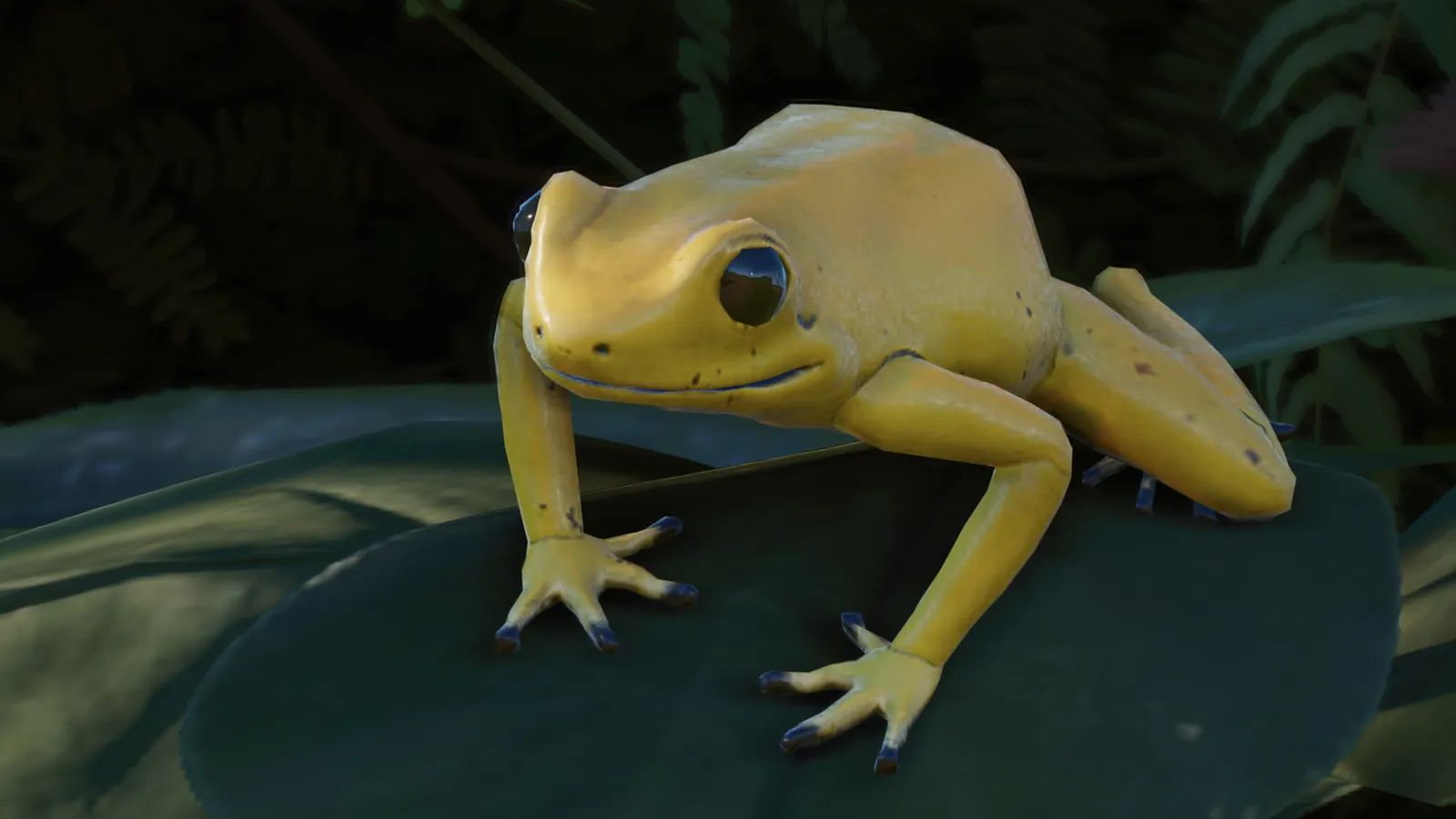
The golden poison frog (or Phyllobates terribilis), also known as the golden dart frog or golden poison arrow frog, is a species of poison dart frog endemic to the rainforests of the Pacific Coast of Colombia. Although being called 'golden' frogs, they are actually found in mint green, yellow and orange colour morphs. All variants have extremely poisonous skin that is used as a defence mechanism against predators, while their bright colouration acts as a warning signal to potential threats. They live on the forest floor and, unlike other frog species, do not require to live in or near water, though they do need a water source in which to deposit their eggs. Golden poison frogs measure an average of 50mm to 55mm, and females are typically larger than males.
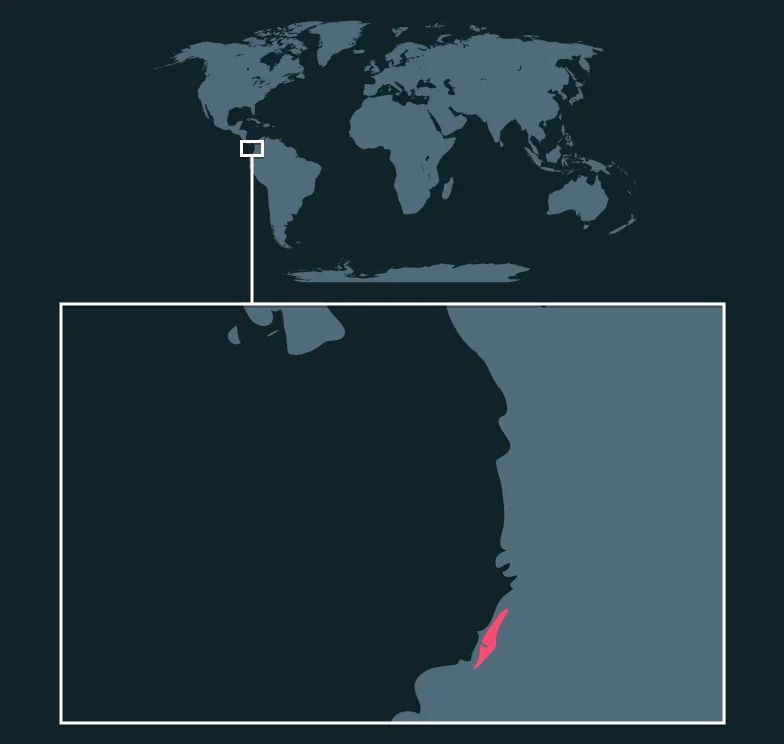
Found in South America
Regions
- South America
Biomes
- Tropical
Size & weight
Size
Length: 0.05 m
Measured as Length. The person stands 1.75 m tall for scale.
Habitat needs
Environment
Temperature
26 to 31°C
Humidity
80-90%
Conservation
IUCN Red List
Endangered
Least concern
Critically endangered
The golden poison frog is assessed as an Endangered species due to continued loss and degradation of their habitat. Aside from forest clearance for logging and mining operations, rainforest is also illegally cut down to make space for illicit crop farming. Not only does this remove valuable habitat for these tree frogs, the pollution from pesticides used on these crops also has detrimental effects on the fauna in these areas. Golden poison frogs are popular in the pet trade, although the number of wild-caught specimens is likely to be low. Small parts of these frogs’ habitat are contained in protected areas. International trade is restricted by CITES Appendix II, and indeed, the supply of captive-bred golden poison frogs has strongly reduced illegal collection of wild specimens. The frogs are toxic due to their wild diet, and as such captive-bred frogs are a much safer and cheaper option for hobbyists. Nonetheless, further habitat protection is required to ensure this species’ survival in the wild.
Social & reproduction
Keeper notes
Golden poison frogs are social animals, living in unrelated groups of between 4 and 7 individuals in the wild. Golden poison frogs mate year-round. When females are ready to lay their eggs, males will attempt to attract them with a series of high pitched squeaks. They will mate in large groups; males moving from female to female to fertilise her eggs as she lays them, then taking the clutch of eggs and carrying them on his back to a suitable water source to deposit them. Eggs hatch 11 to 12 days after laying, but the tadpoles remain in the water until they become froglets between 55 and 60 days later. The young frogs will reach sexual maturity after 12 to 18 months.
Group and breeding
Lifecycle and breeding
Life expectancy
10-15 years
Gestation or incubation
0.4 months
Interbirth period
6 months
Litter size
1-4
Mating season
Aseasonal
Animal facts
- The golden poison frog is the largest species of poison dart frog.
- A single golden poison frog has enough poison on its skin to kill between 10 and 20 people.
- Captive frogs do not produce toxins because they cannot eat the same invertebrates as they do in the wild, which are the source of the poison.
- Indigenous tribes that live in the rainforest use the frog's poison on poison darts for hunting, hence their name.
- Most species of tree frog are extremely secretive and will hide often, but this species is quite fearless, likely due to its toxicity making it invulnerable to attack.
Taxonomy
Class
Order
Family
Genus
Species