Overview
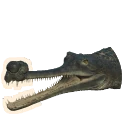
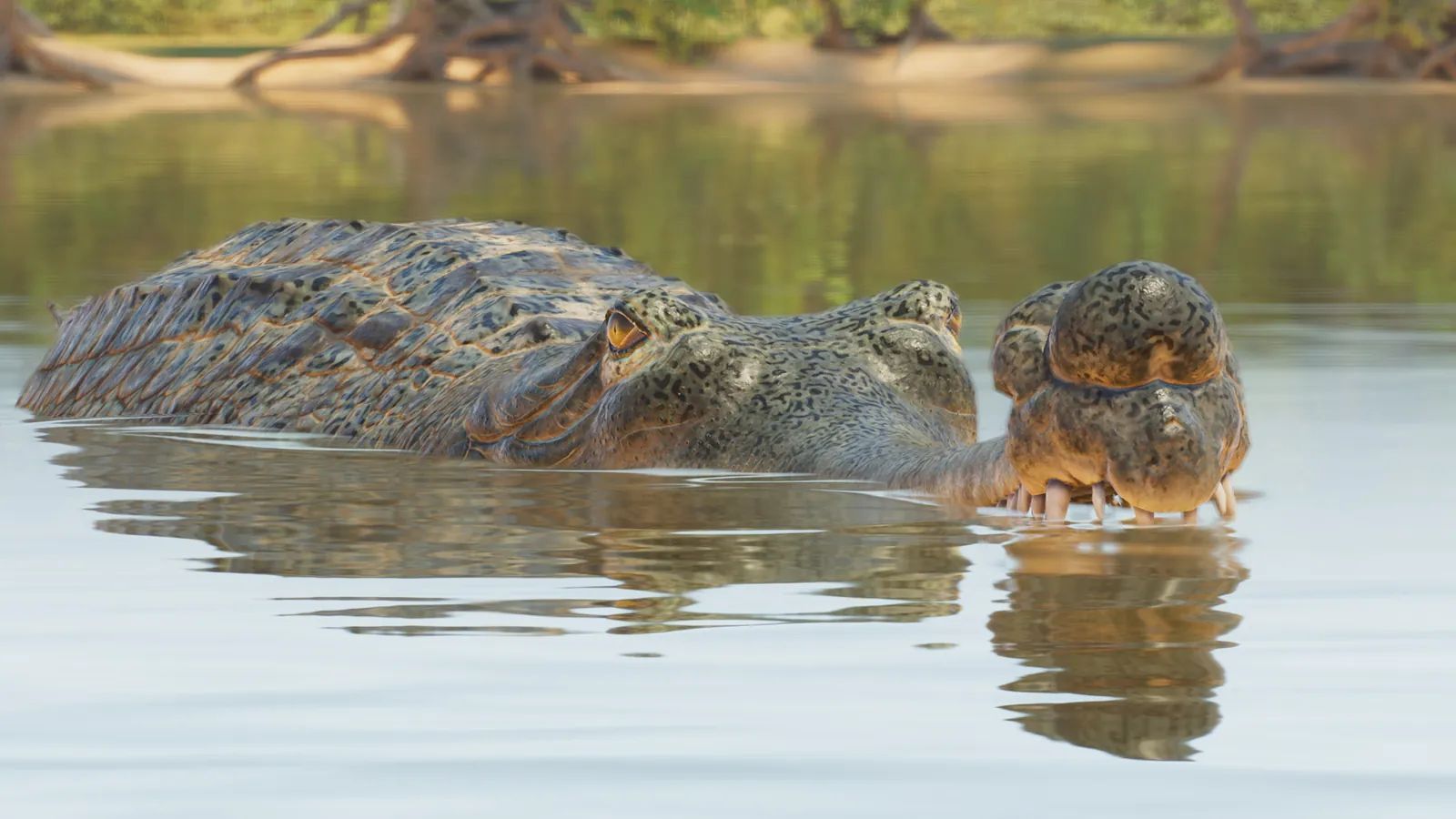
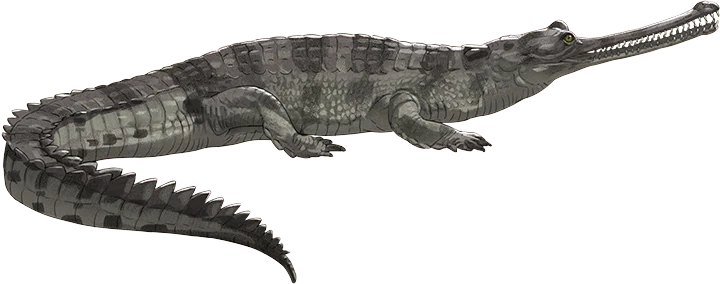
Gharials (or Gavialis gangeticus) are a crocodilian native to the rivers of the Indian subcontinent, surviving in just four stretches of river in Nepal and Northern India. They are also known as gavials or fish-eating crocodiles. Gharials have long, thin jaws adapted for eating fish, and are almost entirely aquatic. Unlike other crocodiles, they have weak legs and are poor movers on land, but they are extremely agile in deep water due to their long, flattened, muscular tail. Males have a distinctive bulbous swelling on the end of the nose, which is used to make sounds that attract females and intimidate males during the mating season. Apart from this difference, the species is also dimorphic in size, with males growing 3m to over 6m long. Females are smaller and lighter, at 2.6m to 4.5m long. The average weight of adults is 150kg to 250kg, very large males may reach weights of over 600kg.
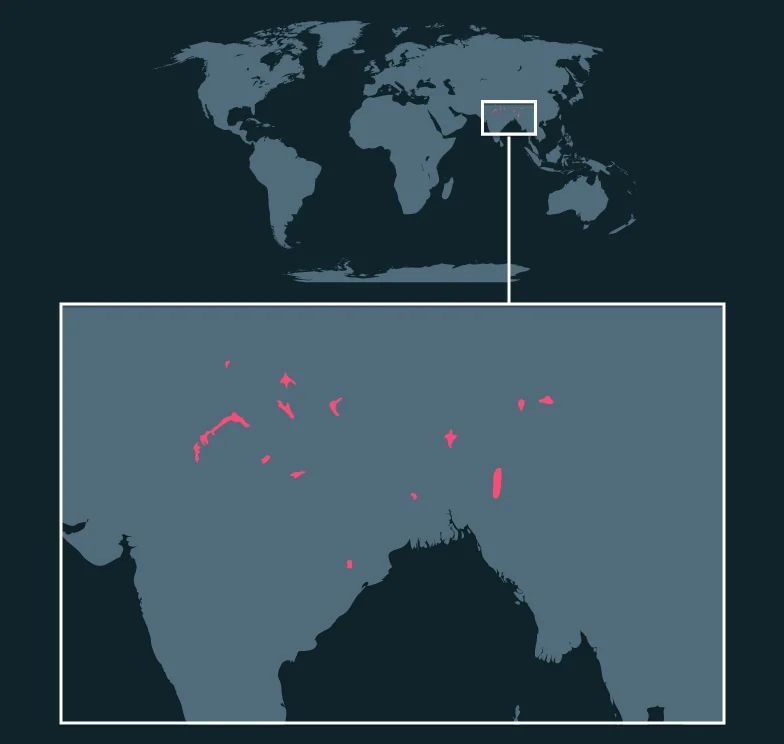
Found in Asia - Indian subcontinent
Regions
- Asia
Biomes
- Lakes & rivers
- Rainforest
- Wetlands
Size & weight
Size
Length: 2.7 to 4.4 m
Weight
Male
300 kg
Female
105 kg
Bars use a log scale against the heaviest animal in the Zoopedia, the Common Hippopotamus.
Measured as Length. The person stands 1.75 m tall for scale.
Habitat requirements
Barrier grade
Grade 2 of 5
Minimum height
1 m minimum
Climbing & water
Climb proof
Not needed
Water barrier
Not allowed
Combine this animal with others in the barrier planner.
Conservation
IUCN Red List
Critically endangered
Least concern
Critically endangered
Wild population
650
650 in the wild. Rank 5 of 57 species with a known count, smallest first.
The gharial is Critically Endangered and locally extinct in much of its former range. The dramatic collapse in numbers has been caused by the increase in river pollution reducing the amount of fish in the water, as well as by sand-mining destroying sandbanks that are essential for egg-laying females and basking. Unregulated fishing and accidental entanglement in fishing nets further threaten the species, while the fragmentation of river systems by dams and irrigation projects restricts their natural movement and breeding opportunities. Conservation actions focus on habitat protection, community engagement, and captive breeding and releases. Protected river stretches offer safe nesting grounds, with more being made viable by river restoration initiatives, and conservation organisations work with local communities to reduce fishing-related mortality. While thousands of hatchlings have been bred and released since the 1970s, reintroductions alone have not significantly helped in re-establishing the populations while other factors were not addressed. Their current population trend is positive thanks to the combined and ongoing efforts.
Zoopedia sketchbook
Social & reproduction
Keeper notes
While gharials may live in close contact with each other – as well as compete for sandy riverbanks to use as basking sites – they are not social animals. Despite this, they are unlikely to fight, although competing males may 'buzz' at each other in intimidation using their snout bulbs. During the breeding season, many females may be living in close proximity as they guard the eggs they have laid in the sand banks. During the breeding season from November to January, both male and female gharials will pursue each other until they decide on a mate they are happy with. A male will mate with many females, but females will select only one male. Larger males claim the best nesting sites against smaller, less mature rivals. In the dry season, between March and April, the females congregate to lay and bury clutches of 30 to 50 eggs in a sandy river bank, which they then guard. Three months later, in July, the hatchlings emerge. Females may help dig them out of the sand in response to their vocalisation, and some remain at the river banks with the hatchlings until the monsoon floods cover the banks. Otherwise, no parental care is provided and juveniles must independently find food from hatching. Gharials become sexually mature at a body length of 2.6m to 3m in females or 3m to 4m in males, which correlates to about 13 to 16 years old.
Animal facts
- Gharials are named after the growth that males have on their snout which resembles an Indian pot called a 'ghara'.
- Gharials are the only crocodile species that show sexual dimorphism not just in size but anatomy; the males look different from the females due to their distinctive nose bulb.
- Gharials lay the largest eggs of any crocodile species.
- Gharials are not aggressive; their long, thin jaws are ill-suited for attacking large animals.
- Gharials' snouts contain sensory cells that detect vibrations in the water, making them excellent fish hunters.
Taxonomy
Class
Order
Family
Genus
Species