Overview
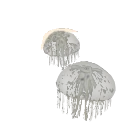
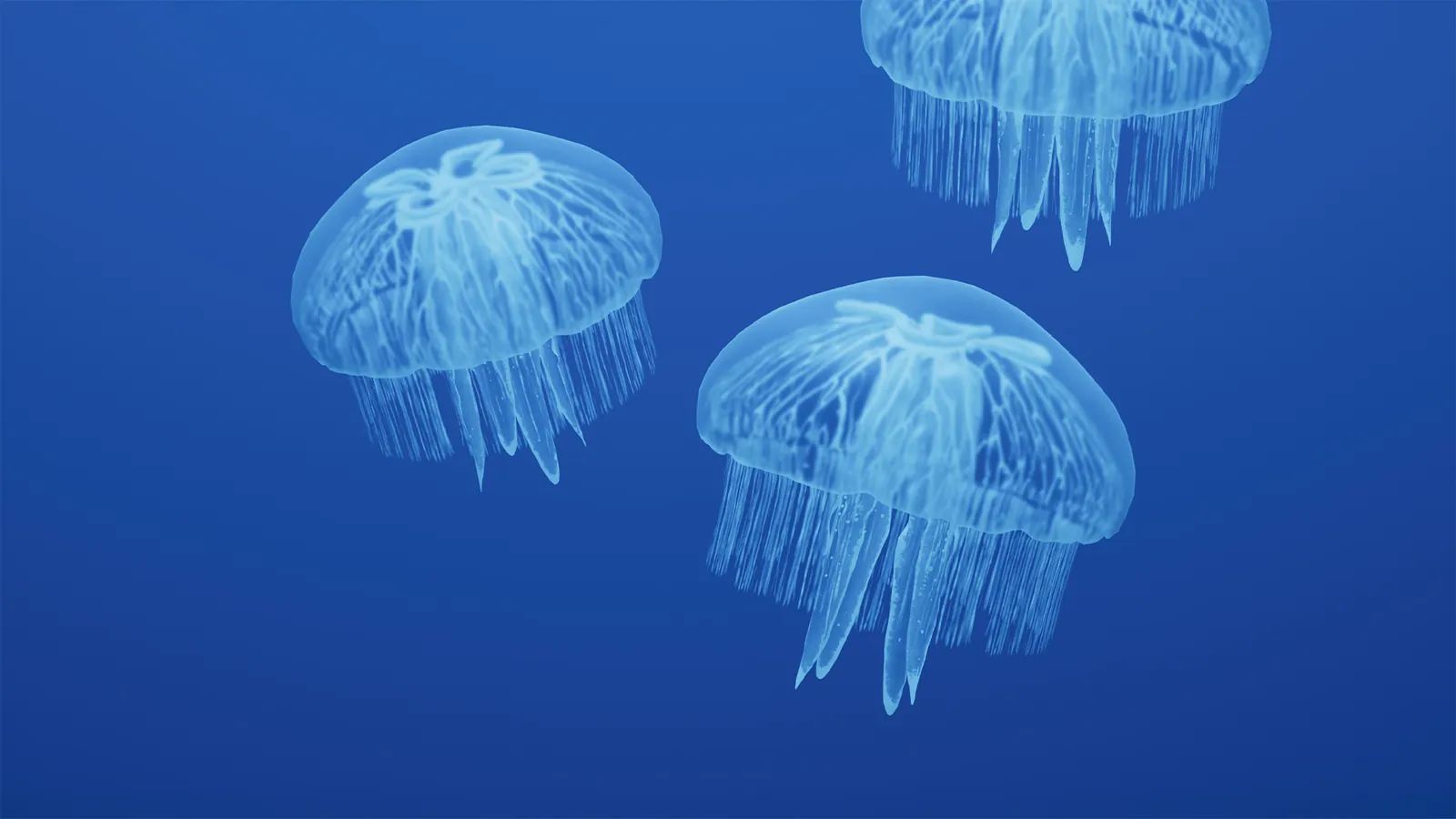
The moon jelly (or Aurelia aurita) is a widespread species of jellyfish found in coastal waters around the world, particularly in temperate and tropical seas. It typically inhabits the upper layers of the ocean, often near the surface in bays, harbours, and estuaries where plankton is abundant. Moon jellies are easily recognised by their translucent, saucer-shaped bell, with four distinct horseshoe-shaped gonads visible through the bell. The colour of their gut varies depending on their diet, with pale pink, amber, blue and white hues possible. Their bodies are delicate and gelatinous, weighing only a few hundred grams despite their size. Short, fine tentacles fringe the bell’s edge. The bell of the moon jelly can reach up to 25cm to 40cm in diameter.
Found in Worldwide
Regions
- Arctic Ocean
- Atlantic Ocean
- Indian Ocean
- Pacific Ocean
- Southern Ocean
Biomes
- Estuarine
- Open sea
Conservation
IUCN Red List
Not evaluated
Least concern
Critically endangered
The moon jelly is not currently considered at risk. Jellies may ingest microplastics and pollutants, which slow growth and impair reproduction. Heavy metal contamination, especially from copper and silver, can harm the polyp stage by causing deformities or mortality affecting population stability. While moon jellies often thrive in human-altered coastal environments, the resulting blooms can harm marine ecosystems, clog infrastructure like power plant intakes, and disrupt fisheries. Monitoring efforts for this species are gaining traction: volunteers increasingly report jellyfish sightings and gathering spots, enabling better tracking of bloom and assisting tourism and fisheries in preparing for potential impacts. Scientific studies are clarifying how microplastics and heavy metals affect moon jelly physiology and reproduction, which may guide policies for reducing coastal pollution and enhancing water quality. Some efforts focus on environmental management that exacerbate jellyfish blooms - though most of these remain at local or pilot levels and would benefit from broader implementation.
Social & reproduction
Keeper notes
Although moon jellies may be found in large aggregates, they are not social and are usually found together because of ocean currents and shared food sources. Moon jellies can breed year-round when water is warmer and food is plentiful. The moon jelly reproduces both sexually and asexually during its complex life cycle. Adult males release sperm into the water, which females take in through their mouth-arms. Fertilisation occurs internally, and the developing embryos are carried on the female’s oral arms until they become free-swimming planula larvae. These larvae eventually settle on hard surfaces such as rocks, shells, or pier pilings, where they transform into polyps. The polyp stage is important for survival, as it can persist for months or even years and reproduce asexually by budding to form more polyps. When conditions are favourable, the polyps undergo a process called strobilation, segmenting into stacks that produce juvenile jellyfish known as ephyrae. These tiny, star-shaped ephyrae break free and grow into the familiar bell-shaped adults, called medusae. The medusa stage is the sexual phase of the life cycle, allowing the jellies to breed and continue the cycle. By alternating between an asexual polyp stage and a sexual medusa stage, moon jellies can adapt to environmental changes; polyps ensure persistence in tough conditions, while medusae spread and reproduce when the environment is favourable.
Animal facts
- Moon jellies’ bodies are constituted of over 95% water.
- Moon jellies move by pulsating their bell but are poor swimmers and mostly are carried by ocean currents.
- Moon jellies have a weak sting that cannot usually be felt by humans.
- In the right conditions, moon jellies form huge swarms called ‘blooms’ that may cover many kilometres of ocean.
- Moon jellies feed on plankton and fish larvae by capturing them in their tentacles and with the mucus in their bell.
Taxonomy
Class
Order
Family
Genus
Species