Overview
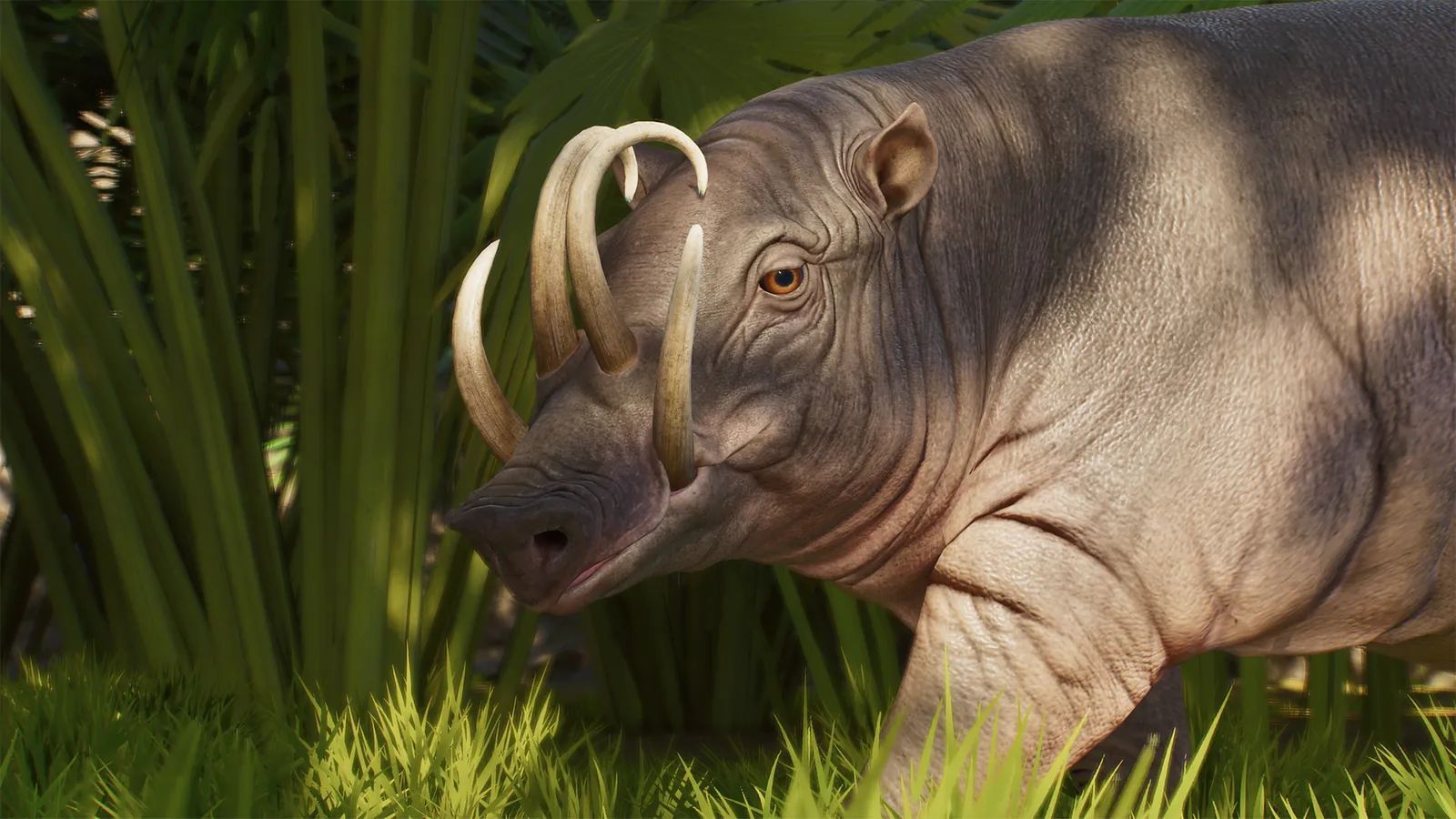
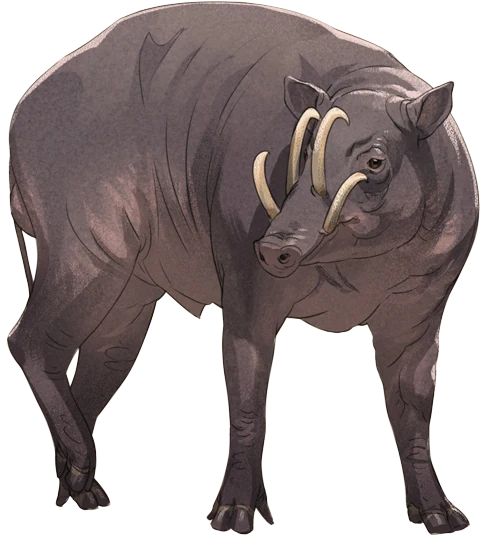
The North Sulawesi babirusa (or Babyrousa celebensis) is a species of pig native to the Sulawesi island of Indonesia and several small surrounding islands. Its body is mostly hairless with grey skin. The species has a head-body length of 85cm to 110cm, a tail length of 29cm to 32cm and a shoulder height of 58cm to 66cm. Male babirusas weigh between 70kg and 100kg and have four large tusks that curl back towards their skull. Female babirusas weigh between 45kg and 80kg.
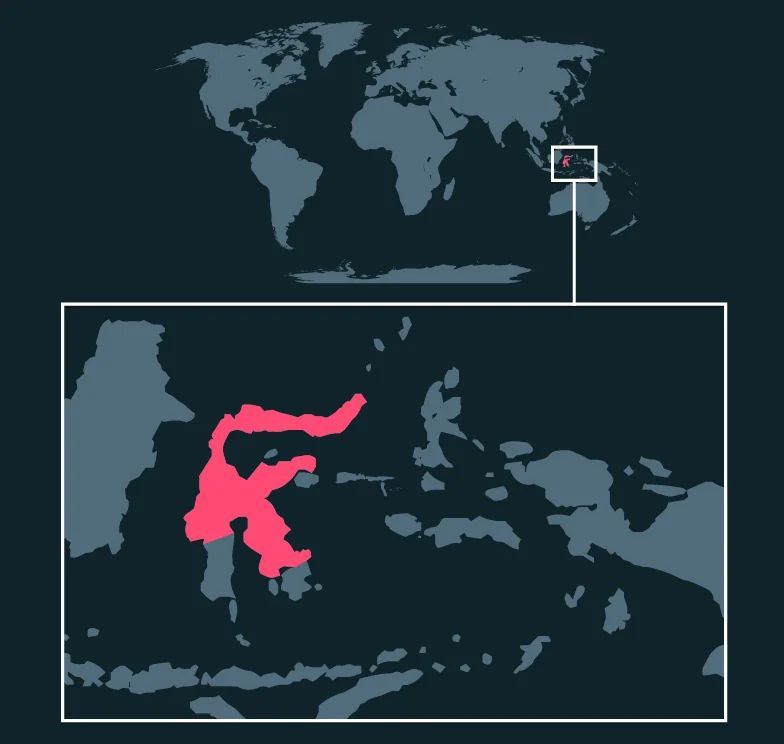
Found in Asia
Regions
- Asia
Biomes

Appearance
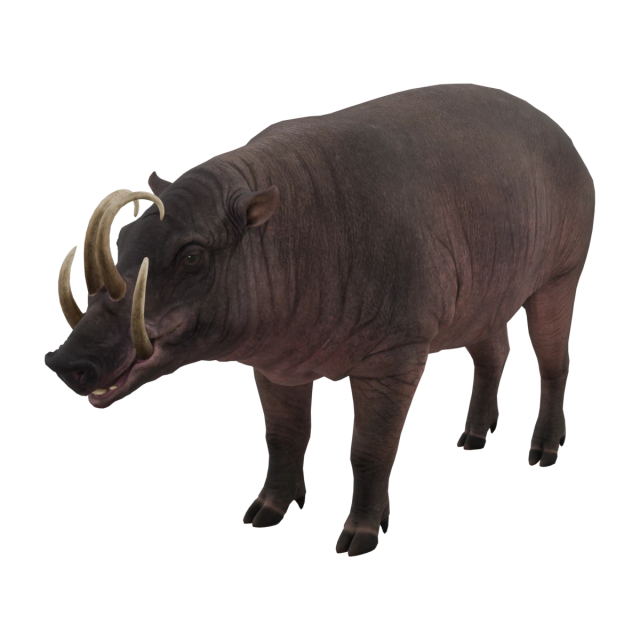
Male
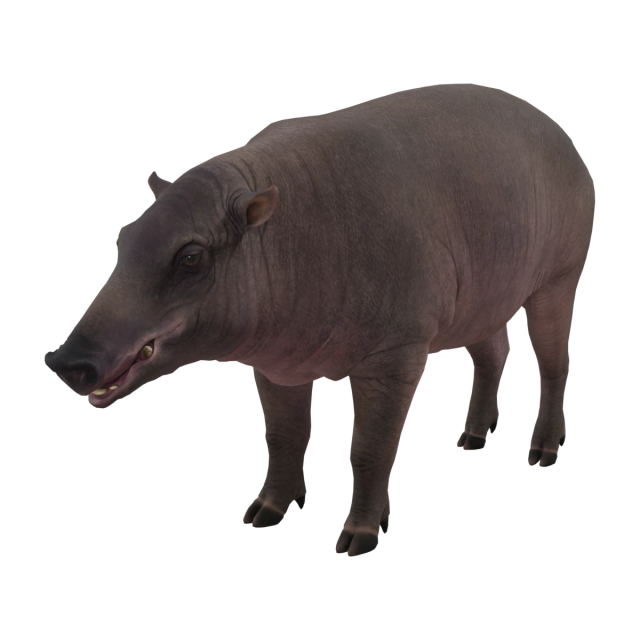
Female
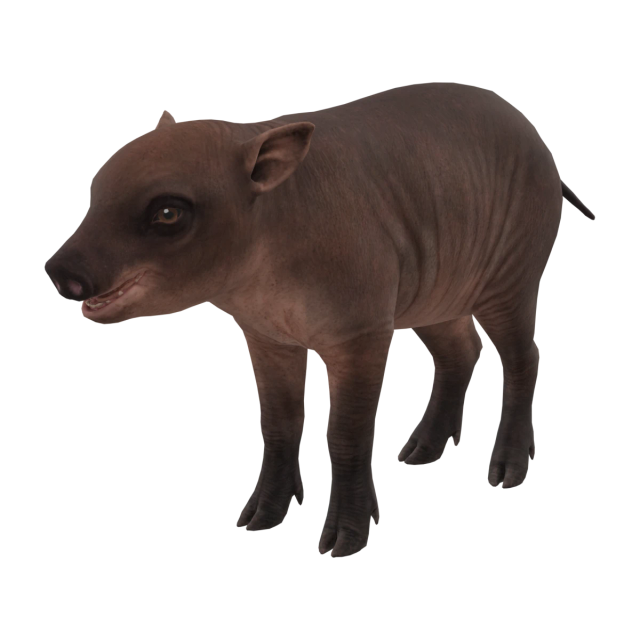
Juvenile
Size & weight
Size
Shoulder height: 0.58 to 0.66 m
Weight
Male
85 kg
Female
61.5 kg
Bars use a log scale against the heaviest animal in the Zoopedia, the Common Hippopotamus.
Measured as Shoulder height. The person stands 1.75 m tall for scale.
Habitat requirements
Barrier grade
Grade 2 of 5
Minimum height
1.25 m minimum
Climbing & water
Climb proof
Not needed
Water barrier
Not allowed
Habitat needs
Minimum area
Land
350 m² + 150 m² per extra animal
Shelter
10 m² per animal
Environment
Temperature
18 to 33°C
Plant coverage
10-100%
Enclosure
Habitat
Terrain
- Grass 0-50%
- Sand 0-50%
- Soil 40-100%
- Rock 0-30%
Diet and enrichment
Diet
- Herbivore Pellets
- Fruit and Vegetables







Conservation
IUCN Red List
Vulnerable
Least concern
Critically endangered
Wild population
10,000
Under 10,000 in the wild. Rank 18 of 58 species with a known count, smallest first.
The North Sulawesi babirusa is a Vulnerable species, undergoing significant regional population declines due to habitat loss, hunting pressure, and limited range. Babirusas are forest specialists and struggle to survive in heavily altered landscapes. Expanding agriculture, logging, and human settlement fragment forests the babirusa depends on, reducing food availability and safe breeding areas. They are intensively hunted for bushmeat and their unique tusks, which hold cultural and ornamental value. Protected areas are critical refuges for remaining populations, where enforcement against poaching is improving. Education aims to reduce hunting by highlighting the babirusa’s ecological and cultural importance, and support alternative livelihoods to reduce reliance on bushmeat. Captive breeding programs, both within Indonesia and internationally, provide an additional safeguard against extinction and potential for reintroduction if wild populations continue to decline. Together, these efforts protect the babirusa and preserve the broader ecosystems of Sulawesi, home to many endemic and endangered species.
Zoopedia sketchbook
Social & reproduction
Keeper notes
Babirusa females tend to live in small groups made up of sisters and their offspring under two years old. Mature males live alone but will come alongside female groups in the mating season. Breeding season is year-round, but peaks around June and July. When the females are in oestrus, males will track them from the scent of their urine and follow them once located. If two males locate the same female, they may engage in a dominance display to win the rights to mate. They will vocalise, charge at each other and, if neither concedes, fight by standing on their hind legs and ‘boxing‘ with their front legs. Usually the larger male with the longer teeth will win. After a pregnancy of 150 to 164 days, the female will give birth to 1 to 2 piglets. Piglets can eat solid food from 3 to 10 days after birth and will be fully weaned by 6 to 8 months old, or earlier if their mother falls pregnant again. Males leave their mother’s group at 1 year old and will become solitary. Females may remain with their mother’s group or leave to start their own natal group. Both sexes will be sexually mature after 1 to 2 years.
Group and breeding
Group
Group size
1-5 (up to 1 male, up to 4 females)
Male bachelor group
1
Female bachelor group
1-4
Offspring dispersal
Male offspring
Lifecycle and breeding
Life expectancy
12-24 years
Age of sexual maturity
2 years
Age of sexual sterility
Death
Gestation or incubation
5.3 months
Interbirth period
6.7 months
Litter size
1-2
Mating system
Polygynous
Mating season
Aseasonal
Reproduction in captivity
Easy
Dominance
Males fight for right to mate. Females have rank in groups based on age.
Animal facts
- ‘Babirusa’ means ‘pig deer’ in Malay.
- Babirusas have a two chambered stomach, more like that of sheep than of other pigs.
- The male babirusas tusks continue to grow throughout his life and can even grow into the skull.
- Babirusas are missing a bone in the snout that other pigs have, so they do not engage in ‘rooting’ behaviour typical of pigs.
- Babirusas are excellent swimmers; it is thought that they are found across various Indonesian islands because they swam to them.
Taxonomy
Class
Order
Family
Genus
Species