Overview
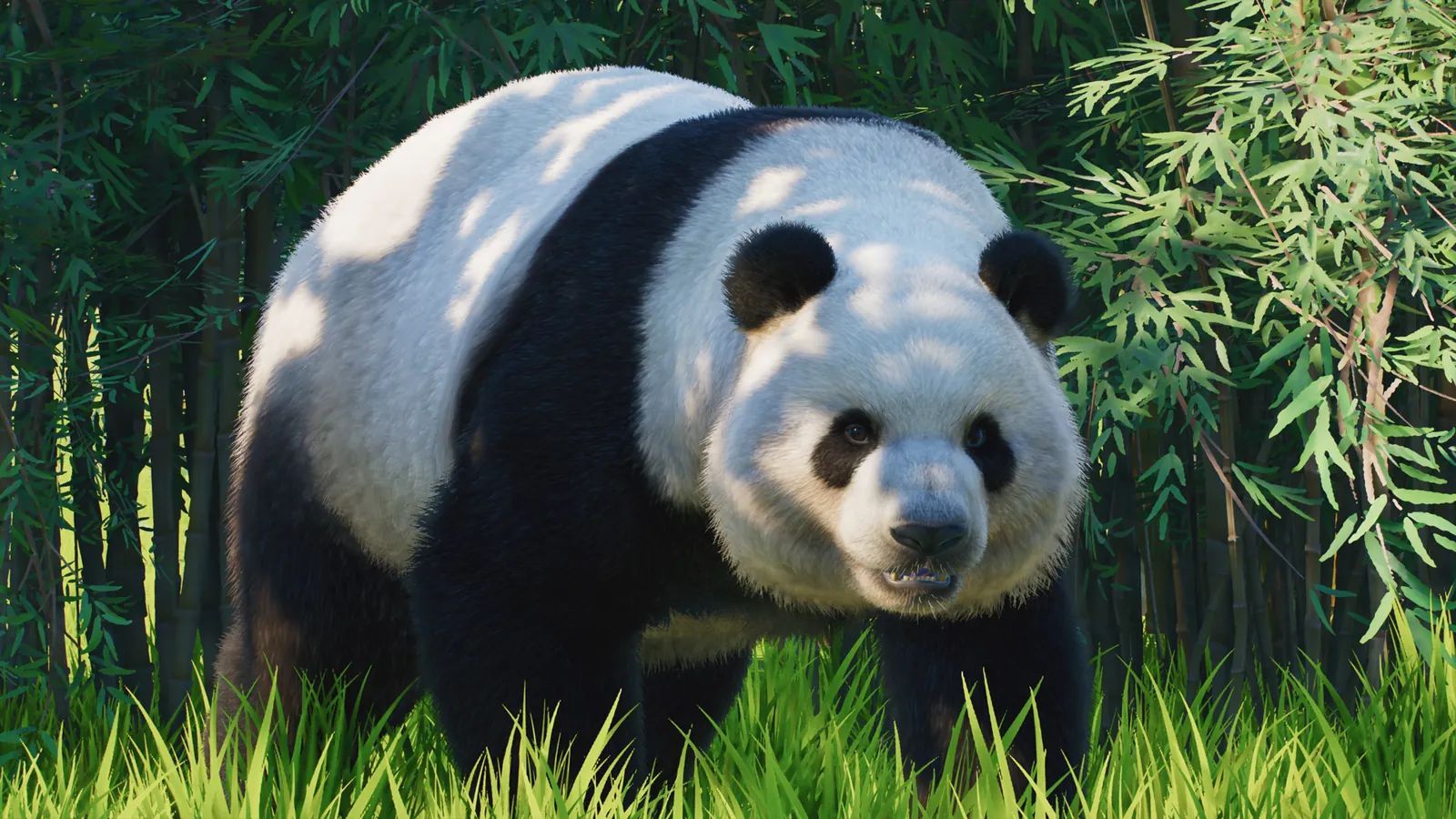
The giant panda (or Ailuropoda melanoleuca) is a species of bear native to the mountains of Central China. They have black and white fur in a distinctive pattern, with black legs, ears and circles around their eyes. Pandas feed almost exclusively on bamboo and, as a result, are extremely dependent on rich bamboo forests to survive. This is a low energy food, so pandas must eat a lot of it to live and spend most of their waking hours foraging and eating. Their low energy intake also means they produce very tiny and vulnerable cubs. Giant pandas commonly reach a body length of 1.2m to 1.8m and may stand from 0.6m to 0.9m tall at the shoulder. Males can grow 10% to 20% larger than females, and are also heavier on average, with a weight of 85kg to 125kg compared to a female’s 70kg to 100kg.
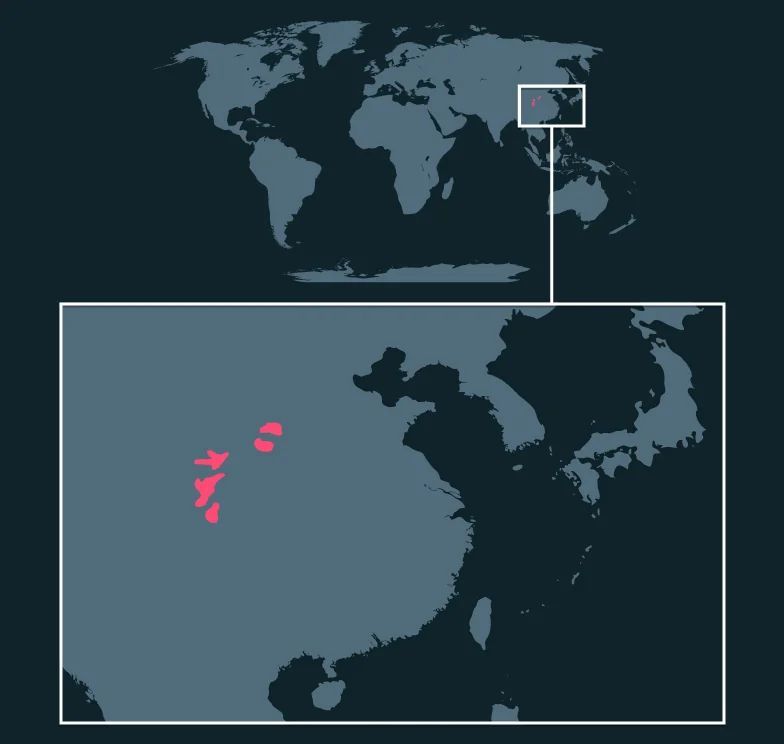
Found in Asia
Regions
- Asia
Biomes
- Temperate
Size & weight
Size
Nose to rump: 1.55 m
Measured as Nose to rump. The person stands 1.75 m tall for scale.
Habitat requirements
Barrier grade
Grade 4 of 5
Minimum height
2 m minimum
Climbing & water
Climb proof
Needed
Water barrier
Not allowed
Combine this animal with others in the barrier planner.
Conservation
IUCN Red List
Vulnerable
Least concern
Critically endangered
Wild population
500
500 - 1,000 in the wild. Rank 4 of 57 species with a known count, smallest first.
Giant pandas are now considered Vulnerable, having improved from previous assessments as Endangered. The species is threatened by habitat loss and fragmentation due to deforestation and urbanisation over past decades, having destroyed much of the bamboo forest that pandas rely on. This fragments the population, and limits their ability to find mates. Additionally, bamboo sometimes undergoes mass flowering and die-offs – pandas that cannot relocate to new habitats face starvation. Climate change can further disrupt bamboo growth; and the naturally slow reproduction rate of giant pandas limits their ability to recover from population declines. China has put a lot of effort into conserving the panda population. Currently, there are dozens of panda reserves protecting a large portion of the remaining pandas. Habitat restoration efforts create linking corridors between habitats, enabling pandas to move freely to access new food and mates. Captive‑breeding programs and careful management of panda populations have complemented habitat-based strategies, providing a safety net should wild populations suffer further decline.
Zoopedia sketchbook
Social & reproduction
Keeper notes
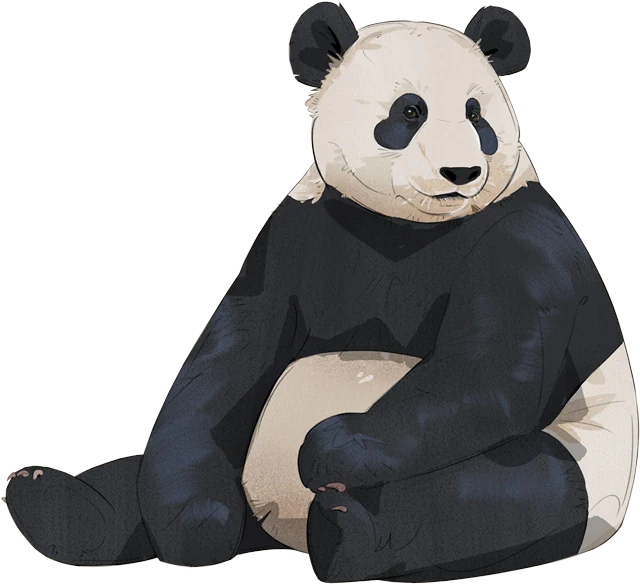
Pandas are solitary creatures but will interact if they come across each other. However, females are more territorial than males and may chase away rivals who invade their territory. They need plenty of space and the ability to isolate themselves if they want to. Giant pandas mate between March and May. Females are only fertile for 2 to 3 days a year, and may not always meet a male at the right time. If a pair meets, they will mate several times before going their separate ways again. After successful fertilisation, the mother will be pregnant for between 95 and 160 days before giving birth to 1 or 2 very small cubs; if she has twins, she will not care for both because she will not have enough milk. Cubs will stay with their mothers until they are between 1.5 to 2 years old before leaving to establish their own territories. Giant pandas reach sexual maturity between 4 and 8 years old.
Animal facts
- Pandas have the smallest babies relative to adult body size of any placental mammal; cubs are 800x smaller than their mothers.
- Pandas have evolved a 6th finger that helps them strip leaves from bamboo.
- The giant panda is the only bear species that is entirely herbivorous. Unlike many other animals, pandas are not used in Chinese traditional medicine.
- There is a sub-population of giant pandas called 'Qinling pandas' that are chocolate brown and white. Some taxonomists argue that this may even be a separate subspecies.
- Pandas are a symbol of peace in China; warring groups would hold up flags with panda images on them to call a truce.
Taxonomy
Class
Order
Family
Genus
Species