Overview
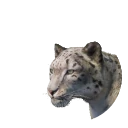
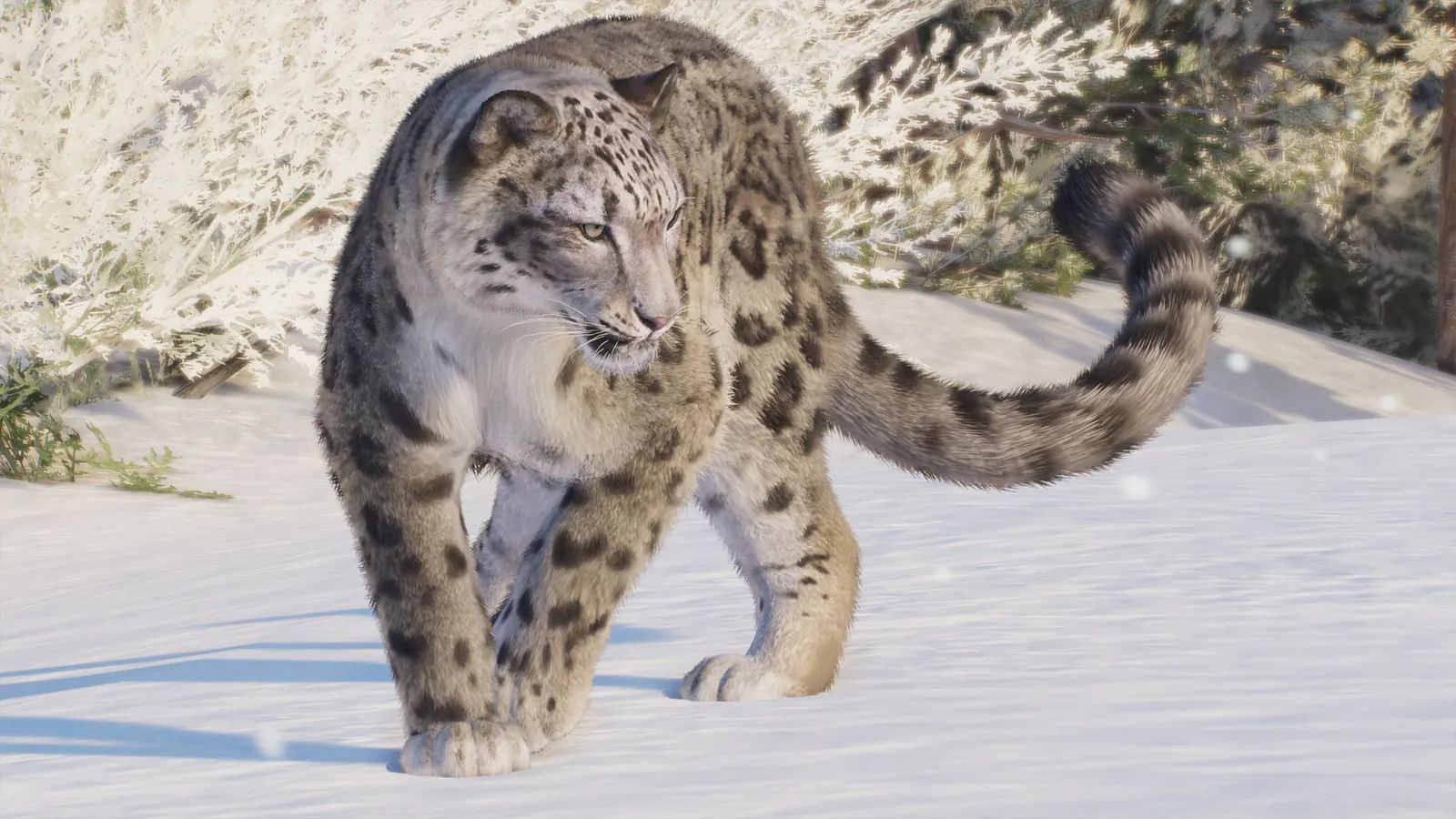
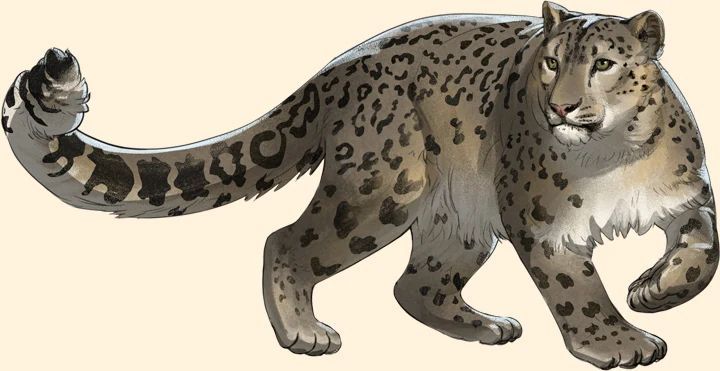
The snow leopard (or Panthera uncia), identifiable by its white to grey fur, black rosettes across its body, and black spots on its face, lives in the mountains of Nepal, Tibet, Northern India, Southern Siberia, Pakistan, Bhutan and Mongolia. The animal's fur is extremely thick and well insulated, which helps it comfortably withstand sub-zero temperatures as low as -25°C. They mostly feed on mountain goats and sheep, but also hunt birds and rodents. The species is less sexually dimorphic than other big cats, but males are still slightly larger than females on average. Head-body length ranges from 0.75m to 1.5m, with 0.8m to 1.05m added by the long tail. Shoulder height is around 56cm tall. Males weigh an average of 45kg to 55kg, females are lighter at 35kg to 40kg.
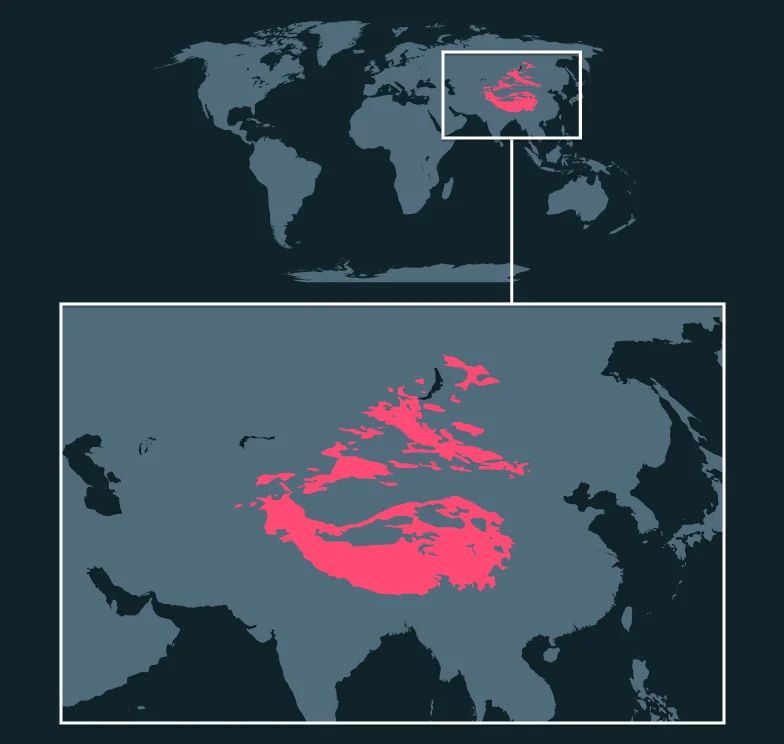
Found in Central Asia
Regions
- Asia
Biomes
- Taiga
- Tundra
Size & weight
Size
Shoulder height: 0.5 to 0.55 m
Weight
Male
40 kg
Female
40 kg
Bars use a log scale against the heaviest animal in the Zoopedia, the Common Hippopotamus.
Measured as Shoulder height. The person stands 1.75 m tall for scale.
Habitat requirements
Barrier grade
Grade 2 of 5
Minimum height
3 m minimum
Climbing & water
Climb proof
Needed
Water barrier
Not allowed
Combine this animal with others in the barrier planner.
Conservation
IUCN Red List
Vulnerable
Least concern
Critically endangered
Wild population
3,900
3,900 - 6,500 (estimated) in the wild. Rank 12 of 57 species with a known count, smallest first.
As a Vulnerable species, snow leopards face many conservation challenges that threaten their survival across the mountain ranges of Central and South Asia. Infrastructure, agricultural, and mining operations fragment their habitat, making it harder for them to find prey and access new mates and thereby maintain healthy genetic diversity. Poaching for body parts and retaliatory killings further adds pressure. Climate change compounds these challenges by shrinking suitable high-altitude terrain and altering prey distributions as well as increasing competition with other predators. International and local organisations collaborate with governments and mountain communities to reduce human-wildlife conflict, support anti-poaching patrols and improve habitat protection. Livestock insurance schemes, predator-proof fencing and other economic incentives reduce the causes for retaliatory killings and illegal trade. In some regions, populations surveys and local engagement have shown promising signs of stabilising population numbers. The snow leopard is listed under CITES I, restricting most trade, but illegal trade for cultural dress and traditional medicine remains a problem across many countries.
Zoopedia sketchbook
Social & reproduction
Keeper notes
Snow leopards are solitary animals and live alone, unless it is a mother with her cubs. They have home ranges, but are not aggressively territorial over them and will tolerate other leopards moving through their space. During the mating season from December to March, snow leopards scent-mark and call in order to signal to mates. When a male and female snow leopard meet, they will mate multiple times over several days. They only mate with one partner each breeding season. Female snow leopards are pregnant for 3 months and then give birth to 1 to 3 cubs in a den in a rock crevice. Cubs are born with thick fur to survive the harsh temperatures, begin walking at 5 weeks old and are already weaned by 10 weeks old. The young follow their mothers out of the den at 2 to 4 months old, and remain with them until they are almost 2 years old. At 20 to 23 months old, they gradually begin distancing themselves from their mothers and eventually leave her territory to establish their own. Sexual maturity is reached at 3 years.
Animal facts
- Snow leopards have very large paws in proportion to their body size that allow them to move quickly and stealthily along the snow.
- The snow leopard can jump higher and further than any other cat species; reaching heights of 6m when jumping and distances of 15m when pouncing.
- Snow leopards can live at altitudes of 5400m.
- Snow leopards are 'crepuscular' animals; they are active at dawn and dusk.
- It is theorised that snow leopards will often hold their own tail in their mouth to use it as a muffler against the wind and snow.
Taxonomy
Class
Order
Family
Genus
Species