Overview
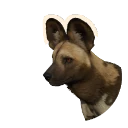
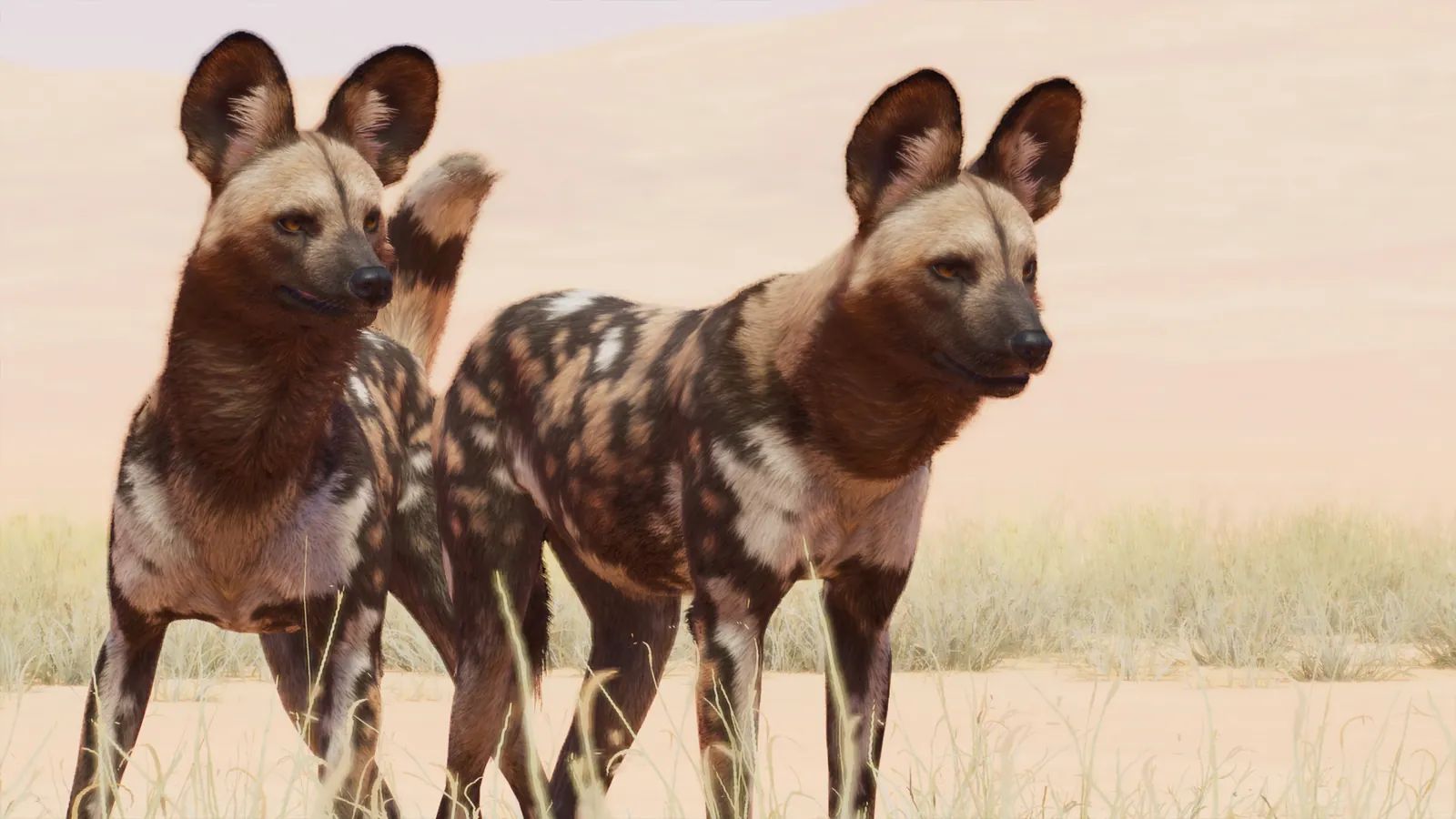
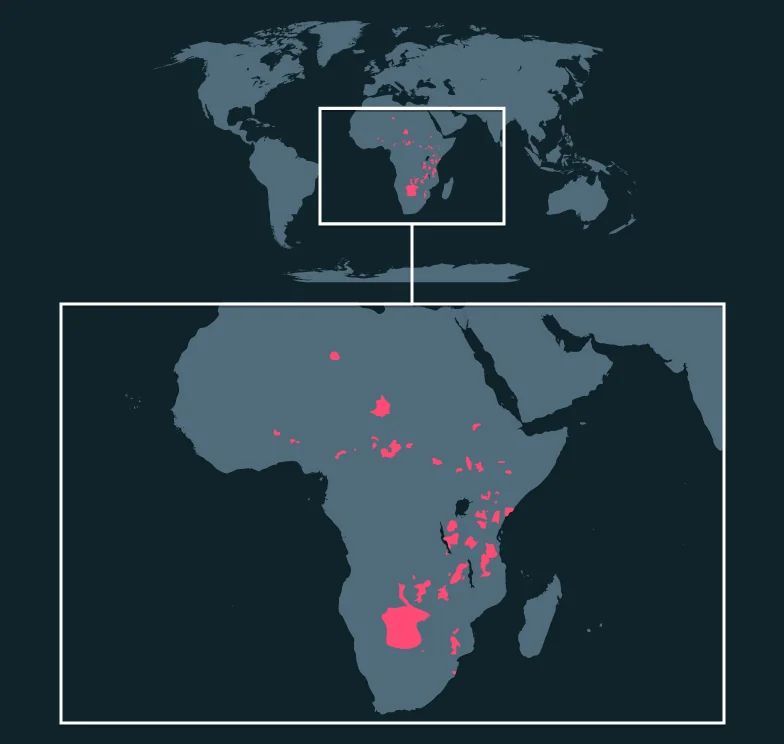
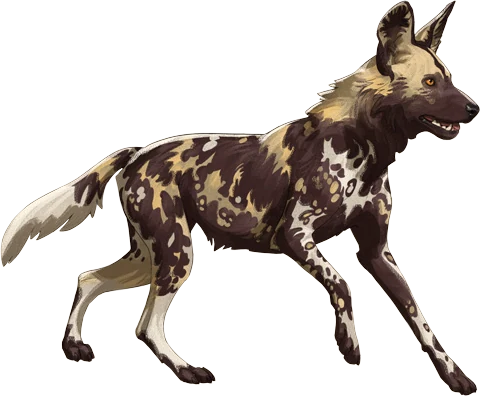
African wild dogs (or Lycaon pictus) are also known as Cape hunting dogs or painted wolves. They live throughout sub-Saharan Africa – the continent has several different populations and five subspecies in total. The dogs are slim and tall in comparison to other canines, with extremely large, rounded ears and distinctive colouration. Generally, they have yellow and black mottled fur with white patches on their legs, chest and tail, however this varies on the subspecies. Some may also have a spot-like patterning on parts of their body. African wild dogs are 60cm to 75cm tall at the shoulder and 70cm to 100cm long, with a weight of 20kg to 30kg. Males are usually larger than females.
Found in Africa
Regions
- Africa
Biomes
- Grassland
Size & weight
Size
Shoulder height: 0.64 to 0.73 m
Measured as Shoulder height. The person stands 1.75 m tall for scale.
Habitat requirements
Barrier grade
Grade 2 of 5
Minimum height
3 m minimum
Climbing & water
Climb proof
Not needed
Water barrier
Not allowed
Combine this animal with others in the barrier planner.
Habitat needs
Minimum area
Land
930 m² + 100 m² per extra animal
Shelter
10 m² per animal
Environment
Temperature
14 to 36°C
Plant coverage
10-40%
Enclosure
Habitat
Terrain
- Sand 10-40%
- Grass 20-70%
- Rock 0-30%
- Soil 20-70%
Diet and enrichment
Diet
- Nutritionally Complete Meat
- Small Carcasses










Conservation
IUCN Red List
Endangered
Least concern
Critically endangered
Wild population
6,600
6,600 in the wild. Rank 15 of 58 species with a known count, smallest first.
African wild dogs are assessed as Endangered mainly due to habitat fragmentation from human expansion and change in land use. This also means that they have contact with domestic animals, exposing them to diseases that they would not usually be threatened by in the wild. African wild dogs are a very wide-ranging species, meaning it is difficult to monitor them in protected areas as they roam. Additionally, they are often killed by lions and hyenas. Conservation groups are protecting wild dogs by improving coexistence with humans and assisting in land use planning that will give dogs more hunting space. In recent years there have been rebranding efforts in place, proposing to change the species’ name to ‘painted dog’ or ‘painted wolf’. Conservation organisations hope to improve public perception of the animal by doing so, though this definition is not yet widely spread.
Zoopedia sketchbook
Social & reproduction
Keeper notes
African wild dogs are extremely social animals. They live in packs with an alpha male and female, who both lead the group on hunts and act as the main decision makers. The males in a pack are all related; females migrate into the group from their natal pack when they are around a year old. Adult packs are permanent once formed, with the dogs remaining together for life, even responding badly to being separated or losing a pack member. In a pack of African wild dogs, only the alpha male and female reproduce. The two are monogamously bonded and will have a litter of pups each year. Courtship between the dominant pair involves play, vocalisations, grooming and submissive gestures, which reinforces their bond. Depending on location, breeding happens year-round or from April to July, when hunting successes are higher and conditions are more favourable for rearing pups. A female African wild dog is pregnant for about 70 days. She will give birth in a den, producing litters that can range from 6 to 16 pups (though not all pups will survive to adulthood). Subordinate dogs do not have pups but help raise the pups of the alpha pair, and it is thought that this is to prevent the pack from becoming too large for each dog to get enough food. Pups are fully weaned at around 10 weeks old, and will accompany the pack on hunts as they grow. Wild dogs reach sexual maturity at about 12 to 18 months old. Between the age of 1 to 3 years, females disperse to join or form other packs, while males remain in their natal pack.
Group and breeding
Group
Group size
2-27 (up to 26 males, up to 26 females)
Male bachelor group
1-27
Female bachelor group
1-27
Offspring dispersal
Female offspring
Lifecycle and breeding
Life expectancy
12-17 years
Age of sexual maturity
1.5 years
Age of sexual sterility
10 years
Gestation or incubation
2.5 months
Interbirth period
12 months
Litter size
1-6
Mating system
Monogamous
Mating season
Summer
Reproduction in captivity
Easy
Dominance
Alpha male and alpha female
Animal facts
- African wild dogs hunt their prey for long distances and over extended periods of time until the prey collapses from exhaustion.
- African wild dogs have a hunting success rate of between 60 and 90%; far more successful than other group predators like lions and hyenas, who often steal the dogs' kills.
- African wild dogs in captivity can be trained like domestic dogs.
- When African wild dog pups are born, they take priority in the pack, even over the alphas. They eat before all other dogs.
- African wild dogs are observed to 'vote' by sneezing; the more dogs in a pack that sneeze concurrently, the more likely they are to go hunting. Dominant dogs are more likely to start a successful hunt vote.
Taxonomy
Class
Order
Family
Genus
Species