Overview
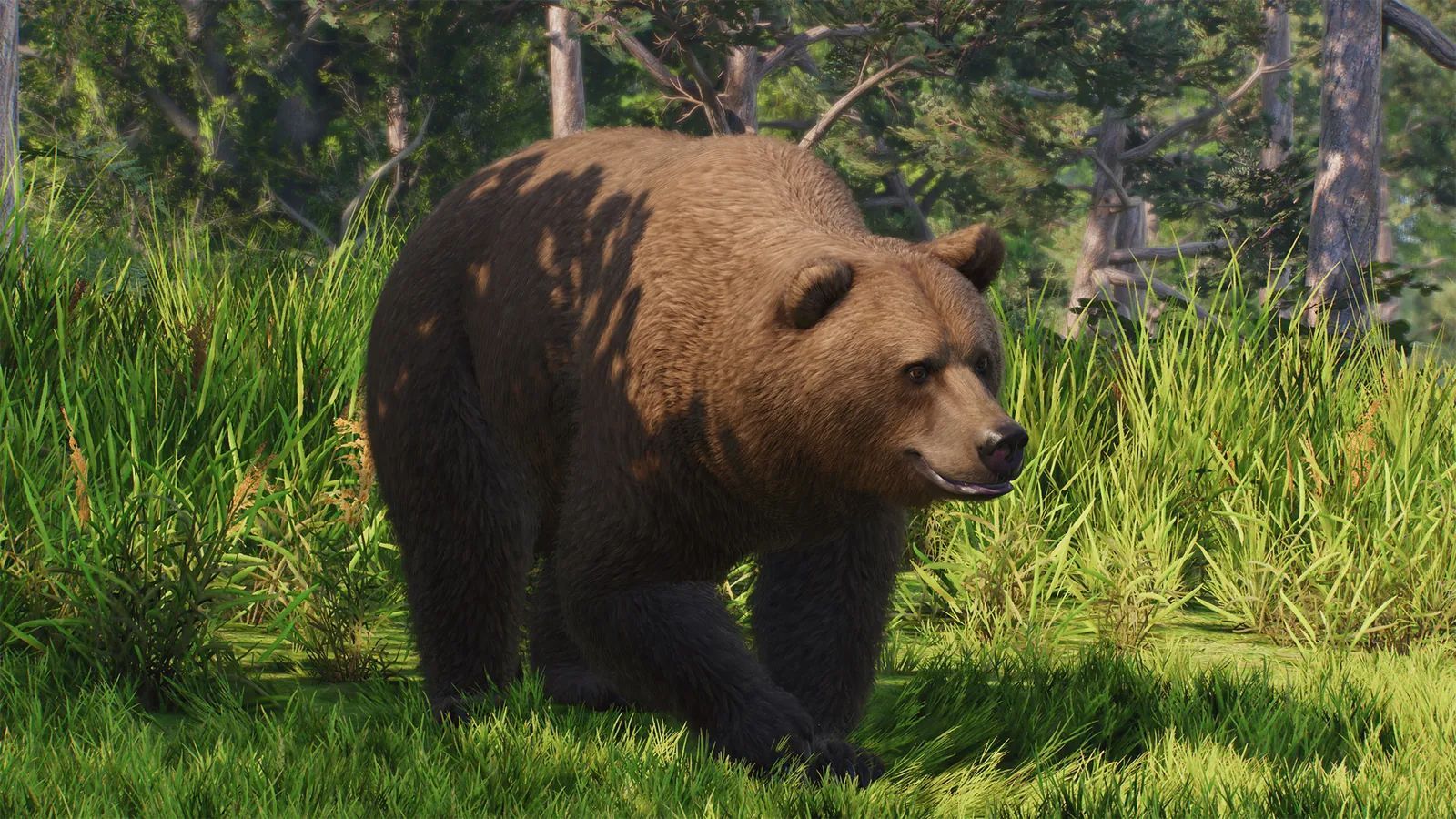
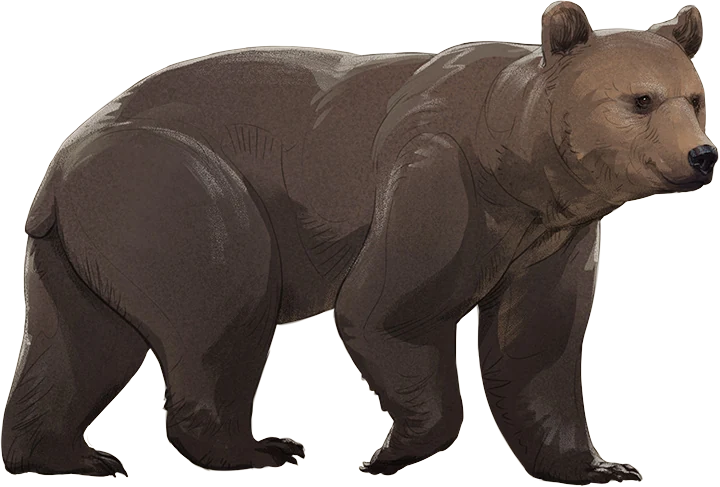
Ranging from Europe to Central Russia, where it inhabits boreal and temperate forests, grasslands, and wetlands, the Eurasian brown bear (or Ursus arctos arctos) is a subspecies of the brown bear. Eurasian brown bears have thick, brown fur, a large shoulder hump, a rounded head and small, rounded ears. They have strong front legs with long claws used for digging and hunting. Brown bears can grow extremely large, but there is a lot of variation in size between different populations. An average male bear weighs 350kg to 500kg and will be 2.2m long, while an average female bear weighs 150kg to 300kg and will be 1.8m long.

Found in Europe, Asia
Regions
- Asia
- Europe
Biomes
- Taiga
- Temperate
- Tundra
Size & weight
Size
Nose to rump: 1.8 to 2.1 m
Measured as Nose to rump. The person stands 1.75 m tall for scale.
Habitat requirements
Barrier grade
Grade 3 of 5
Minimum height
3 m minimum
Climbing & water
Climb proof
Needed
Water barrier
Not allowed
Combine this animal with others in the barrier planner.
Conservation
IUCN Red List
Least concern
Least concern
Critically endangered
Wild population
100,000
100,000 in the wild. Rank 38 of 57 species with a known count, smallest first.
While of Least Concern today, the Eurasian brown bear has lost much of its historic range. Centuries of habitat destruction, hunting, and deliberate persecution have led to severe population declines and local extinctions. Bears had vanished from much of Western Europe by the early 20th century, surviving only in remote mountainous and forested areas. Growing environmental awareness and legal protections, such as the EU Habitats Directive and the Bern convention have laid the groundwork for bear conservation and recovery. Reintroductions and translocation efforts have played a vital role in restoring bear populations to former habitats, such as in Italy’s Trentino-Alto Adige region, or the Pyrenees Mountains, where bears from Slovenia were released to bolster a nearly extinct population. Bear reintroductions typically involve carefully selected individuals, soft-releases, post-release monitoring, and intensive community engagement to address human-wildlife conflicts. Several reintroduced populations are now breeding successfully and expanding their range, making the Eurasian brown bear one of Europe’s notable large carnivore conservation successes.
Zoopedia sketchbook
Social & reproduction
Keeper notes
Except for a mother with her cubs, brown bears are solitary. They only interact with each other to mate or fight over mates. They may be seen in close quarters when there is a desirable food source, such as gatherings of bears at rivers' edges during the salmon spawning season. Bears will usually ignore another bear when they encounter one. The breeding season for the Eurasian brown bear occurs between May and July. Males roam widely in search of receptive females and may compete for access to mates. Dominant individuals tend to have greater reproductive success. Brown bears are promiscuous, meaning both males and females mate with multiple partners. Due to delayed implantation, although fertilisation occurs soon after mating, the fertilised egg does not immediately implant in the uterus. Instead, implantation happens in late autumn, just before the female enters hibernation. Cubs are typically born in January or February, after a pregnancy of 7 to 8 months, during hibernation in a den. A litter usually consists of 1 to 4, usually 2 or 3, cubs, born blind, hairless, and very small. They remain in the den and feed only on milk until they are 3 or 4 months old. At this age, they will take their first trip out of the den and begin eating solid food. The female will not mate while she raises cubs, who usually remain with their mother for about 1.5 to 2.5 years, during which time she teaches them essential survival skills, including foraging and avoiding danger. Once the cubs become independent, they leave to become solitary and establish their own territory. Brown bears reach sexual maturity between 4 and 6 years of age, though reproduction may occur later depending on environmental and social conditions.
Animal facts
- The Eurasian brown bear’s sense of smell is 2,100 times better than humans, and even better than dogs.
- Eurasian brown bear cub litters usually have multiple fathers.
- Eurasian brown bears walk on the soles of their feet when standing upright, like humans. This gives them excellent balance.
- In the wild, Eurasian brown bears hibernate for up to 7 months without eating, drinking, urinating or defecating.
- Although Eurasian brown bears can be dangerous predators, they are hypocarnivorous omnivores and 70 to 80% of their diet is vegetarian.
Taxonomy
Class
Order
Family
Genus
Species