Overview
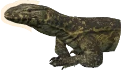
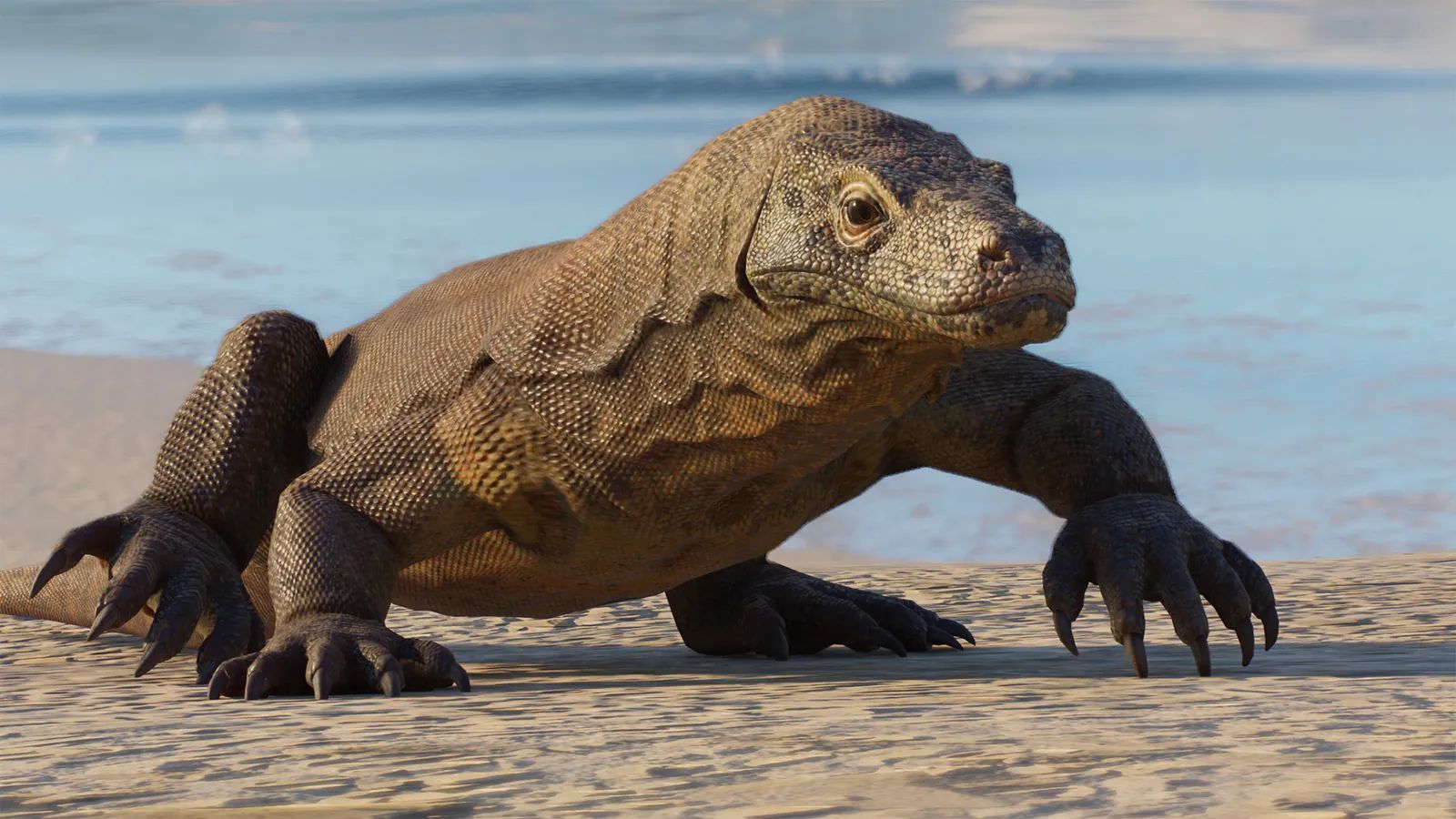
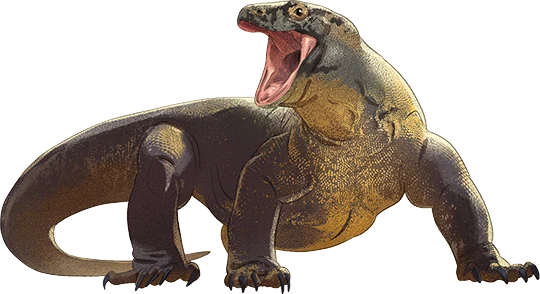
The Komodo dragon (or Varanus komodoensis) is a large species of reptile that lives on the Indonesian isles of Komodo, Rinca, Flores, Gili Dasami, and Gili Motang. They are a dull green-brown in colour with wide set limbs with a wide gape, have a long, muscular tail, and a yellow forked tongue. A Komodo dragon's walk is very distinctive, moving its limbs far out from its body and swaying from side to side as it moves. Although they appear slow, the dragons can run up to 19km/h when chasing prey. The males reach an average length of 2.59m and usually weigh between 79kg and 91kg, whereas the females are smaller, averaging 2.29m long and between 68kg and 73kg.
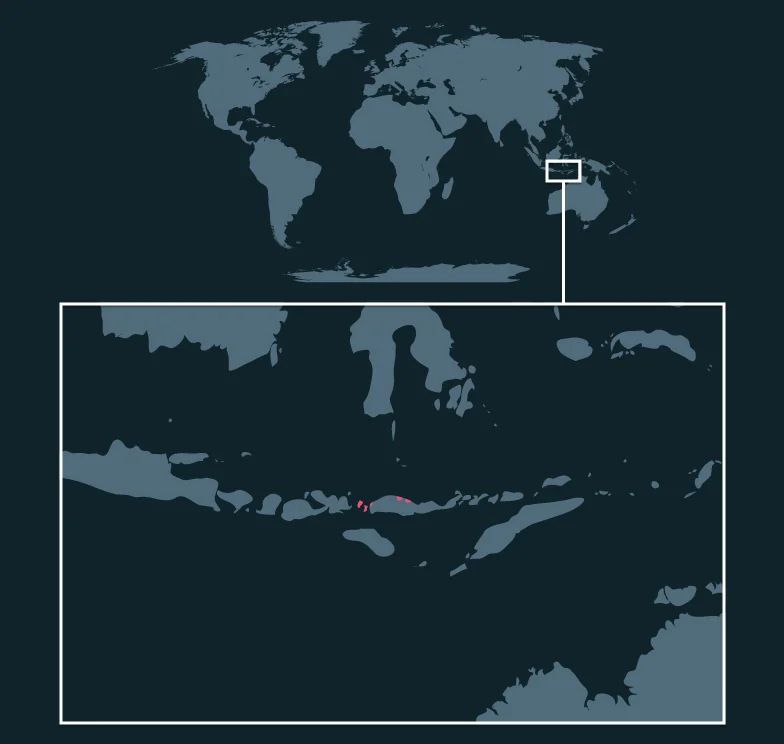
Found in Southeast Asia
Regions
- Asia
Biomes
- Mangrove
- Rainforest
- Wetlands
Size & weight
Size
Length: 2.3 to 2.85 m
Weight
Male
85 kg
Female
71 kg
Bars use a log scale against the heaviest animal in the Zoopedia, the Common Hippopotamus.
Measured as Length. The person stands 1.75 m tall for scale.
Habitat requirements
Barrier grade
Grade 2 of 5
Minimum height
1 m minimum
Climbing & water
Climb proof
Not needed
Water barrier
Not allowed
Combine this animal with others in the barrier planner.
Conservation
IUCN Red List
Endangered
Least concern
Critically endangered
Wild population
1,383
1,383 in the wild. Rank 6 of 57 species with a known count, smallest first.
Komodo dragons are Endangered due to habitat loss, human encroachment, and overhunting of their prey species, such as Timor deer. Native only to a handful of islands in Indonesia, this species is highly vulnerable to disturbances in their isolated ecosystems. Human settlement and agriculture have fragmented their environment, and rising sea levels because of climate change potentially inundate low-lying nesting areas and small islands. Komodo National Park was established in the 1980s, offering strong legal protection to dragons and their habitat on this island. In-situ conservation focuses on population monitoring, poaching mitigation, and support of ecotourism, while ex-situ conservation maintains a genetically healthy insurance population in zoos, and raises awareness and funds. Climate adaption planning may help in identifying and protecting higher-elevation nesting sites. While these measures have helped stabilise populations on protected islands, continued success will depend on local engagement, habitat connectivity, and coordinated global support.
Zoopedia sketchbook
Social & reproduction
Keeper notes
Komodo dragons are solitary creatures, but they will group together to feed and mate. When in groups, the largest male is dominant; he will feed first and get first choice of females. During the mating season from May to August, males fight over territory and mates, scenting the air with their tongues to track nearby females. Rival males fight each other standing on their hind legs. Females are rarely receptive to approaching males, often biting and scratching any suitors, and copulation usually involves the male pinning the female to the ground. Komodo dragon females lay 15 to 30 eggs into a nest in the ground about 1 to 3 months after mating, where they remain to incubate for 7 to 8 months. The hatchlings must dig themselves out of the nest, before climbing into trees and living above ground to avoid being eaten by adults. Up to 90% of hatchlings die before making it to adulthood. They will not reach sexual maturity until they are between 8 and 9 years old.
Animal facts
- Komodo dragons are ambush predators; they lie in wait for prey and go for the throat when they attack.
- Komodo dragons can swallow prey up to the size of a goat or small deer whole. After a large meal like this, they will slowly digest it and then regurgitate the fur, horns and bones.
- Komodo dragons are cannibalistic. Up to 10% of an adult's diet is juvenile dragons.
- Komodo dragons apply potent venom onto multiple frenzied bite wounds from their sharp teeth. The venom makes the victim collapse from blood loss and shock after the initial attack, too weak to escape or fight back.
- Female Komodo dragons can lay viable eggs without mating, but all hatchlings will be male. This process of asexual reproduction is called parthenogenesis.
Taxonomy
Class
Order
Family
Genus
Species