Overview
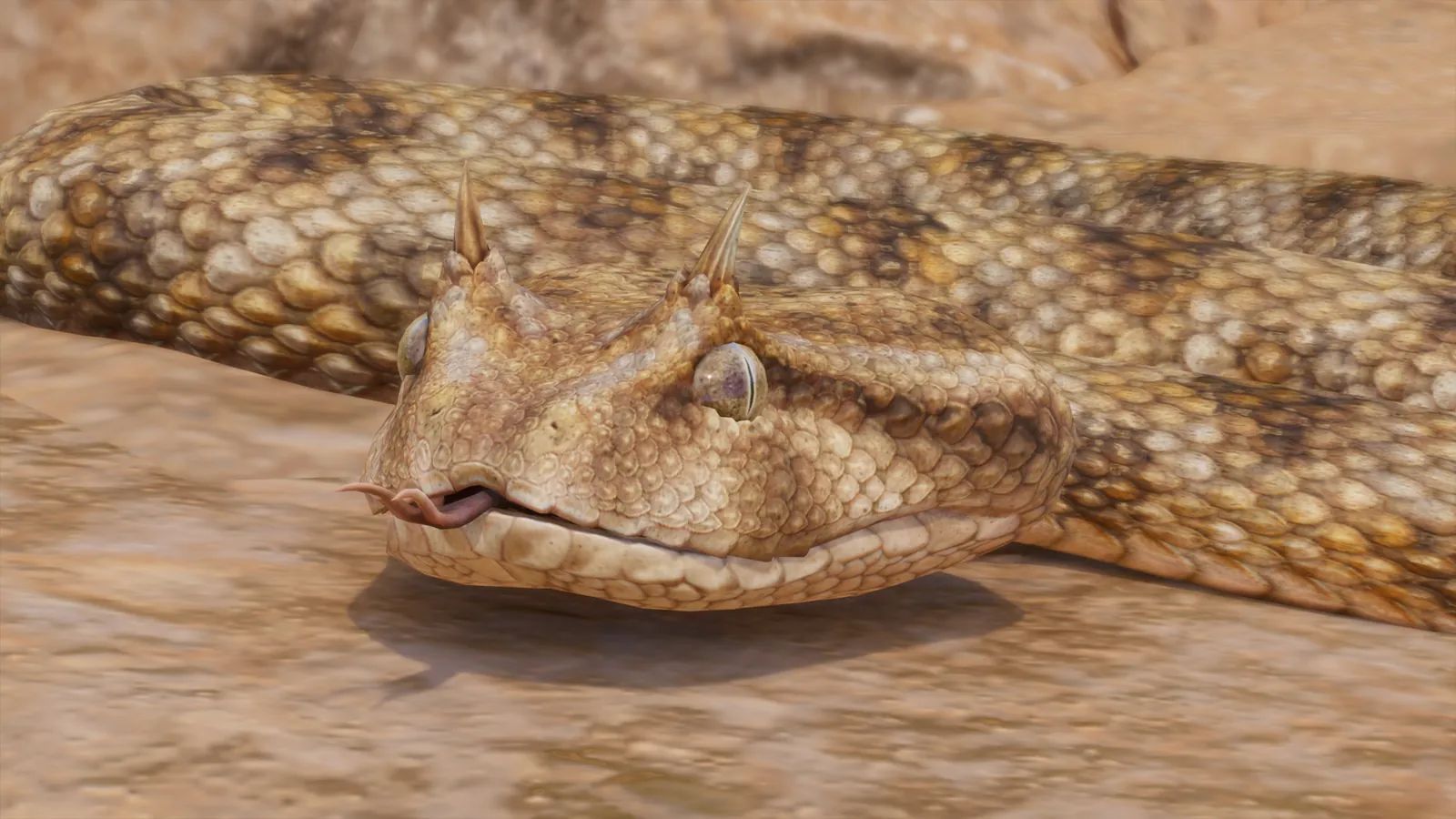
The desert horned viper (or Cerastes cerastes) is a venomous snake native to the deserts and semi-deserts of Northern Africa and the Middle East. It is also known as the Saharan horned viper or Arabian horned viper. The body of the desert horned viper is sand-coloured, often with a paler underside. They may have slightly darker brown mottling on their scales as camouflage. The head is large and triangular. Most notably, they may have distinctive, pointed horns above their eyes, from which they get their name. Males and females look alike, although females tend to be slightly larger. Their body length varies from 30cm to 60cm long.
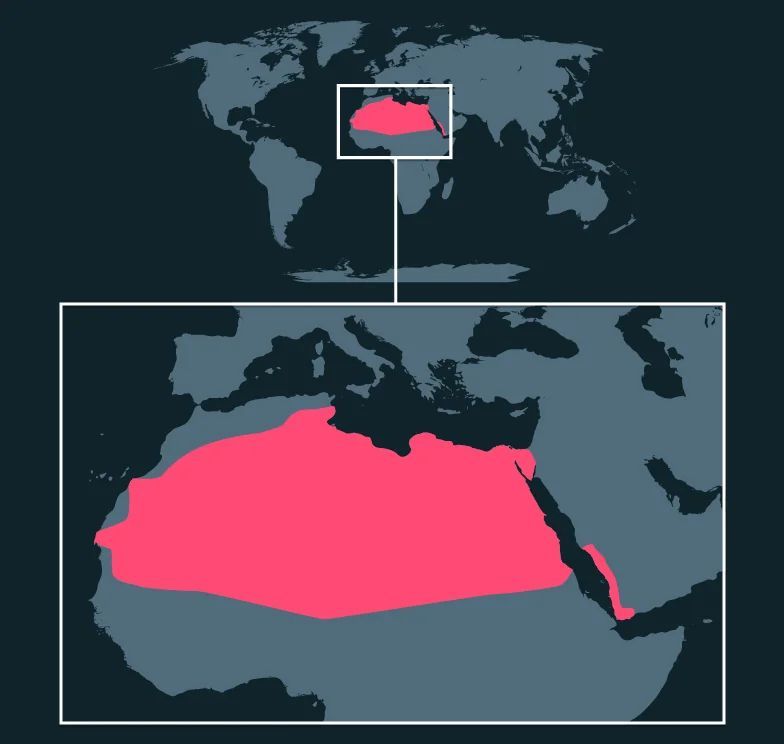
Found in Africa, Asia
Regions
- Africa
- Asia
Biomes
- Desert
Size & weight
Size
Length: 1 m
Measured as Length. The person stands 1.75 m tall for scale.
Conservation
IUCN Red List
Least concern
Least concern
Critically endangered
Desert horned vipers are a species of Least Concern and are not endangered. Animals are collected locally by snake charmers, for venom collection, and for the pet trade in small numbers. They are often subject to human persecution when encountered. Their population is common and widespread in its native range. The species is found in protected areas of North Africa but otherwise has no ongoing conservation actions. The long-term outlook for this species appears to be a stable population across its wide native range. Additional studies are required on both the sustainability of venom harvests and the genetic study of subspecies.
Social & reproduction
Keeper notes
Desert horned vipers are solitary. They only interact with other individuals to mate. Breeding in desert horned vipers takes place while buried in sand, so very little is known about it. Mating events appear to take place in April, when a male and female viper meet. It is assumed they locate each other through pheromones. Copulation may last 3 to 4 days, after which the snakes part ways again. Soon after mating, the female viper lays a clutch of 8 to 23 eggs underneath rocks or in an abandoned burrow. She does not stay with the eggs and no parental care is provided. The eggs hatch after an incubation period of 50 to 80 days. Hatchlings are independent from birth and reach sexual maturity at around 2 years old.
Animal facts
- The desert horned viper’s venom causes swelling, bleeding, necrosis, nausea and vomiting in humans, but is rarely fatal.
- The desert horned viper moves quickly and easily across the sand by sidewinding.
- The desert horned viper has specially adapted sharp-edged scales on its underside that allow it to grip to loose sand.
- The desert horned viper is an ambush predator, meaning it lies hidden and then lunges quickly to grab prey as it passes by the snake’s hiding spot.
- The horns of the desert horned viper are specially adapted scales that help protect the snake’s eyes from sand. However, only 50% of desert horned vipers actually exhibit this feature.
Taxonomy
Class
Order
Family
Genus
Species