Overview
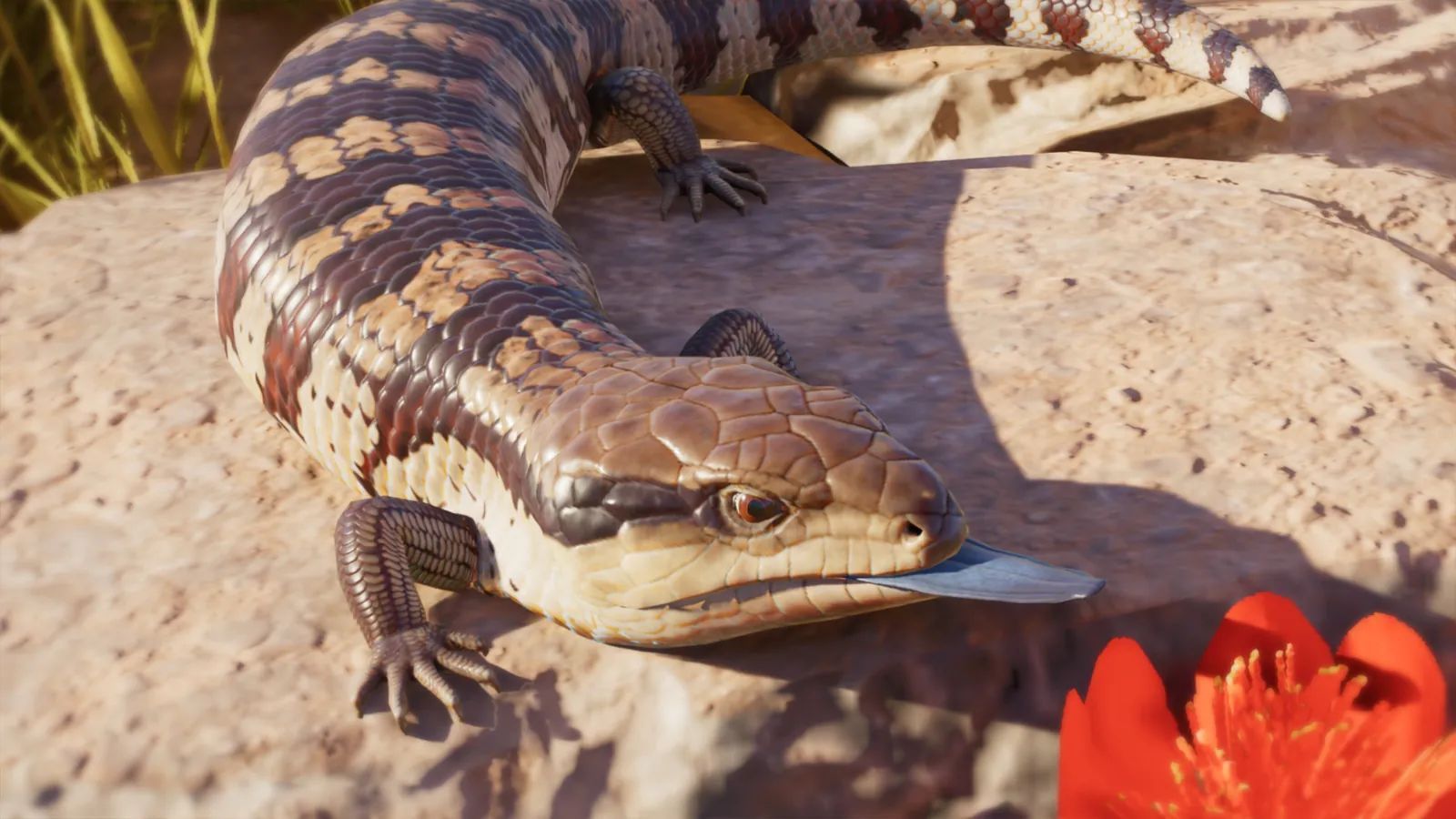
The common bluetongue (or Tiliqua scincoides), also called common blue-tongued lizard or blue-tongued skink is a species of reptile that lives in the woodland, scrubland and semi-desert areas of Australia. They are broad and squat animals, with a triangular head and a thick tail. It has various colour morphs but typically has tan, beige and black scales arranged in a striped pattern. As its name suggests, it has a bright blue tongue. Adult common bluetongues are between 45cm and 60cm long and weigh 0.35kg to 1kg.
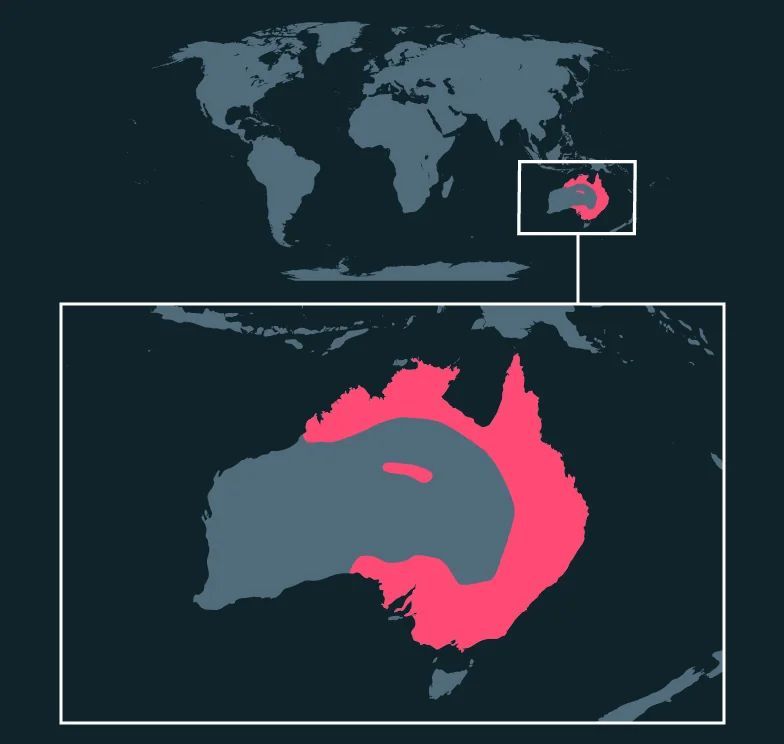
Found in Oceania
Regions
- Oceania
Biomes
- Rainforest
- Savannah
- Temperate
Size & weight
Size
Length: 0.43 m
Weight
Male
0.35 kg
Female
0.35 kg
Bars use a log scale against the heaviest animal in the Zoopedia, the Common Hippopotamus.
Measured as Length. The person stands 1.75 m tall for scale.
Conservation
IUCN Red List
Least concern
Least concern
Critically endangered
The common bluetongue is assessed as a species of Least Concern. While the increased urbanisation along the Australian coast degrades their natural habitat, this lizard seems to have adapted well to this altered landscape. However, like many other Australian animals, they are at risk from the invasive cane toad, a South American toad that is poisonous and will kill common bluetongues when ingested by them. Many parts of the common bluetongue’s range are protected areas in national parks and reserves and there are no further direct conservation efforts targeted on the species. Measures against invasive species would in general help the common bluetongue as well, and it has been suggested that taste aversion training could be a tool to help common bluetongues avoid preying on cane toads.
Social & reproduction
Keeper notes
Common bluetongues are solitary animals and only interact to mate or fight over mates. Male common bluetongues track females by scent during the mating season from September to November. If multiple males are tracking the same female, they are likely to meet and fight aggressively for mating rights. The victor will get to mate with the female. Mating may be violent and females often have scratches and scars from mating. Around 3 to 5 months after mating, females will give birth to an average of 10 to 15 live young. The young are independent from birth, and the female provides no further care. Common bluetongues reach sexual maturity between 18 and 24 months old, and are fully grown at around 3 years old when they have reached a size of approximately 40cm in length.
Animal facts
- Common bluetongues give birth to live young.
- Common bluetongues may detach their tail when attacked as a distraction. Their tails can grow back after detachment.
- When threatened, the common bluetongue will puff itself up, hiss and stick out its blue tongue to intimidate predators.
- Adult common bluetongues shed their skin approximately every 6 weeks.
- Common bluetongues have a strong and painful bite and often will not let go of the bitten object.
Taxonomy
Class
Order
Family
Genus
Species