Overview
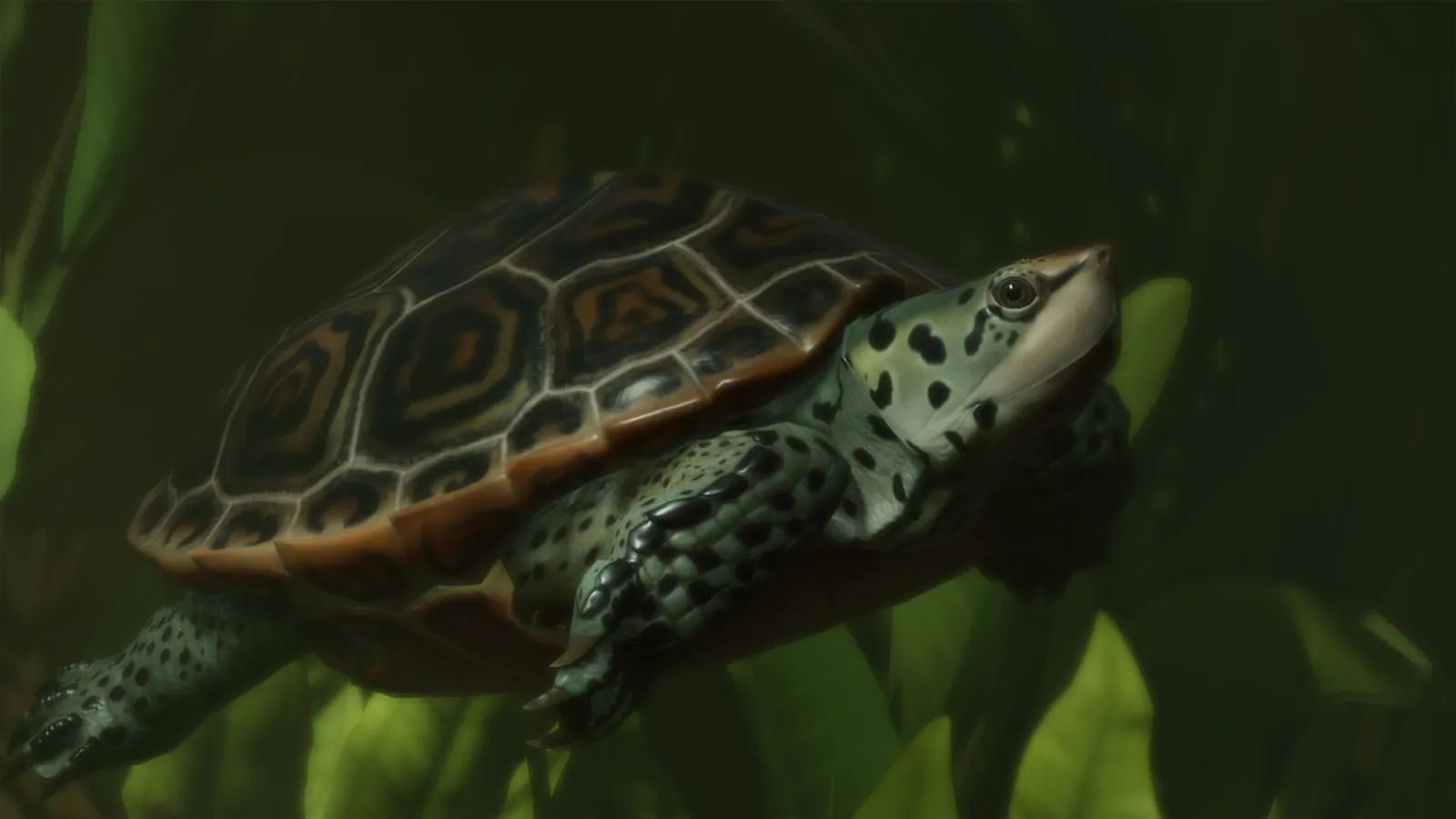
The diamondback terrapin (or Malaclemys terrapin) is a small species of turtle that lives in the brackish and coastal swamps of the Eastern and Southern United States of America. It is characterised by its distinctive shell pattern of interlocking ‘diamonds’ that tend to have concentric light and dark rings within them. However, pattern and colouration do vary within the species across subspecies. The average shell length of males is 13cm with an average weight of 0.32kg, whereas the average shell length of the female is 17cm with a weight of 0.72kg.
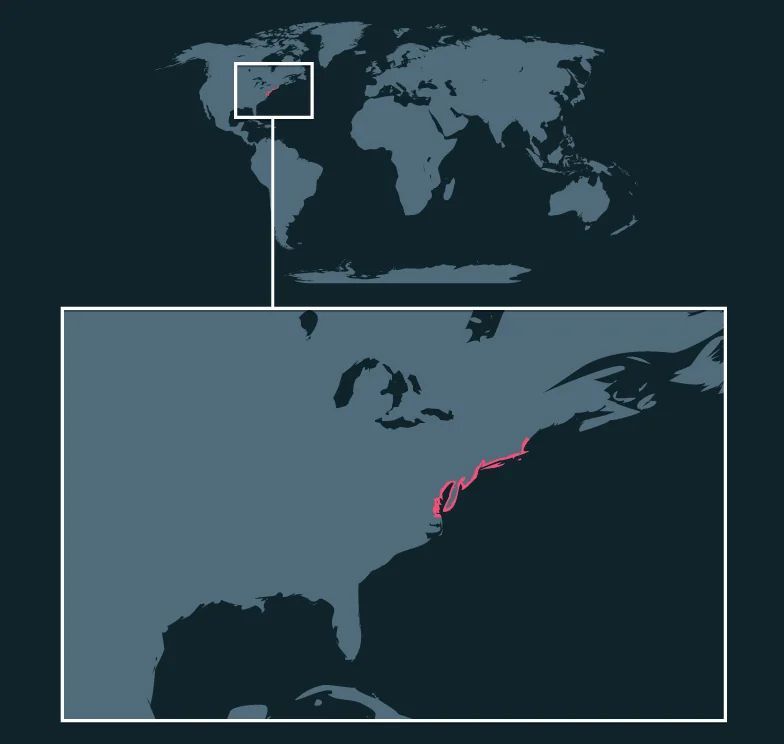
Found in North America
Regions
- North America
Biomes
- Estuarine
- Mangrove
- Wetlands
Size & weight
Size
Length: 0.13 to 0.17 m
Weight
Male
0.32 kg
Female
0.72 kg
Bars use a log scale against the heaviest animal in the Zoopedia, the Common Hippopotamus.
Measured as Length. The person stands 1.75 m tall for scale.
Conservation
IUCN Red List
Vulnerable
Least concern
Critically endangered
Diamondback terrapins are a Vulnerable species. Historically, they were driven to the brink of extinction by the early 1900s due to overhunting for meat and shells. While they have somewhat recovered since, today they are primarily at risk of drowning in crab pots of commercial crab fisheries, but also vehicle collisions while crossing roads to find nesting sites, predation by animals thriving in densely populated areas, and overall habitat loss of brackish coastal wetlands due to urban development and rising sea levels. In some areas, they are illegally collected for the pet trade despite protections. In many states, the terrapins are protected from hunting, though there are exceptions. Bycatch reduction devices can lower mortality in crab pots, though fishery lobbies resist large-scale adoption of this practice. There have been initiatives to provide fencing to limit roadkill. Several habitat restoration and headstart initiatives provide predator free, healthy marsh environments for juveniles to mature in for improved survival rates. Populations are still in decline, and continued work is needed to enforce legislation to protect this species and its habitat.
Social & reproduction
Keeper notes
Diamondback terrapins will tolerate other nearby terrapins as long as there is plenty of space, and live well together and occasionally interact, although most social behaviour occurs during the mating season. During the breeding season in early spring, the female will swim conspicuously on top of the water waiting for males to approach. She may either let him mate immediately, or swim away. Males may chase females for long distances in an attempt to mate. Females can store sperm from multiple males for many years and egg fertilisation is delayed, so each batch of eggs is likely to come from several fathers. When the female is ready to lay her eggs, she will climb ashore onto a sandy beach, dig a nest 10cm to 20cm in the sand to lay her eggs there and leave afterwards. The eggs hatch in late summer or early autumn and the hatchlings are around 50mm in size. Males reach sexual maturity when they grow to 110mm in size, which takes 2 to 3 years. Females on the other hand only reach sexual maturity when they grow to 171mm in size, which may take up to 8 to 10 years.
Animal facts
- The Diamondback terrapin is sexually dimorphic; the males are significantly smaller than the females.
- Diamondback terrapins live in brackish water (areas where freshwater and seawater mix) but require visits to freshwater to avoid dehydration.
- Diamondback terrapins have salt glands behind their ear which allow them to excrete excess salt that they accumulate from living in near-marine environments.
- Diamondback terrapins were considered a delicacy and almost hunted to extinction for their meat in the 19th Century.
- The concentric rings within the plates of the Northern diamondback terrapin’s shell are growth rings that form as the terrapin gets larger.
Taxonomy
Class
Order
Family
Genus
Species