Overview
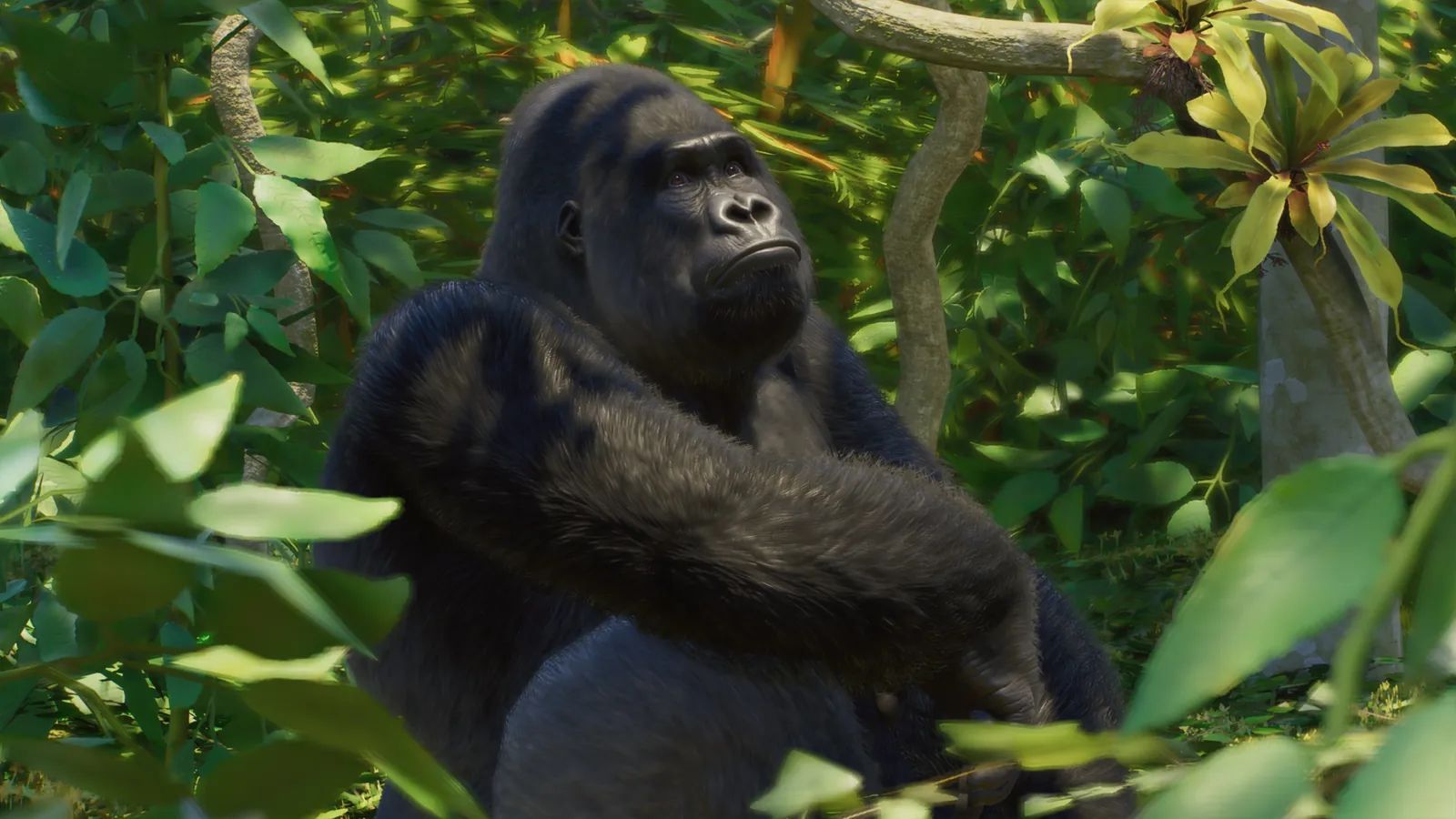
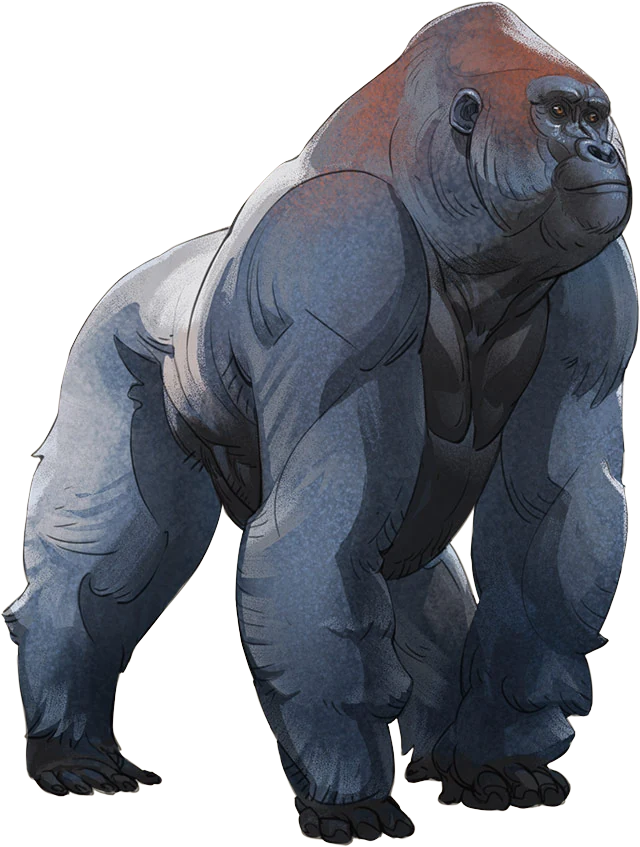
The Western lowland gorilla (or Gorilla gorilla gorilla) is native to Cameroon, Equatorial Guinea, Gabon, Republic of the Congo and Southern Niger, living and foraging in the rainforests, swamp forests and abandoned farmland there. They have black skin, dark forward-facing eyes, a prominent brow ridge, large nostrils and coarse hair which covers most of their body except the face, ears, hands and feet. Males are much larger than females and, when they mature, the hair on their backs becomes grey and they are identified as 'silverbacks'. Male gorillas are much larger, up to twice the size, than females. On average, they are 1.7m tall while standing on their hind legs and weigh 181.5kg. Females are 1.5m tall and weigh around 79kg.
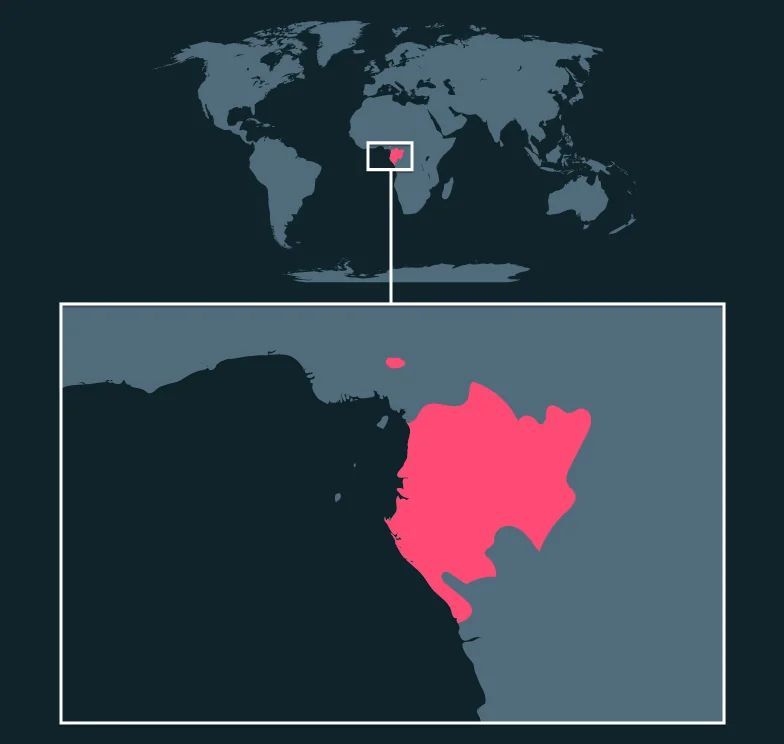
Found in Africa
Regions
- Africa
Biomes
- Rainforest
- Wetlands
Size & weight
Size
Standing height: 1.5 to 1.67 m
Measured as Standing height. The person stands 1.75 m tall for scale.
Habitat requirements
Barrier grade
Grade 3 of 5
Minimum height
3 m minimum
Climbing & water
Climb proof
Needed
Water barrier
Allowed
Water barrier size
6 m wide, 2 m deep
Combine this animal with others in the barrier planner.
Conservation
IUCN Red List
Critically endangered
Least concern
Critically endangered
Wild population
230,000
230,000 - 260,000 in the wild. Rank 45 of 57 species with a known count, smallest first.
The Western lowland gorilla is Critically Endangered. Their tropical forest habitats in Central Africa are increasingly fragmented by logging, mining, and agricultural expansion. This limits food access and isolates populations. Poaching remains a critical threat, as gorillas are hunted for bushmeat and whole troops may be killed to access and capture a single infant for the illegal wildlife trade. Diseases, such as the Ebola virus, have, in recent decades, wiped out up to 90% of some local populations. All this is exacerbated by climate change altering their forest ecosystems. Gorillas are being supported both in-situ and ex-situ. Protected areas and national parks provide critical safe habitats with anti-poaching patrols and habitat management. Community-based conservation programmes engage local people in sustainable livelihoods and forest stewardship, reducing the incentive to hunt or capture gorillas. In captivity, zoos and breeding centres manage breeding programmes, public education, and genetic research, and support in-situ efforts with funding, hoping to ensure a long-term survival of the species.
Zoopedia sketchbook
Social & reproduction
Keeper notes
Gorillas are social animals, living in small groups with an approximately even split of male and females. There will usually be one dominant male, known as the silverback – although there can occasionally be two; a father and son – who leads the group when foraging or travelling. Despite individuals within groups being unrelated, the females will have very strong bonds with each other and their silverback, not leaving him in favour of another male once their group has been established. Gorillas mate year-round. When a female gorilla is fertile, she will slowly approach the silverback and attempt to get his attention by maintaining eye contact and puckering her lips. If he does not respond, she will pound the ground near him; if the bid is successful, the male will mate with her. The mother is pregnant for 8.5 months before giving birth to one baby, which she will care for closely until the infants are around 4 years old, when their offspring begin to gain significant independence. Between 9 and 10 years old, young gorillas both male and female will leave their family group. Young females will search for a group to join, whereas males will be solitary for some time until they are mature enough to become silverbacks and form their own group. Gorillas reach sexual maturity between 8 and 9 years old.
Animal facts
- Gorillas are the largest primate species.
- Gorillas are incredibly important to the forests in which they live because their feeding and roaming habits disperse fruit seeds.
- Gorillas build nests daily that they sleep in at night; these nests are usually in trees.
- Gorillas create and use tools, using branches they have modified to get food that is out of reach, or to measure the depth of water.
- Gorillas have been taught sign language successfully – Koko the gorilla, born in San Francisco Zoo, learned over 1100 signs.
Taxonomy
Class
Order
Family
Genus
Species