Overview
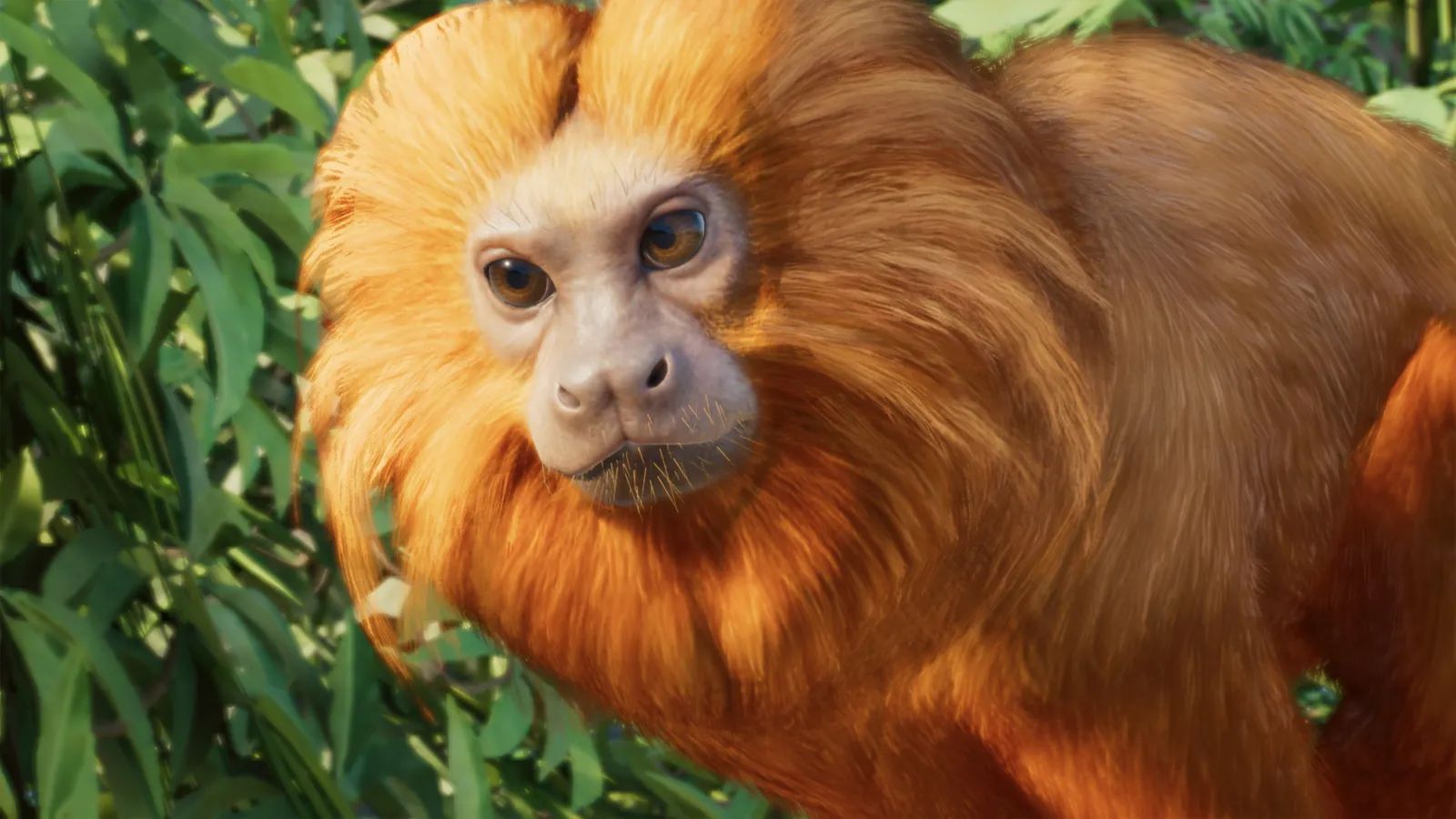
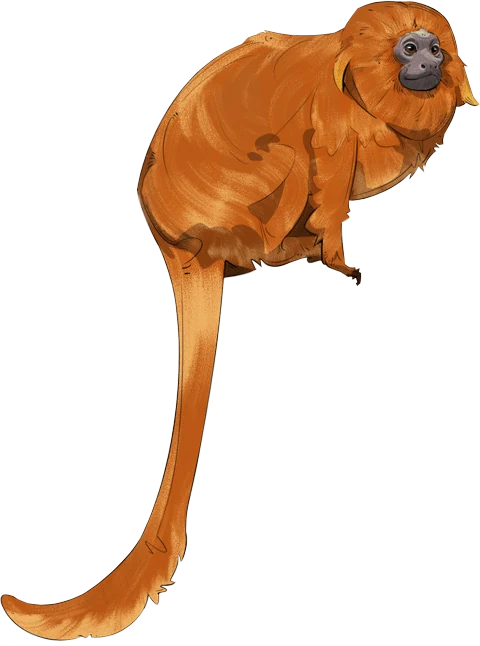
The golden lion tamarin (or Leontopithecus rosalia) is a New World primate native to the Atlantic coastal rainforests of southeastern Brazil, living primarily in humid lowland and secondary forests. In appearance, these tamarins are small, slender monkeys with a rich golden to reddish‑gold coat and a distinctive mane of long hair framing a dark face. Their head and body length averages roughly 20cm to 30cm with a long tail of 32cm to 40cm. Adults typically weigh around 600g to 800g. Males and females are similar in size and colouration.

Found in South America
Regions
- South America
Biomes
- Rainforest
Size & weight
Size
Nose to rump: 0.27 m
Measured as Nose to rump. The person stands 1.75 m tall for scale.
Habitat requirements
Barrier grade
Grade 1 of 5
Minimum height
3 m minimum
Climbing & water
Climb proof
Needed
Water barrier
Allowed
Water barrier size
3 m wide, 1 m deep
Combine this animal with others in the barrier planner.
Conservation
IUCN Red List
Endangered
Least concern
Critically endangered
Wild population
4,800
4800 in the wild. Rank 13 of 57 species with a known count, smallest first.
The golden lion tamarin is considered Endangered. It has faced conservation challenges for decades due to habitat loss, fragmentation, and a reduced gene pool. Their remaining Atlantic Forest consists of tiny, isolated patches too small to support healthy tamarin populations, leaving populations vulnerable to genetic decline and disease outbreaks. Illegal logging, agricultural expansion, urban development, and the illegal pet trade have contributed to declines, and disease has killed over 30% of some subpopulations. Conservation efforts have been protecting and restoring habitat, connecting forest fragments with canopy corridors, and bolstering wild populations, leading to dramatic population increases. Protected reserves provide safe habitat, and translocation and reintroduction programmes have established new viable populations. Vaccination against yellow fever and sustainable agricultural initiatives around forest edges aim to reduce disease impacts and human pressures. Environmental education, agroforestry support, and long‑term strategic planning to ensure a connected, genetically robust future for the tamarins.
Zoopedia sketchbook
Social & reproduction
Keeper notes
Golden lion tamarins are highly social primates. They live in family groups of 2 to 8 individuals, usually consisting of a breeding pair and their offspring from one or more litters. Breeding occurs between September and March. Golden lion tamarins form monogamous or socially cohesive breeding pairs within their family groups. Courtship is relatively subtle but involves vocalisations, grooming, and close physical contact between the male and female. Males may present food items, such as fruits or insects, to females as part of courtship. Breeding often coincides with periods of higher fruit availability in the Atlantic Forest, ensuring adequate resources for raising offspring. Females usually give birth to twins, though singletons or triplets can occur, after a gestation period of about 125 days. Reproduction in golden lion tamarins is highly cooperative, with all group members participating in infant care. Adults and older juveniles take turns carrying, grooming, and protecting the newborns, while the mother primarily nurses. Infants cling to the caregiver’s body for transport through the canopy during foraging. Juveniles are weaned at around 2 to 3 months and reach sexual maturity at approximately 2 to 3 years of age, though they usually remain in the natal group until they are older than this.
Animal facts
- Golden lion tamarins are very vocal; they use high pitched whistle-like ‘phee’ calls, trills, chirps, and alarm calls to maintain contact, warn of predators, and coordinate group activities.
- There were once fewer than 200 golden lion tamarins in the wild; conservation programs have increased wild populations to several thousand.
- Groups of golden lion tamarins defend territories ranging 5 to 25 hectares, using scent-marking and vocalisations to deter intruders.
- Golden lion tamarins sleep in tree holes, hollow branches, or dense vine tangles.
- In the wild, golden lion tamarin infant survival is much higher in groups with helpers, showing the importance of cooperative breeding and social care.
Taxonomy
Class
Order
Family
Genus
Species