Overview
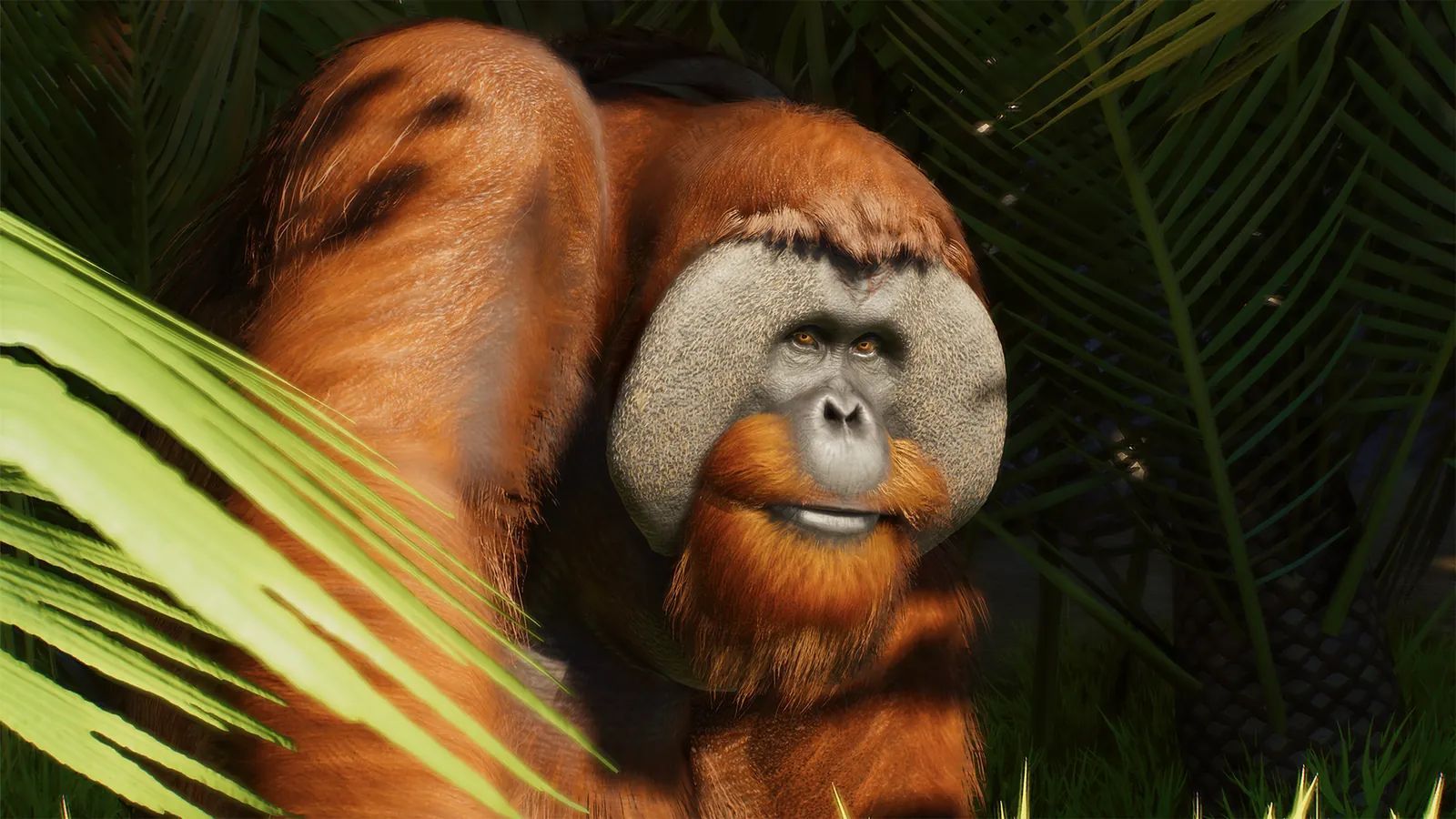
The Sumatran orangutan (or Pongo abelii) is a great ape endemic to the Indonesian island of Sumatra. They inhabit tropical rainforests, including lowland swamp forests and mangroves. They have long orange hair, which is lighter and silkier than that of their Bornean relatives. Males, once sexually mature, develop large cheek pads (flanges) and a throat‑sac, and often grow beards and longer facial hair. Males are significantly larger than females, weighing 50kg to 90kg, and standing up to 1.8m tall. Adult females typically weigh about 30kg to 50kg and reach a height of around 1.3m when standing.
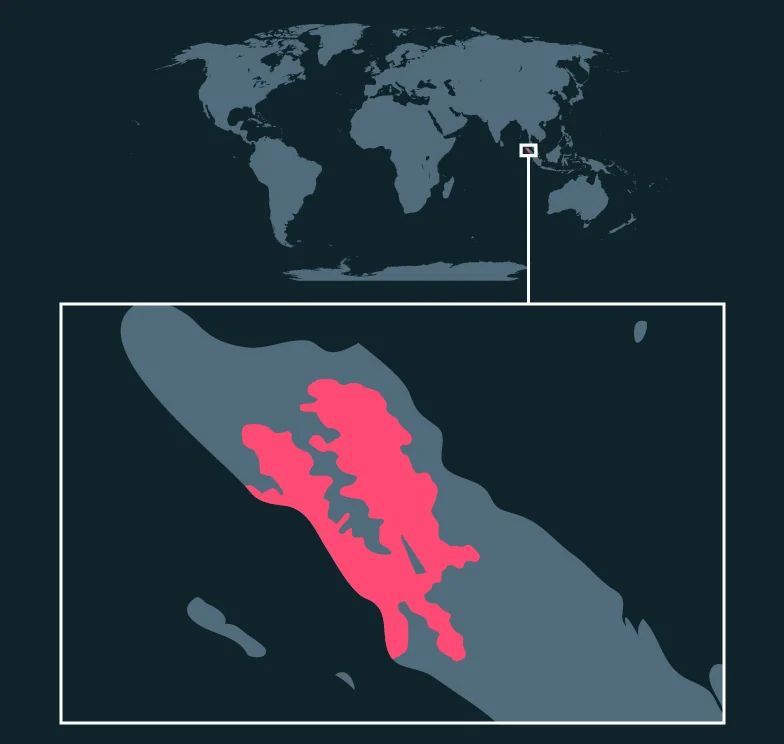
Found in Southeast Asia
Regions
- Asia
Biomes
- Rainforest
Size & weight
Size
Nose to rump: 0.78 to 0.97 m
Measured as Nose to rump. The person stands 1.75 m tall for scale.
Habitat requirements
Barrier grade
Grade 3 of 5
Minimum height
3 m minimum
Climbing & water
Climb proof
Needed
Water barrier
Allowed
Water barrier size
6 m wide, 2 m deep
Combine this animal with others in the barrier planner.
Conservation
IUCN Red List
Critically endangered
Least concern
Critically endangered
Wild population
14,000
14,000 - 15,000 (estimated) in the wild. Rank 23 of 57 species with a known count, smallest first.
Sumatran orangutans are Critically Endangered. Their decline is primarily driven by habitat loss and illegal killing and trade. Between 1985 and 2014, rainforest cover in Sumatra fell dramatically, and still, large swatches of forest are cleared for oil-palm plantations, lumber, and other agriculture. This destroys and fragments vital habitat, preventing orangutans to find food and mates. Additionally, despite legal protection, orangutans are sometimes captured for the pet trade and killed for meat or because they are seen as pests on plantations. Their slow reproductive rate means even a few deaths have major impacts on population viability. Conservation efforts include habitat protection, rehabilitation, and community-based conservation. Orangutans confiscated from illegal trade are rehabilitated and reintroduced into protected areas. Furthermore, conservation organisations engage with local communities to promote sustainable livelihoods, reducing the pressure to convert rainforest into plantations. Global efforts raising awareness and shifting consumer demand away from palm oil, and seeking to strengthen protection against illegal logging are helping, slowly but surely, to reduce drivers of habitat destruction.
Zoopedia sketchbook
Social & reproduction
Keeper notes
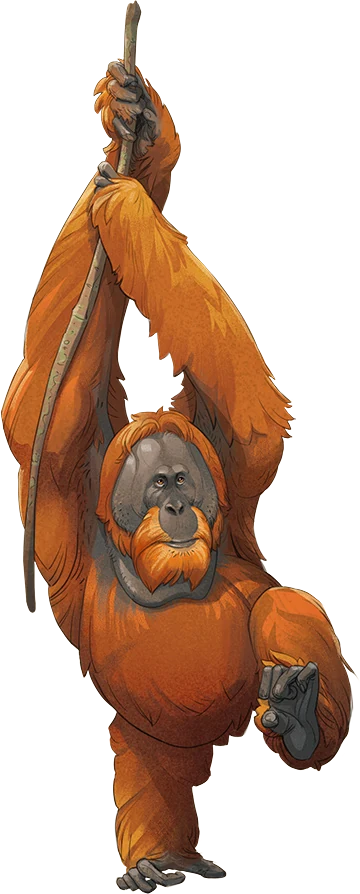
Occasionally, a male and female may travel together for a time, but orangutans generally live alone, except for a mother and her young. They have far less social interaction than other ape species. However, they are still intelligent animals, and do not like complete isolation from their counterparts. They will interact if they meet, and may be friendly, avoidant or aggressive. Sumatran orangutans can mate year-round: female receptiveness is determined by a 30-day oestrus cycle. Mature, dominant males preside over large territories. They develop cheek and throat pads, and are far more likely to gain the attention of females than younger or less dominant males that lack these flanges. Dominant males often call to attract females to their territories from far away. After successfully mating, a female will be pregnant for 8.5 months and give birth to a single infant. She will care closely for her child for the first 8 years of its life. Young orangutans remain with their mothers until 10 to 11 years old, then they leave to live solitarily and establish their own home range.
Animal facts
- Orangutans are the only great ape species that do not live in Africa.
- Orangutan means 'person of the forest' in Malay and Indonesian, they are 7 times stronger than humans.
- Orangutans are the largest tree-dwelling animal in the world.
- Orangutans are the only ape species that live solitarily.
- Orangutans use tools with their mouths, unlike gorillas and chimps that use their hands.
Taxonomy
Class
Order
Family
Genus
Species