Overview
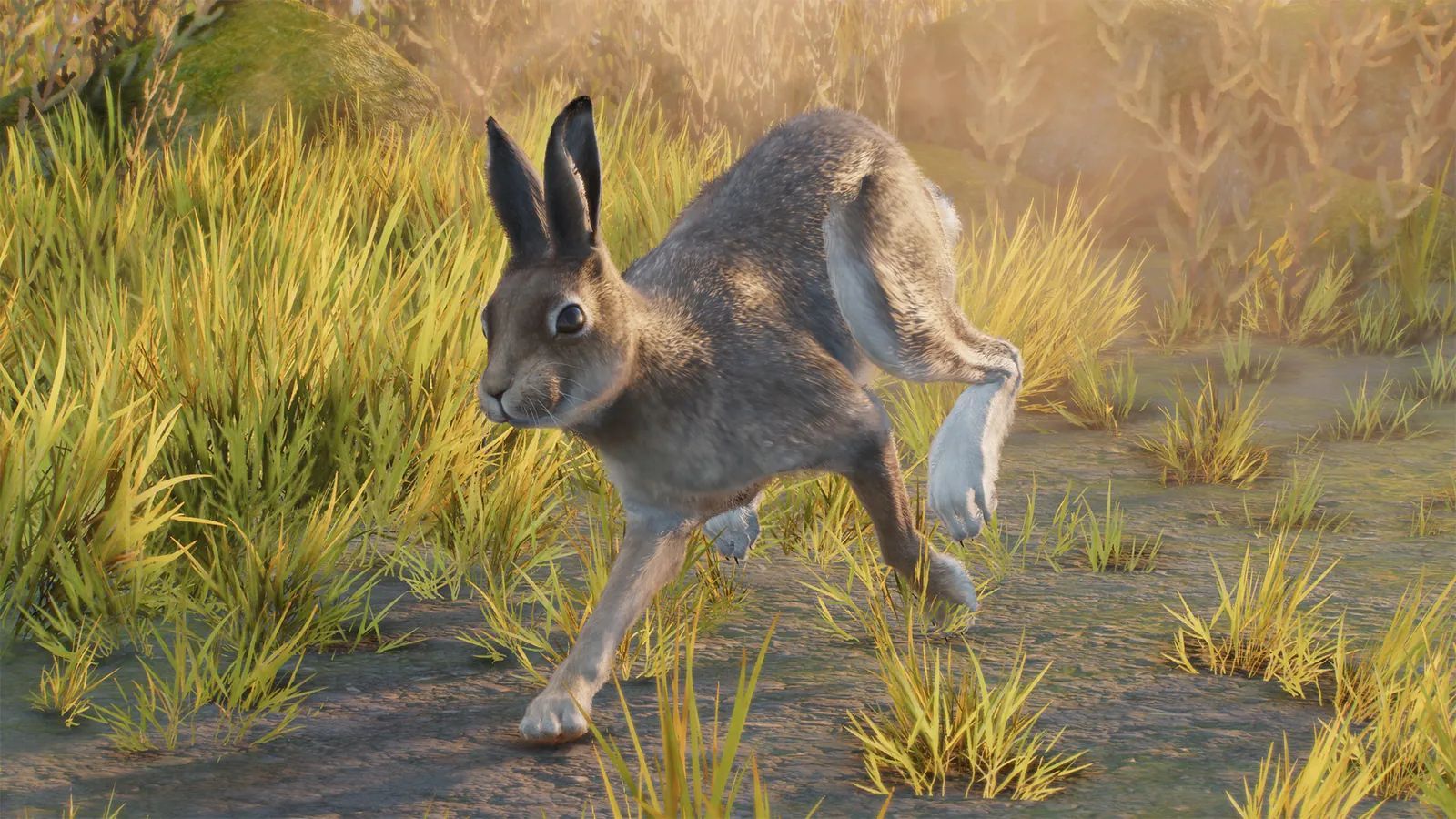
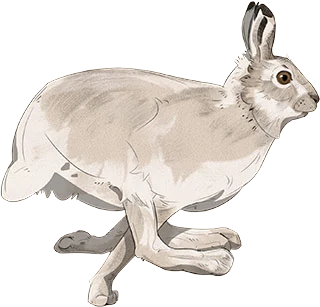
The mountain hare (or Lepus timidus) is a medium-sized lagomorph native to northern and central Eurasia, ranging from Scotland and Scandinavia across Russia to parts of northern China, Mongolia, and the Japanese island of Hokkaido. It lives in montane environments, preferring cool climates and areas with dense ground cover such as heather, shrubs and rocky outcrops. Mountain hares are well-adapted to snowy environments, with seasonal camouflage that turns their fur white in winter and brown or grey in summer. Adults measure 45cm to 65cm in body length with a tail of 5cm to 10cm. Females are generally larger than males, weighing 3.0kg to 4.2kg, compared to 2.5 to 3.8kg in males.
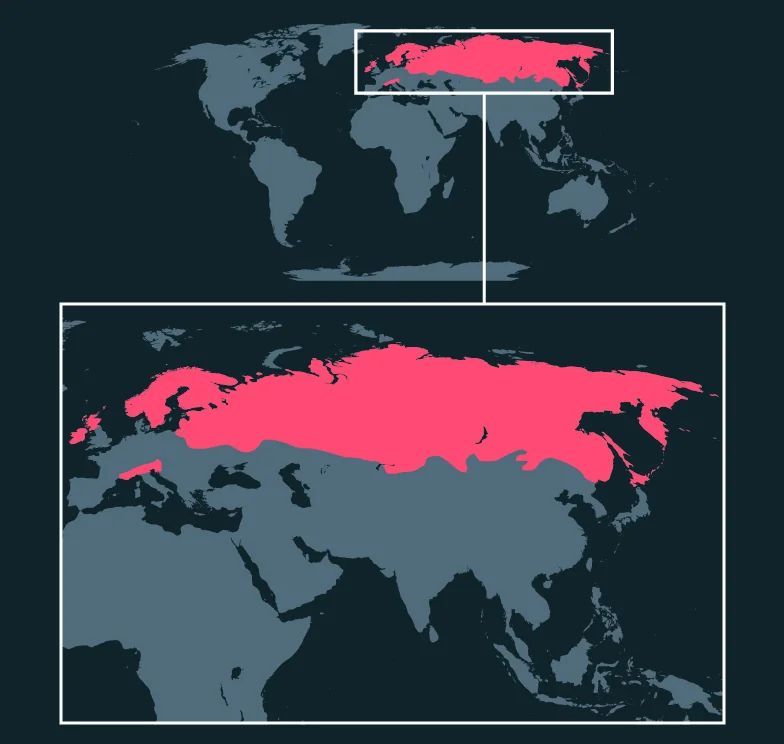
Found in Europe, Asia
Regions
- Arctic
- Asia
- Europe
Biomes
- Taiga
- Temperate
- Tundra
Size & weight
Size
Nose to rump: 0.5 to 0.55 m
Measured as Nose to rump. The person stands 1.75 m tall for scale.
Habitat requirements
Barrier grade
Grade 1 of 5
Minimum height
1.25 m minimum
Climbing & water
Climb proof
Not needed
Water barrier
Allowed
Water barrier size
3 m wide, 1 m deep
Combine this animal with others in the barrier planner.
Conservation
IUCN Red List
Least concern
Least concern
Critically endangered
The mountain hare is a species of Least Concern. Key threats include habitat loss, climate change, competition with introduced species and unsustainable culling. In the UK, mountain hares were erroneously believed to contribute to disease transmission in red grouse, and subject to large-scale culls. Climate change has led to habitat contraction and increased mismatch between seasonal coat colour and snow cover, making hares more vulnerable to predation. In central Europe, hybridisation and competition with European brown hares (Lepus europaeus) further threaten isolated populations. In Scotland, mountain hares were granted full legal protection in 2020, making it illegal to kill them without a licence. Habitat conservation efforts for upland heathlands and moorlands are helping support local populations. Reintroduction efforts have had mixed success. Continued research, monitoring, and habitat restoration, alongside efforts to mitigate climate impacts and prevent hybridisation, are essential to ensuring the long-term survival of mountain hares across Europe and Asia.
Zoopedia sketchbook
Social & reproduction
Keeper notes
Mountain hares are largely solitary but will interact during the breeding season and may gather at food sources when food is scarce. The mountain hare breeding season runs from January to September depending on local climate and latitude. During this time, hares exhibit a range of courtship behaviours, most famously the ‘boxing’ often seen in spring, where females fend off overly eager males or test their stamina. Males will pursue females in groups, forming temporary large gatherings. Despite this competition, females are dominant during mating, often initiating or rejecting advances. Once mating occurs, the female undergoes a gestation period of about 47 to 54 days, and she may produce up to 4 litters per year in favourable conditions. Each litter usually consists of 1 to 4 young. Rather than building a nest, the mother places each juvenile in a separate shallow depression to reduce the risk of predation. She visits briefly at dusk to nurse them, relying on their camouflage and stillness for protection. Juveniles are weaned after 3 to 4 weeks and grow quickly, reaching sexual maturity by 6 to 8 months of age, typically breeding the following spring.
Animal facts
- Mountain hares have large feet that are adapted to the snow, allowing them to run on the snow surface without sinking into it.
- Mountain hares are extremely fast, they can run at speeds up to 64km/h and are excellent at running up steep mountain sides.
- Before resting, mountain hares move in erratic zig-zag patterns to make their location hard to track by predators.
- Unlike other lagomorph species, mountain hare juveniles are born fully furred and with their eyes open.
- Mountain hares are nocturnal, and during the day they hide in shallow depressions in the ground known as ‘forms’.
Taxonomy
Class
Order
Family
Genus
Species