Overview
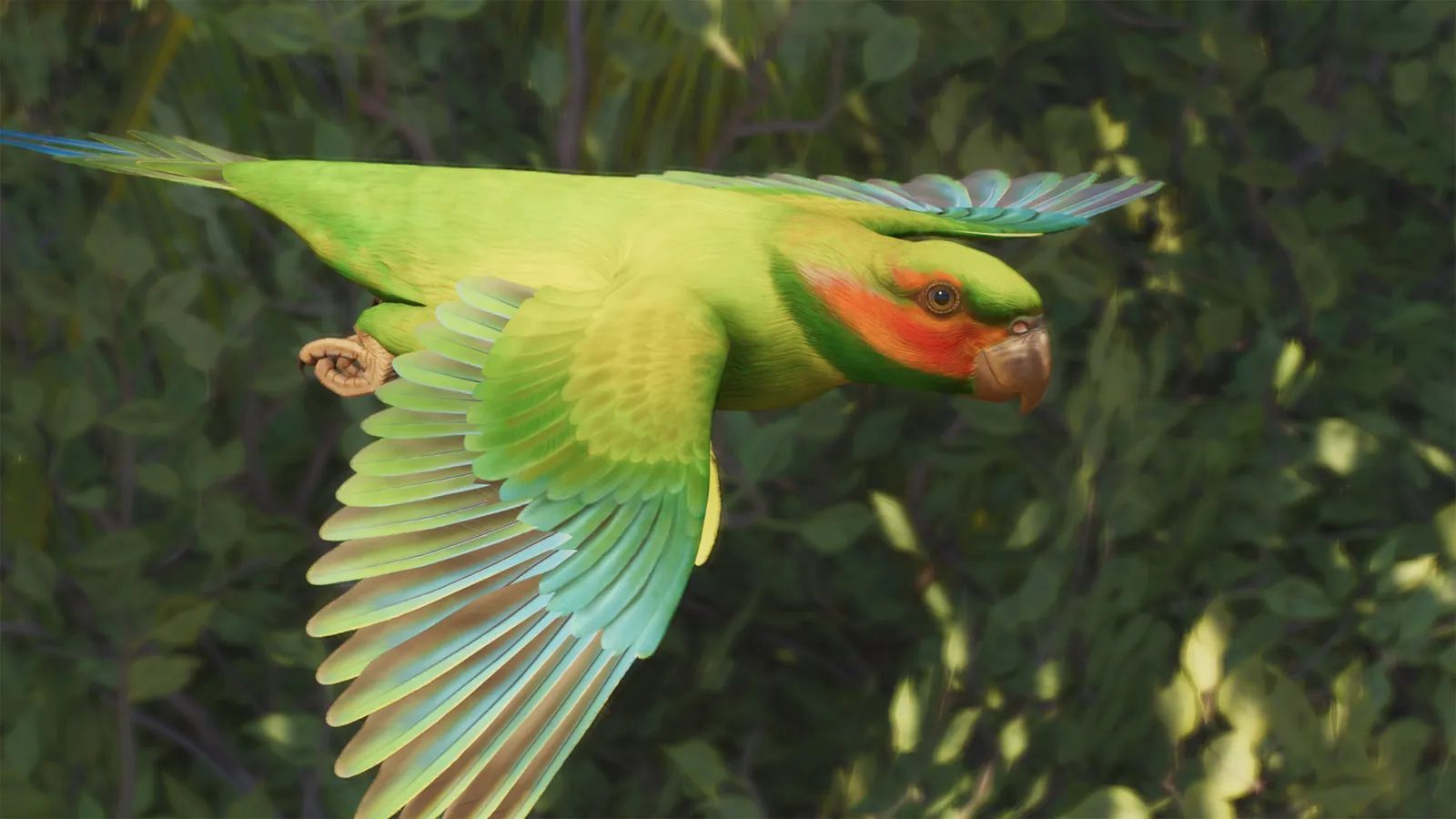
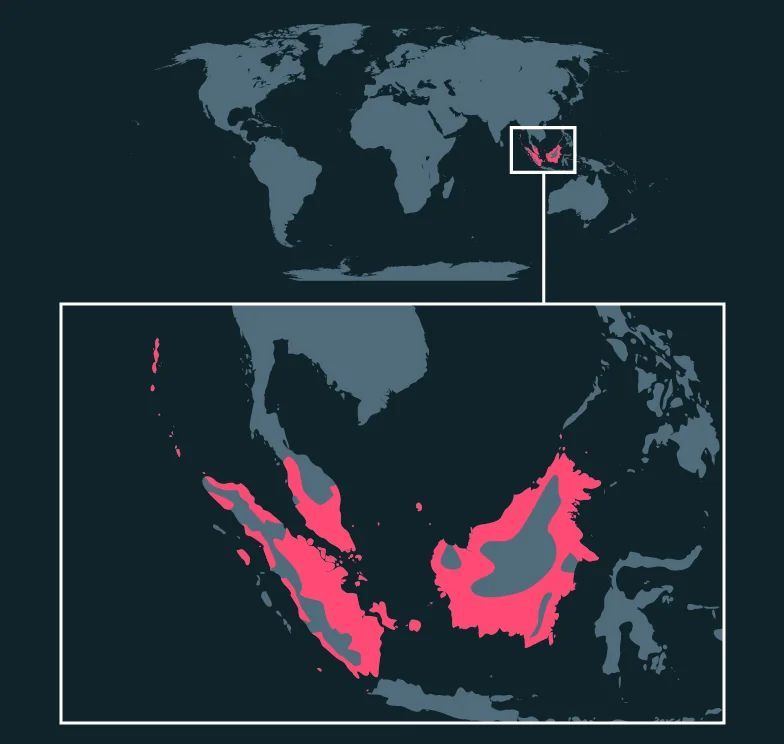
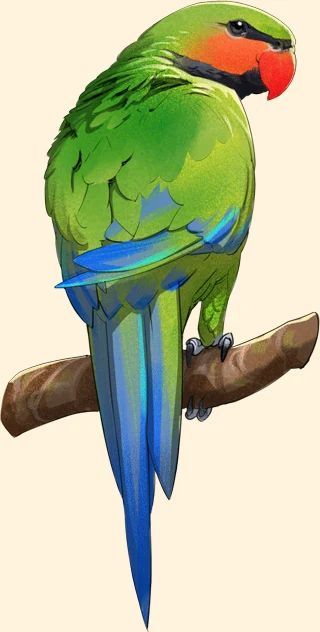
The long-tailed parakeet (or Belocercus longicaudus) is a medium-sized parrot native to Southeast Asia, found across the Malay Peninsula, Sumatra, Borneo and surrounding islands. It inhabits lowland forests, mangroves and plantations. It is easily recognised by its bright green plumage, red beak, and long graduated tail, which gives the species its name. Both sexes share the vivid green body colouration, but males can be distinguished by a pink collar and a black chin strap. Adults typically measure around 15cm in body length, the tail adding an additional 27cm for males and 15cm for females. They weigh around 140g to 190g.
Found in Southeast Asia
Regions
- Asia
Biomes
- Rainforest
Size & weight
Size
Leg span: 0.35 m
Measured as Leg span. The person stands 1.75 m tall for scale.
Habitat requirements
Barrier grade
Grade 2 of 5
Minimum height
1 m minimum
Climbing & water
Climb proof
Not needed
Water barrier
Not allowed
Combine this animal with others in the barrier planner.
Conservation
IUCN Red List
Vulnerable
Least concern
Critically endangered
The long-tailed parakeet is assessed as Vulnerable, and faces population declines due to habitat loss and illegal wildlife trade. Although the species shows some adaptability to modified landscapes such as plantations and gardens, it still relies on large, mature trees with cavities for nesting, and thus suffers from deforestation of old-growth forest habitat. Trapping remains a widespread issue in some regions, where the birds are caught and sold for local and international markets. The species is listed under international trade regulations to limit overexploitation, and there is growing emphasis on monitoring both habitat changes and capture rates to better understand population trends. Research informs about areas requiring protection, to safeguard critical habitat and nesting sites. Local community engagement, awareness campaigns, and sustainable land-use practices are also important parts of the strategy to limit pressure on this species. While these actions provide a foundation for protecting the long-tailed parakeet, continued efforts are required to ensure its survival.
Zoopedia sketchbook
Social & reproduction
Keeper notes
Long-tailed parakeets are gregarious and live in small, highly social groups. Often, many of these groups may gather to form a flock. Long-tailed parakeets generally mate from December to May, with a shorter breeding season from February to April in the populations on Nicobar Islands. Males typically initiate courtship displays by bowing, circling their heads, and producing soft vocalisations. Pair bonding includes males offering food to the female and mutual preening; these bonds may only last seasonally. Several pairs nest in close proximity in tree cavities. The female lays a clutch of 2 to 4 eggs, which she incubates for 23 to 24 days while the male provides food. Once hatched, the chicks are blind, featherless, and fully dependent on parental care. Both parents participate in feeding the young by regurgitation. The chicks develop quickly, beginning to fledge at around six to seven weeks of age. Even after fledging, juveniles may remain dependent on their parents for several weeks, gradually learning to forage and integrate into the social structure of the flock. The exact age of sexual maturity in long-tailed parakeets is unknown, but very likely similar to that of other parakeet species, which would be between 1 and 2 years old.
Animal facts
- There are 5 subspecies of the long-tailed parakeet, separated by the island ranges on which they live.
- Long-tailed parakeets live and nest in cavities within trees, usually dead trees.
- The long-tailed parakeet’s tail is longer than its body and is thought to be an effective rudder for quick movement changes in flight.
- Long-tailed parakeets are highly social creatures and are often seen in large communicative flocks.
- Long-tailed parakeets are intelligent, they will often play and manipulate objects out of curiosity.
Taxonomy
Class
Order
Family
Genus
Species