Overview
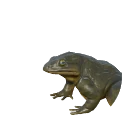
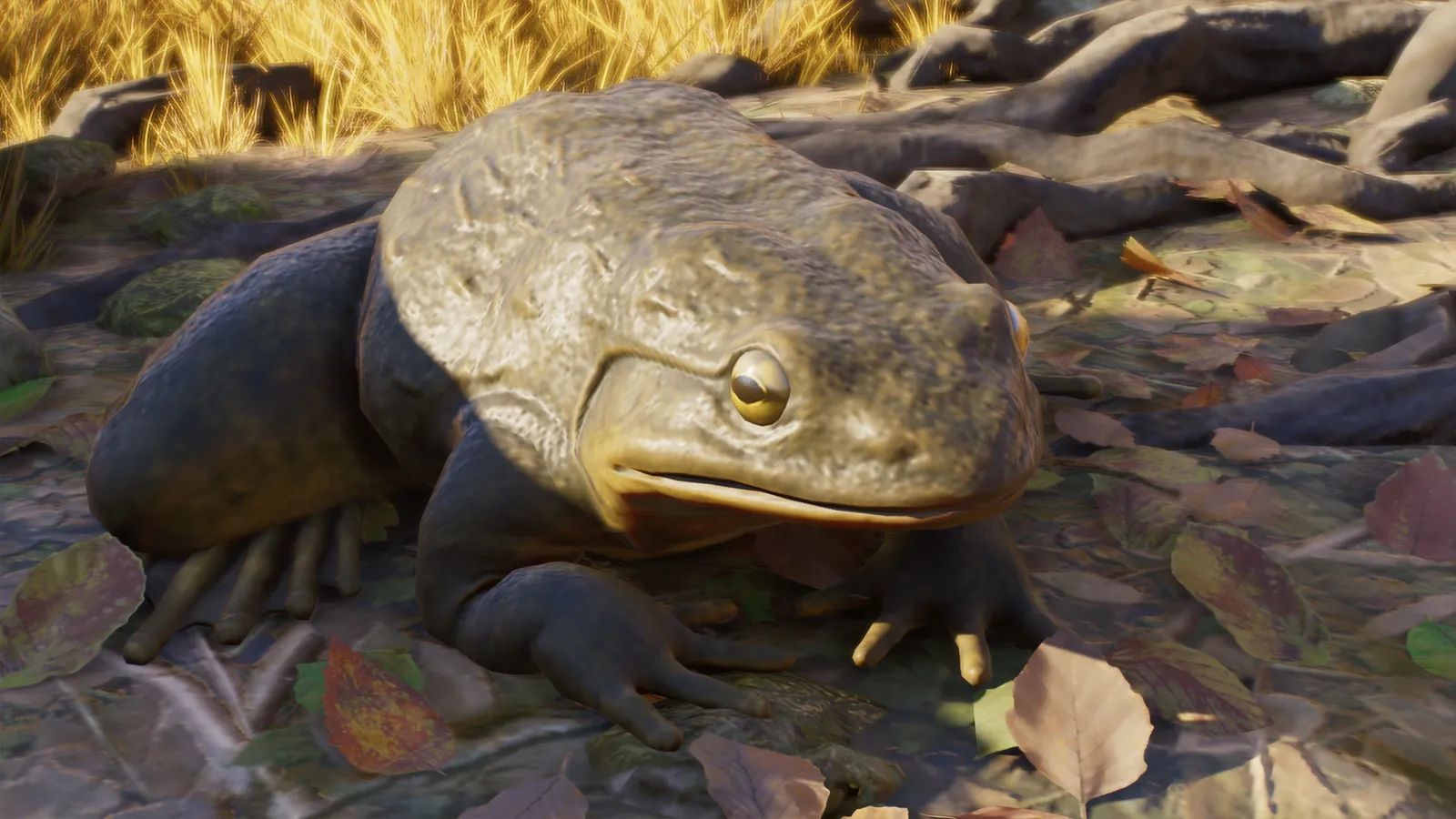
The giant slippery frog (or Conraua goliath), sometimes called the goliath frog, is an extremely large species of frog that lives in the African rainforests of Cameroon and Equatorial Guinea, specifically in the fast-flowing rivers and streams. It can be green to dark brown in colour, with a paler underbelly, large yellow eyes, and may also have small, ridged bumps on its skin. Males are larger than females, weighing between 0.6kg and 3kg and measuring between 17cm and 30cm long.
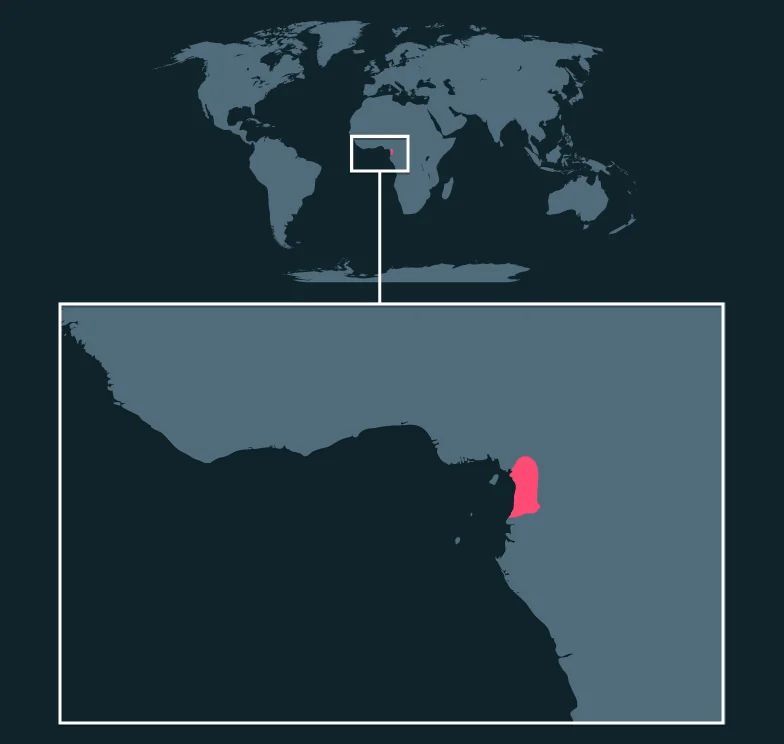
Found in Africa
Regions
- Africa
Biomes
- Lakes & rivers
Size & weight
Size
Length: 0.25 m
Weight
Male
2.3 kg
Female
2.3 kg
Bars use a log scale against the heaviest animal in the Zoopedia, the Common Hippopotamus.
Measured as Length. The person stands 1.75 m tall for scale.
Conservation
IUCN Red List
Endangered
Least concern
Critically endangered
The species is Endangered due to being over-hunted for food, as trophies and large-scale collection by the pet trade. It is also subject to loss of habitat from agriculture, logging, road traffic and human settlement. Sedimentation and pollution of its breeding streams affect tadpole development and plant species essential to feeding tadpoles. The frogs react erratically when disturbed, likely affecting breeding further. Protected areas across the habitat range for the broader ecosystem are beneficial for the conservation of the giant slippery frog. This species is in rapid decline due to over-harvesting, and work is needed to engage local communities in sustainable harvest practices. Captive breeding programs should also be considered.
Social & reproduction
Keeper notes
Giant slippery frogs are solitary and do not interact except to mate or compete over mates. Giant slippery frogs have an unknown specific breeding season that is likely annual. When females are ready to lay eggs, males will build nests on river beds near fast-flowing water, pushing stones into semicircular formations in the sand. They will also wrestle with any rival males that happen to be building nests nearby. It is then up to females to decide on a high-quality nest in which to lay her eggs, the male fertilising them as she does so. Both the mother and father will abandon their eggs after laying, leaving them to hatch into tadpoles that will then grow into froglets approximately 3 months later. The young frogs will reach sexual maturity at 10 to 12 months old.
Animal facts
- The giant slippery frog is the largest living species of frog; it can reach 32cm long and weigh up to 3.25kg.
- Giant slippery frogs have no vocal sac and so cannot croak.
- Giant slippery frogs can leap a distance of up to 3m.
- The tadpoles of the giant slippery frog eat one single species of plant that is only found in rapid flowing water and at the base of waterfalls.
- Giant slippery frogs have been around for 250 million years; they precede dinosaurs.
Taxonomy
Class
Order
Family
Genus
Species