Overview
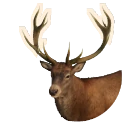
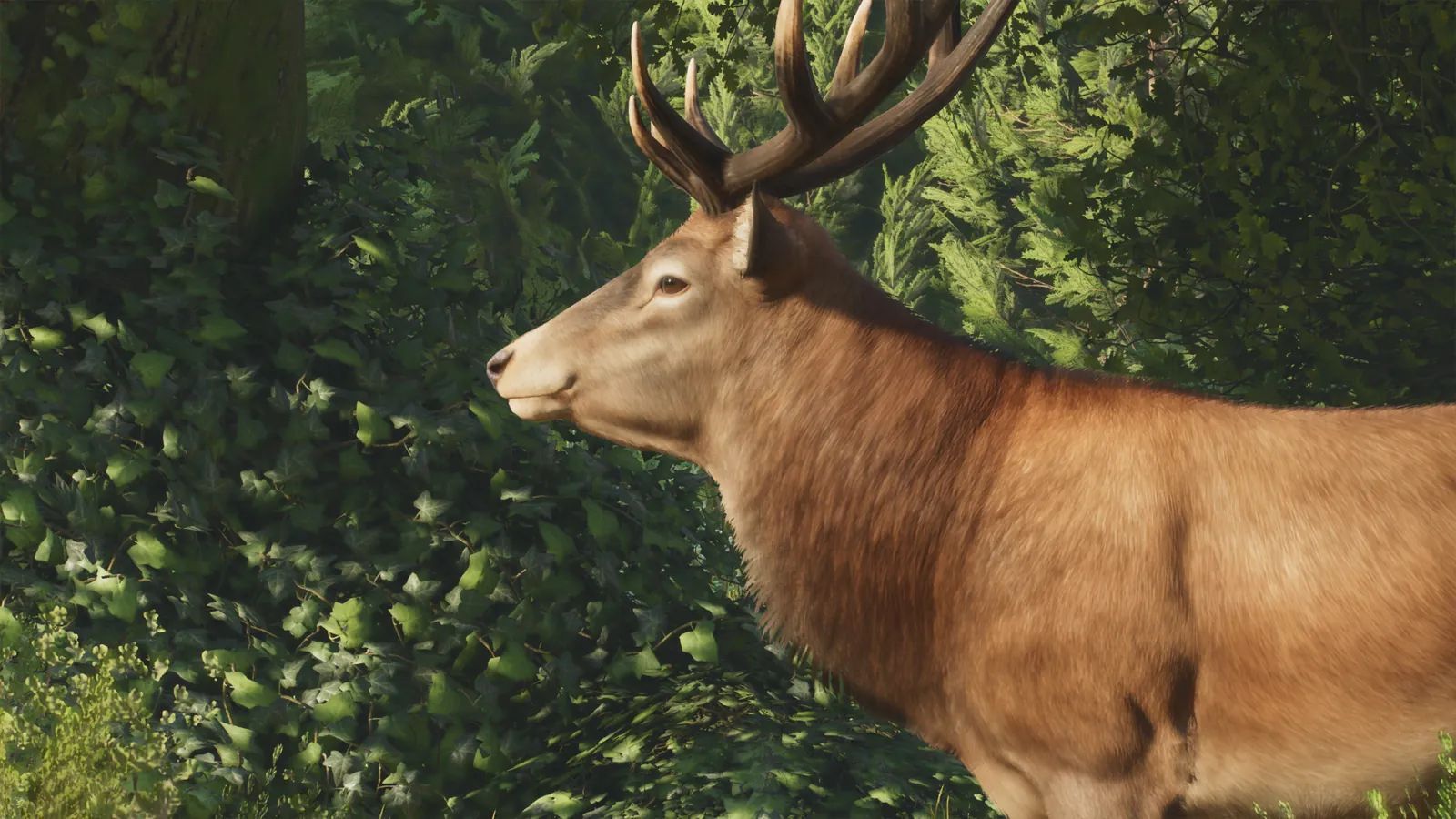
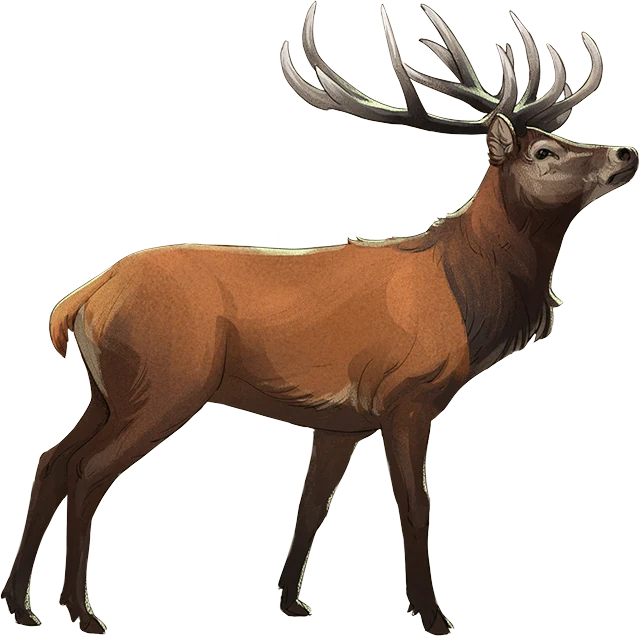
The red deer (or Cervus elaphus) is a widespread species of ungulate that lives throughout the temperate grasslands, woodlands and scrublands of Europe, Northern Africa and Central Asia. It has also been introduced to South America and Oceania. The red deer has a red-brown coat with a pale underside. Red deer have large, pointed ears, large eyes and a long snout. The red deer is sexually dimorphic; the male is larger than the female and has large antlers with multiple prongs; the antlers pair together forms a U shape. The size of the red deer varies a lot depending on the area they live in and the environmental conditions. On average, males measure 175cm to 250cm and weigh 160kg to 240kg, with antlers measuring 60cm to 80cm. Females measure 160cm to 210cm and weigh 120kg to 170kg.
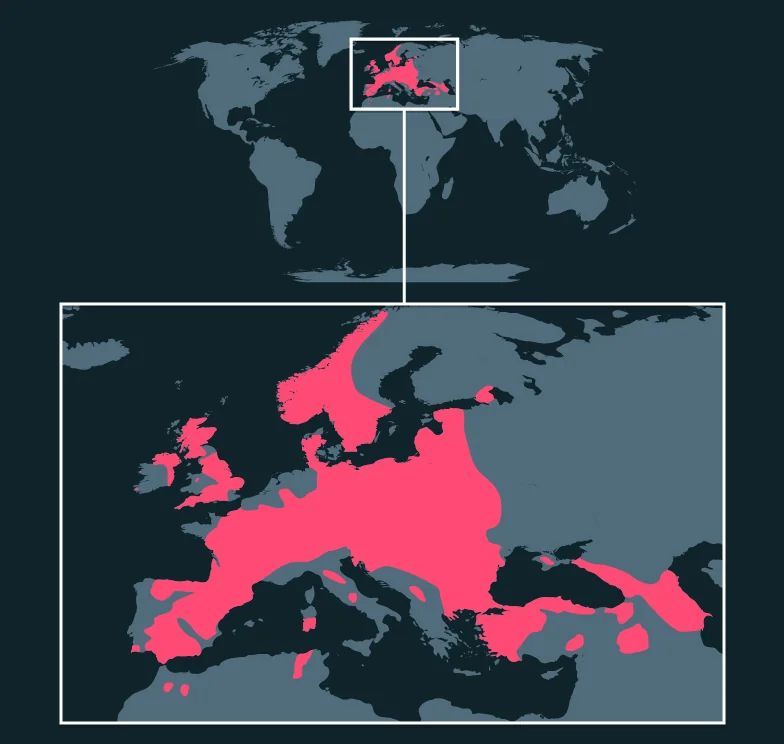
Found in Europe, Asia, Africa
Regions
- Africa
- Asia
- Europe
Biomes
- Temperate
Size & weight
Size
Shoulder height: 1.14 to 1.22 m
Measured as Shoulder height. The person stands 1.75 m tall for scale.
Habitat requirements
Barrier grade
Grade 2 of 5
Minimum height
1.25 m minimum
Climbing & water
Climb proof
Not needed
Water barrier
Not allowed
Combine this animal with others in the barrier planner.
Conservation
IUCN Red List
Least concern
Least concern
Critically endangered
The red deer is a species of Least Concern, but has become locally extinct from areas of its historical range. Red deer populations were heavily reduced in many areas due to overhunting, deforestation, and agricultural expansion. Numerous conservation programs since the 20th century have restored red deer to their native habitats, including legal protection, habitat restoration, and the establishment of protected areas and hunting regulations. Today, red deer are thriving in many regions where they were once absent, often supported by rewilding initiatives that aim to restore ecological processes. Reintroduction projects have played a key role in the recovery of red deer populations in regions where natural recolonisation was unlikely due to habitat fragmentation or human barriers. These reintroductions help restore biodiversity and reinforce the red deer's role as an ecosystem engineer, contributing to vegetation dynamics, seed dispersal, and nutrient cycling. While challenges remain, red deer conservation is widely regarded as a success story within European wildlife management.
Zoopedia sketchbook
Social & reproduction
Keeper notes
Red deer live in different group compositions, out of which loose herds of up to 400 animals can form, depending on food availability and time of year. Interrelated females and their offspring form bonded groups, while young males live in bachelor groups. Older males tend to be solitary and acquire a harem during breeding season. The mating season of Red Deer happens in later summer. Males will aggressively defend interrelated female family groups from rival males, vocalizing to attract females and fend off rival males. Dominance displays may go as far as fighting and clashing horns. A dominant male will typically defend around 6 receptive females. The female will be pregnant for 240 to 262 days before leaving the group to give birth to a fawn alone. She will remain away from the herd for 16 days with her fawn hidden in the undergrowth, returning to the fawn frequently to feed it. Fawns will begin eating grasses when they re-join the herd at 16 days old. Weaning is complete when the fawn is 2 months old. Fawns are independent by 1 year old and become sexually mature at 16 months old. Females remain in their mother’s group and are likely to mate for the first time at 2 years old. Males will join a bachelor group or become solitary. Bachelor groups are usually composed of males 4 to 5 years old or younger and are comprised of 4 to 10 members. During their time in a bachelor group, males learn dominance displays and how to fight. Males are unlikely to mate until they are 4 or 5 years old when their antlers are fully developed and they can compete for mates.
Animal facts
- Red deer play a vital ecological role by shaping vegetation, dispersing seeds, and supporting predator and scavenger populations.
- Male red deer make loud roars during the breeding season to aid in the cohesion of their harem and to signal to rival males.
- The red deer's hooves are soft at birth, so fawns rarely walk for the first 16 days of their lives until they harden.
- Red deer fawns are born with spots for camouflage, but lose their spots by the time they are 5 months old.
- Red deer shed and regrow their antlers every year; while they are growing, they are covered in velvet which provides blood and nutrients to the growing bones.
Taxonomy
Class
Order
Family
Genus
Species