Overview
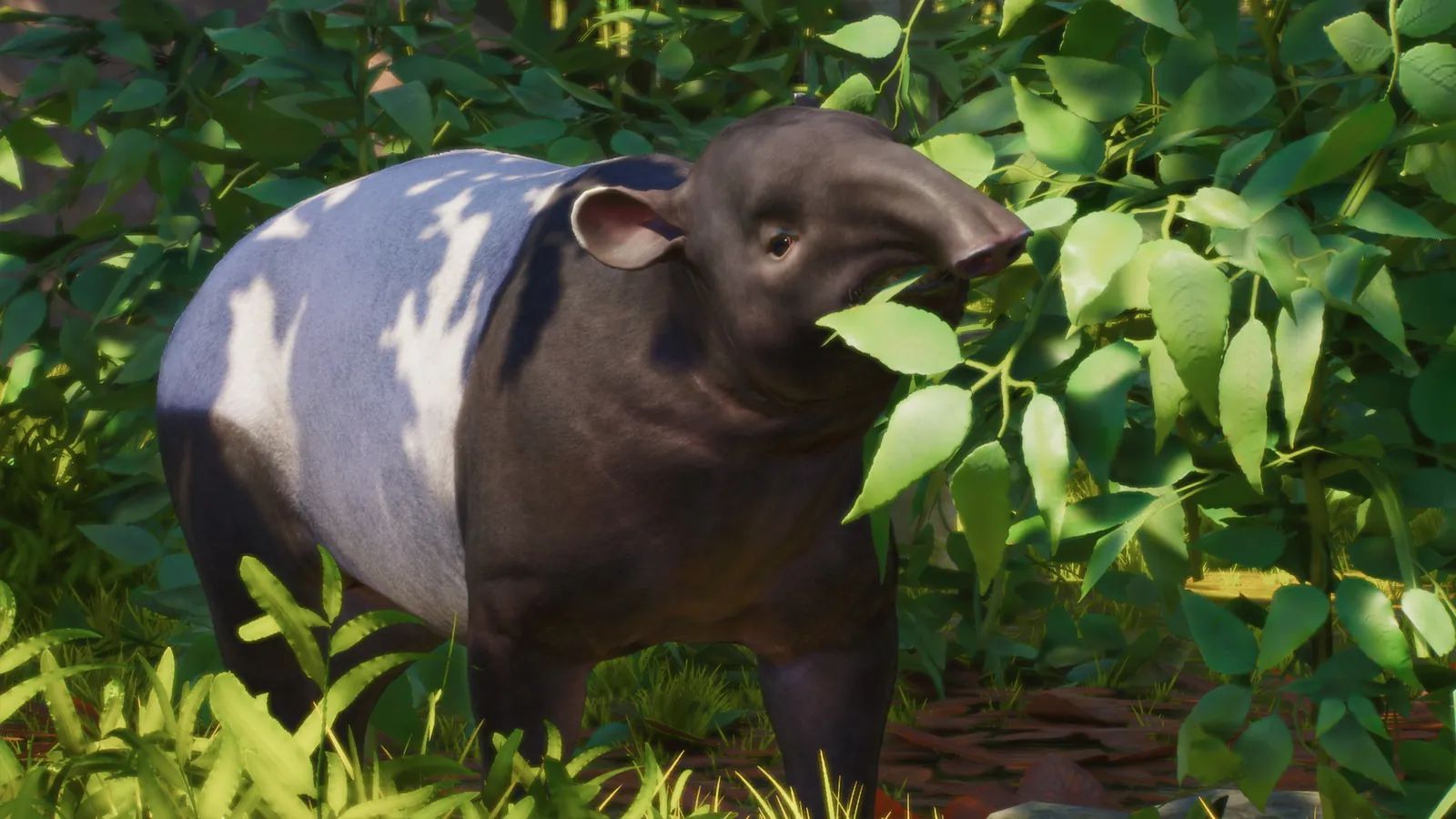
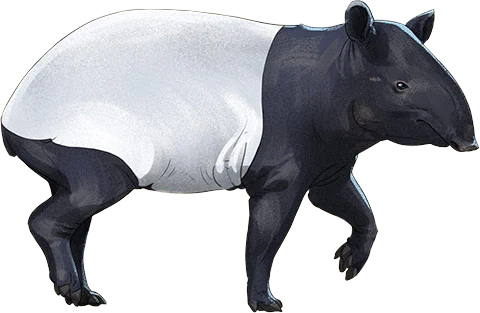
The Malayan tapir (or Tapirus indicus) is a mammal native to the rainforests of Southeast Asia. The Malayan tapir’s head, shoulders, front legs and back legs are black, and their mid-body and back end is white. It is a heavy-set animal and has a distinctive prehensile proboscis nose. Malayan tapirs measure between 1.8m and 2.5m in length and weigh between 250kg and 540kg. Females tend to be slightly larger than males and 10% to 20% heavier.
Found in Asia
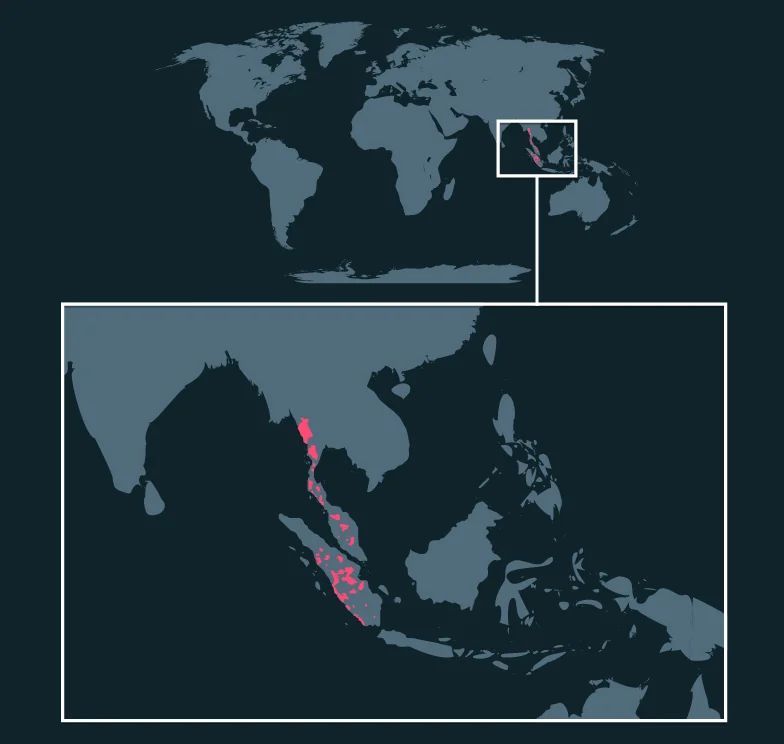
Regions
- Asia
Biomes
- Rainforest
- Wetlands
Size & weight
Size
Shoulder height: 0.95 to 1.05 m
Weight
Male
345 kg
Female
405 kg
Bars use a log scale against the heaviest animal in the Zoopedia, the Common Hippopotamus.
Measured as Shoulder height. The person stands 1.75 m tall for scale.
Habitat requirements
Barrier grade
Grade 2 of 5
Minimum height
1.25 m minimum
Climbing & water
Climb proof
Not needed
Water barrier
Not allowed
Combine this animal with others in the barrier planner.
Conservation
IUCN Red List
Endangered
Least concern
Critically endangered
Wild population
2,500
2,500 in the wild. Rank 9 of 57 species with a known count, smallest first.
Malayan tapirs are Endangered. The Malayan tapir faces significant conservation challenges primarily due to habitat loss, fragmentation, and poaching. Rapid deforestation for agriculture, logging, and infrastructure development in Malaysia, Thailand, and Sumatra has drastically reduced the tapir’s natural habitat. As solitary animals with large home ranges, tapirs are particularly vulnerable to habitat fragmentation, which isolates populations and limits genetic diversity. Tapirs are sometimes killed accidentally in snares set for other animals or fall victim to vehicle collisions. They are a protected species in Malaysia and Indonesia. Conservation efforts include protected areas such as national parks and wildlife reserves offer some refuge, and initiatives like wildlife corridors aim to reconnect fragmented habitats. Organisations are working to raise public awareness about the tapir’s plight and promote coexistence strategies in rural communities. In Malaysia, monitoring programs and captive breeding efforts support population recovery. Sustained commitment and collaboration are essential to ensure the survival of this unique and ancient species.
Zoopedia sketchbook
Social & reproduction
Keeper notes
Malayan tapirs are often solitary but may also be found in monogamous pairs with their young offspring or in temporary feeding groups. They are tolerant of other individuals. Breeding season is between May and June. When a tapir female moves through a tapir male’s territory, he will track her by the scent of her urine. When they meet, the male will court the female by nudging and sniffing her hindquarters and chasing her. If the female is receptive, she will allow him to mount her and mate. They will mate several times throughout the day while the female is fertile. After mating, the male and female may stay together or go their separate ways. After a pregnancy of 390 to 410 days, the female will give birth to a single calf. For the first week of the calf’s life, it remains hidden in the undergrowth and the mother will return often to feed it. At a week old, the calf will accompany its mother during foraging. Calves remain with their mother until they are between 1 and 2 years old, depending on when their mother has another calf. They reach sexual maturity at 3 years.
Animal facts
- The Malayan tapir is the largest species of tapir.
- Infant tapirs have dark fur with a pattern of white spots and stripes that camouflages them in the undergrowth and dappled light of the rainforest.
- Malayan tapirs will often walk along riverbeds underwater for up to 90 seconds.
- The Malayan tapir is the only species of tapir that is native to Asia, with all other species living in Central and South America.
- The Malayan tapir’s vision is very poor, and they rely mainly on scent and hearing to navigate their surroundings.
Taxonomy
Class
Order
Family
Genus
Species