Overview
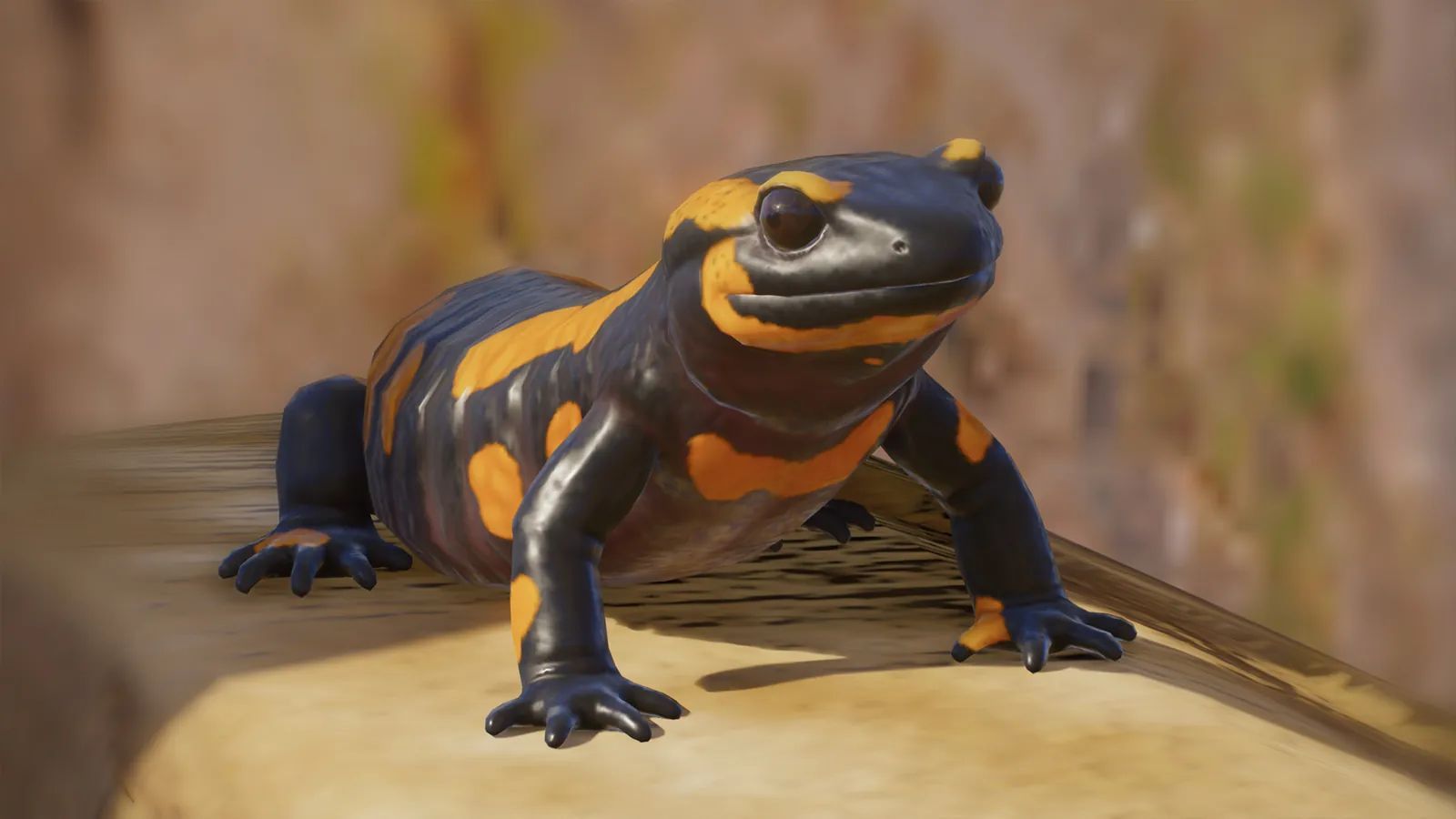
The fire salamander (or Salamandra salamandra) is an amphibian living in the deciduous forests throughout mainland Europe. Its skin is black with yellow spots, although there can be much variation in their patterning. While larvae are aquatic, adults cannot swim and spend their lives on solid ground. Fire salamanders are between 15cm to 30cm long and weigh approximately 30g to 50g. Males and females do not differ in size or appearance.
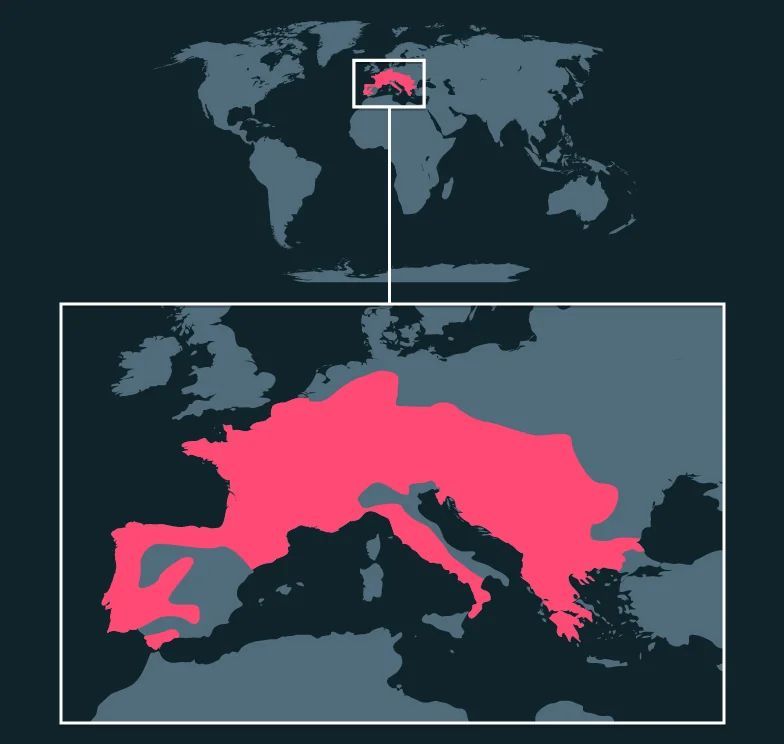
Found in Europe
Regions
- Europe
Biomes
- Temperate
- Wetlands
Size & weight
Size
Length: 0.23 m
Weight
Male
0.04 kg
Female
0.04 kg
Bars use a log scale against the heaviest animal in the Zoopedia, the Common Hippopotamus.
Measured as Length. The person stands 1.75 m tall for scale.
Conservation
IUCN Red List
Vulnerable
Least concern
Critically endangered
Fire Salamanders are considered a Vulnerable species, after having been classed as Least Concern during their initial assessment. The species’ population has declined significantly (and is predicted to decline further) due to the spread of ‘Bsal’ in Europe, a fungus which is extremely lethal to salamanders and has already had devastating effects on populations in several countries. Additionally, ongoing habitat degradation puts further pressure on wild fire salamanders. While the infection with the fungus can be treated in human care, there is no preventative mediation and conservation actions currently focus on captive breeding of insurance populations to hopefully, one day, repopulate areas where these iconic amphibians have gone extinct. At present, there are limited initiatives and successes in limiting the spread of the Bsal fungus itself, so continued research and work is required to ensure the fire salamander’s survival.
Social & reproduction
Keeper notes
Fire salamanders are solitary in the wild but are generally tolerant of other individuals if enough space, mates and food are available. Males may be aggressive towards each other if disputing territory or access to mates. In the mating season from October to January, males will attempt to locate females who are moving through their territory. Once the male has found a mate, he will present her with a spermatophore: a jelly like cone containing his sperm, which the female will take into her cloaca. The female may undergo delayed implantation based on when environmental conditions are most favourable, which can be up to 2 to 5 months after mating. Female fire salamanders often gestate during hibernation, during which time the eggs will develop inside the female. When ready to give birth, she will release 20 to 75 larvae in shallow pools over several days. Fire salamander larvae are 2.5cm long and already have fully developed limbs. They have gills, and unlike adults require water to survive. Their larval stage lasts a minimum of 4 weeks but depending on environmental conditions this may last longer. Once they begin to lose their gills they will leave the water. At an age of 3 to 6 months, again depending on environmental conditions, fire salamanders reach sexual maturity.
Animal facts
- Fire salamanders are mostly found under damp decaying leaf matter on the ground.
- The bright colouration of the fire salamander indicates toxicity; they secrete a neurotoxin called ‘samandarin’ through the skin, which can cause muscle convulsions, difficulty breathing, high blood pressure and death. Unless ingested however, this toxin is generally not dangerous to humans.
- According to legend, the fire salamander received its name because it was born in fires. Most likely they were hiding on wood that humans gathered to build fires, and then tried to escape the flames by crawling out of the embers.
- Fire salamanders tend to stay in the same home range for many years, some even returning to the same spots for their winter hibernation.
- In most subspecies of fire salamander offspring develops in eggs inside the female, to be born as live aquatic larvae. However, the ‘fastuosa’ and ‘bernardezi’ subspecies can give birth to fully metamorphosed young, skipping the aquatic stage.
Taxonomy
Class
Order
Family
Genus
Species