
Necrolei Cyst
Profile
Category
- World
- Subcategory
- Resources
- Entries in Resources
- 23
- Words
- 154
PDA entry
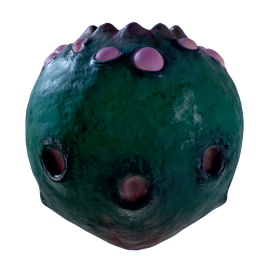
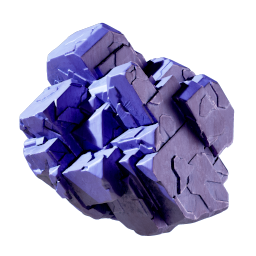
- Polyp stage of the Anthobrachia necrolei jelly's lifecycle. A source of strong acid.
- Either a juvenile necrolei, or a mature jelly that has rejuvenated into its larval form. There is no apparent limit on the number of times a necrolei can return to cyst form. The organism may be biologically immortal, like Earth's Turritopsis dohrnii.
- The interior of a cyst is more acidic than a vulture's stomach. Hydrochloric acid protects the cyst from attack while it strobilates: budding off flowerlike clones. These buds (or medusae) swim in the current in search of rich decay. The cyst is both the beginning and end of the necrolei's life cycle.
- The buds inherit hydrochloric acid from their cyst clone-parents, making them a convenient and renewable - if dangerous - source of strong acid.
- Assessment: collect necrolei buds to process into strong acid. The necrolei converts ecosystem death into useful industrial products. Consider the alignment of self-interests which made this miracle possible.
On the wiki

Related entries
Atacamite (Cu2Cl(OH)3).
A live culture of Protean microbes (Monobiota), single-celled scyllidae algae, and large sea viruses of the...
A bewildering blend of ocean metals and microbial products.
Celestine (strontium sulfate, SrSO4).
Kagome optical fibers derived from shock quartz.
Copper (Cu), element 29.
An egg cluster laid by the deepwing brooder, Titanotagmatapterya amalthea.
Germanium (Ge), element 32.
Gold (Au), element 79.
Lead (Pb, element 82).
Lithium (Li), element 3.
Debris from a human habitat or vehicle.



Loading discussion...