
Unopus
Profile
Category
- Anchored Life
- Subcategory
- Pylons
- Entries in Pylons
- 2
- Words
- 259
PDA entry
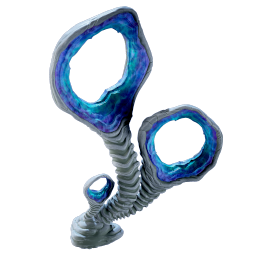
- Pyloraptor unopus. A predatory pylon that seems to evolve from a self-tearing cephalopod.
- 1. Pylon
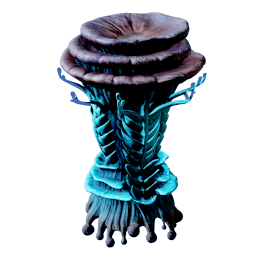
- The unopus is a relative of the mimic pylon. Like the mimic, it begins life as a cephalopod like a squid or octopus with its head buried in the seafloor. The head includes a toroidal nerve braid wrapped around the throat, as well as complex organs such as a heart and central stomach.
- 2. Self-decapitation
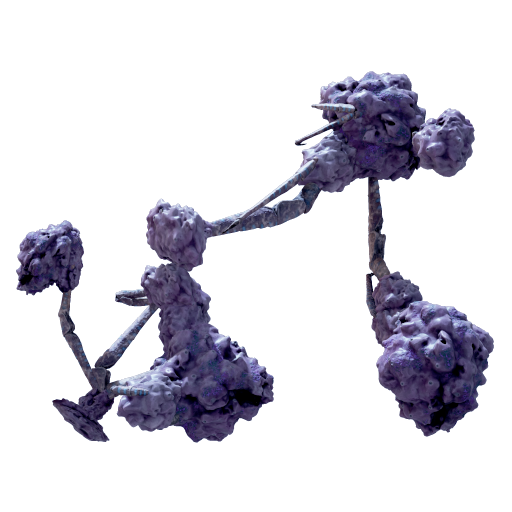
- The unopus grows arms which collect nutritious particles from the seawater. The arms digest their food internally, sparing almost none for the central body. As the head starves,, the hunting arms tear away and find their own anchors. Without a heart, the arms actually bleed their entire blood supply and revert to a water-based, low-oxygen metabolism.
- 3. Patient hunter
- Unopus arms nest in groups which mimic fields of twisty kelp. Without oxygen-rich metabolisms, unopus fields appear slow-moving and passive. In fact, they spend years coiling into their hunting stance, building up mechanical energy in coiled limbs. When the moment is right, unopus fields will lash out and seize passing prey. Paralytic venom allows the unopus field to devour even large prey alive.
- 4. Starfish wasting disease
- There are superficial similarities between unopus self-dismemberment and starfish wasting disease, an infection which causes Earth sea stars to tear themselves apart. The unopus' ancestors may have been afflicted by a similar disease, and only those which could survive dismemberment now remain. Eventually, self-decapitation became a normal part of the unopus life cycle.
- Assessment: harmless, unless you brush close on the wrong day.
Related entries
Tentatively Pyloraptor mimic.
Anchored Life › Algae
Anchored Life › Algae
Anchored Life › Algae
Anchored Life › Anomalies
Anchored Life › Anomalies
Anchored Life › Anomalies
Anchored Life › Anomalies


Loading discussion...