
Jelly Lei
Profile
Category
- Anchored Life
- Subcategory
- Jellies
- Entries in Jellies
- 3
- Words
- 160
PDA entry
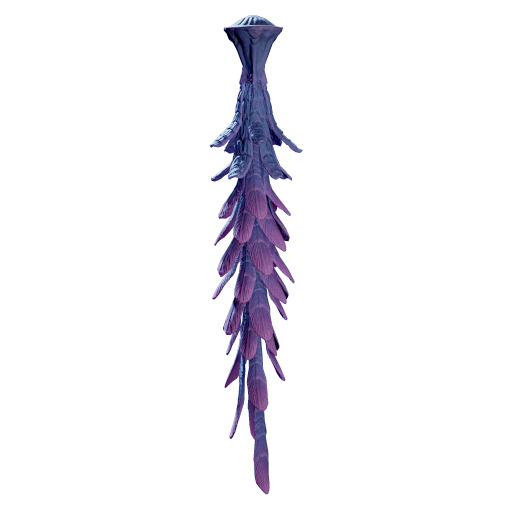
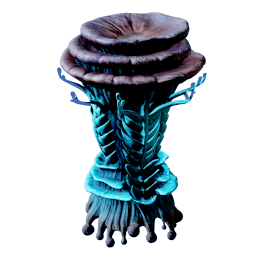
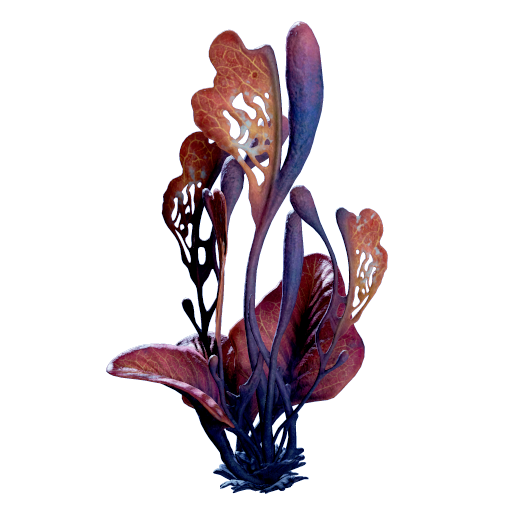
- Anthobrachia hebesoros, the young stack of flower arms. Reproductive stage of a flower-like jelly.
- 1. Polyp
- Despite its resemblance to a kelp, the jelly lei prefers to hang underneath surfaces - where it cannot photosynthesize. It is the rooted polyp phase of a jellyfish's life cycle. The chain of 'flowers' growing beneath the polyp are larval jellyfish, called ephyra. The stalk itself is called a scyphistome.
- 2. Ephyral traits
- The budding larvae have broad, flat petals which will eventually merge into the adult jelly's bell. These petals already host photosynthetic symbiotes - it is possible the adult jelly will seek light sources to grow, akin to the terrestrial upside-down jelly. Note the purple color produced by photosynthetic retinal, the same molecule your eyes use to detect light.
- 3. Heat stress
- The jelly lei's growth cycle has been accelerated by heat stress. The stalked parent may release its larvae early to allow them to swim clear of hot, oxygen-depleted water.
- Assessment: sign of ecological crisis.
Related entries
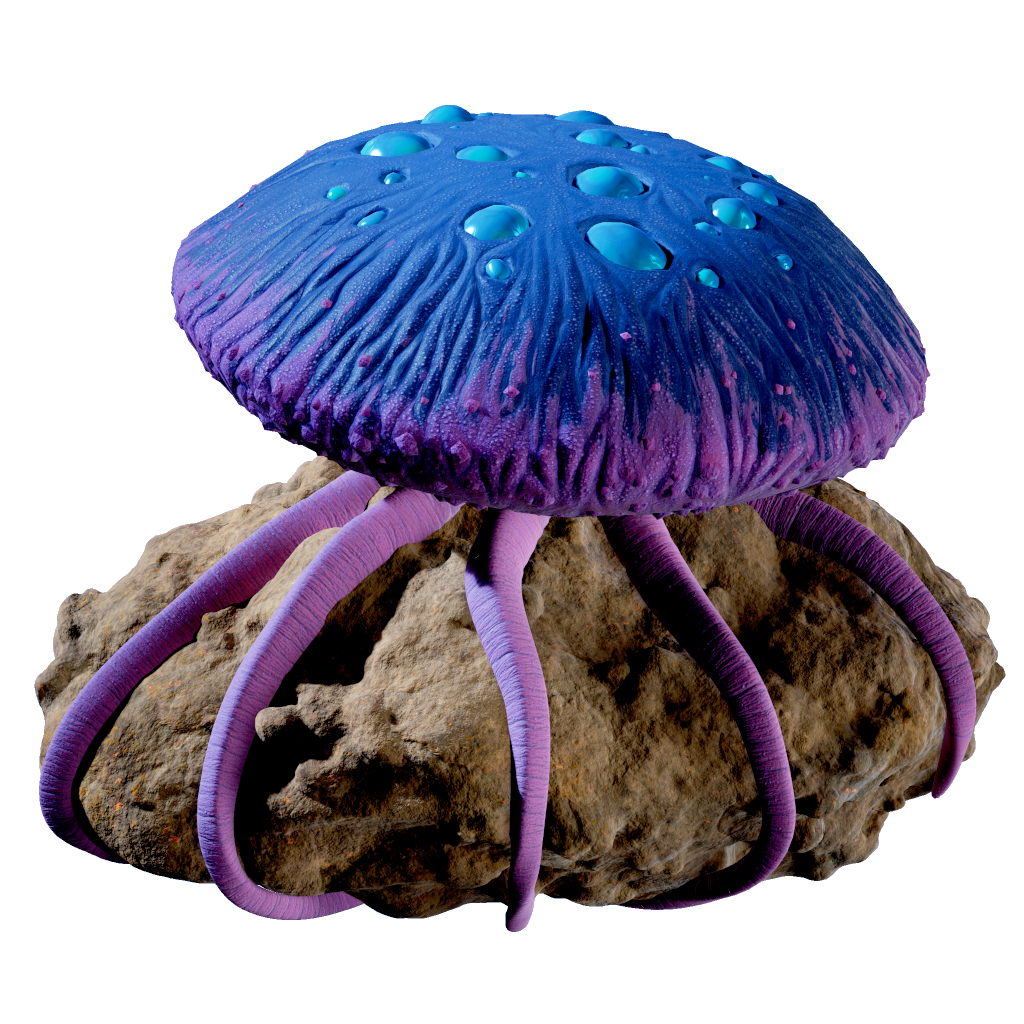
Dactylbrachia gigas, the behemoth finger-legged jelly.
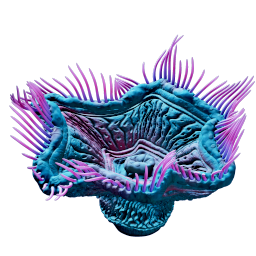
Anthobrachia necrolei.
Anchored Life › Algae
Anchored Life › Algae
Anchored Life › Algae
Anchored Life › Anomalies
Anchored Life › Anomalies
Anchored Life › Anomalies
Loading discussion...