
Bloom Core
Profile
Category
- Anchored Life
- Subcategory
- Bloom
- Entries in Bloom
- 5
- Words
- 230
PDA entry
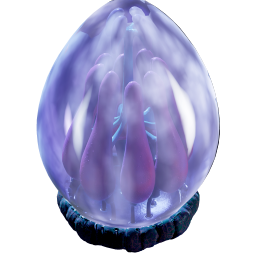
- This animal (Cecidia gamikos) has no Earthly analog. No apparent ecological niche except to reproduce and release virus. The ancestral firm may be a ctenophore (comb jelly).
- Its core is a viral incubator stocked with genetic material from organisms in the surrounding ecosystem.
- 1. Complete viral saturation
- The bloom core's entire body is densely infected with large RNA virus (generated name Proteavirus beta). The only exception is the central bulb.
- 2. External food supply
- The core's filter combs are inactive. It receives all its calories from the titan rockbore below, or, if that supply is disrupted, from nearby bloom cankers. Cutting off both food supplies might allow the bloom core to clear its infection.
- 3. Living bioreactor
- The central bulb of the core contains genetic sequences from organisms living in the nearby ecosystem. These sequences are used as training material for Proteavirus beta to improve its infectiveness. It is a laboratory for genetic adaptation.
- Assessment: source of virus for all nearby bloom nodes. Starve and purge viral infection by clearing connected nodes and cankers. Retrieve central bulb for genetic research and adaptation. Further investigation urgently required. Does this organism have a function beyond viral propagation?
- Note: users may be curious about the symbiosis between Earthly parasitic wasps and polydnaviruses. The wasp's own genome contains the viral genome, allowing the wasp to create the virus for use in its reproductive cycle.
Related entries
Biofilm is an external structure created by bacteria - a city to support their growth.
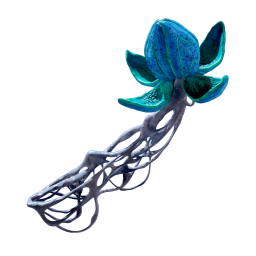
This chimeric organism (Viroblast gaggraina) is a feeding and reproduction site for a large RNA virus...
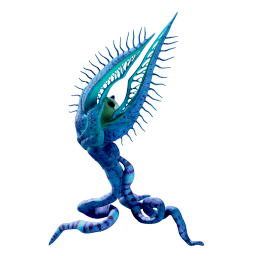
This animal (tentatively Cecidia ctenophora) is a symbiote with - or parasite upon - the titan rockbore below.
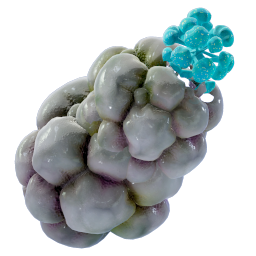
A water slug (Seaslug hydroclast) infected by an aggressive bacterial bloom and trapped in its own secretions.

Loading discussion...